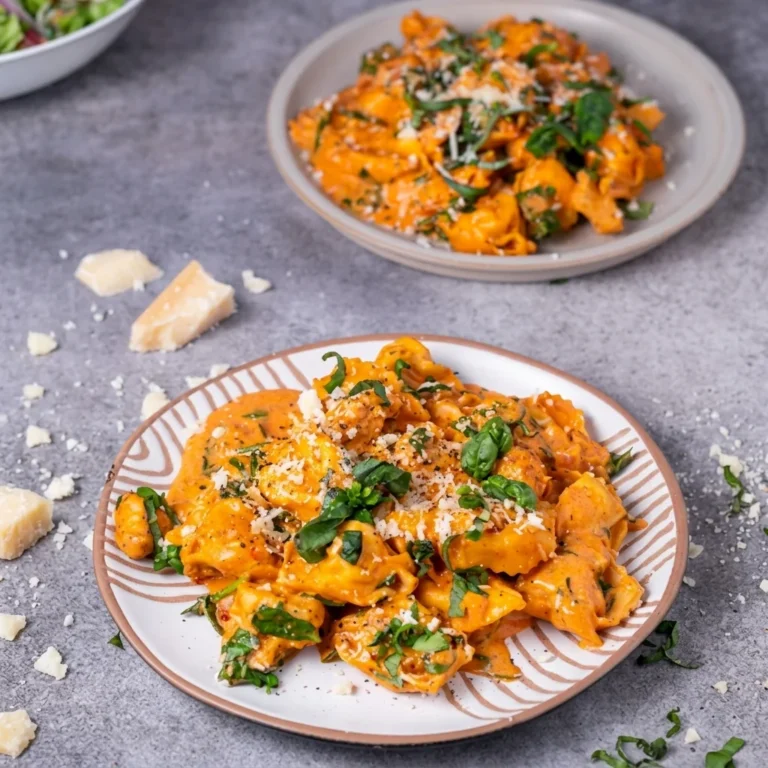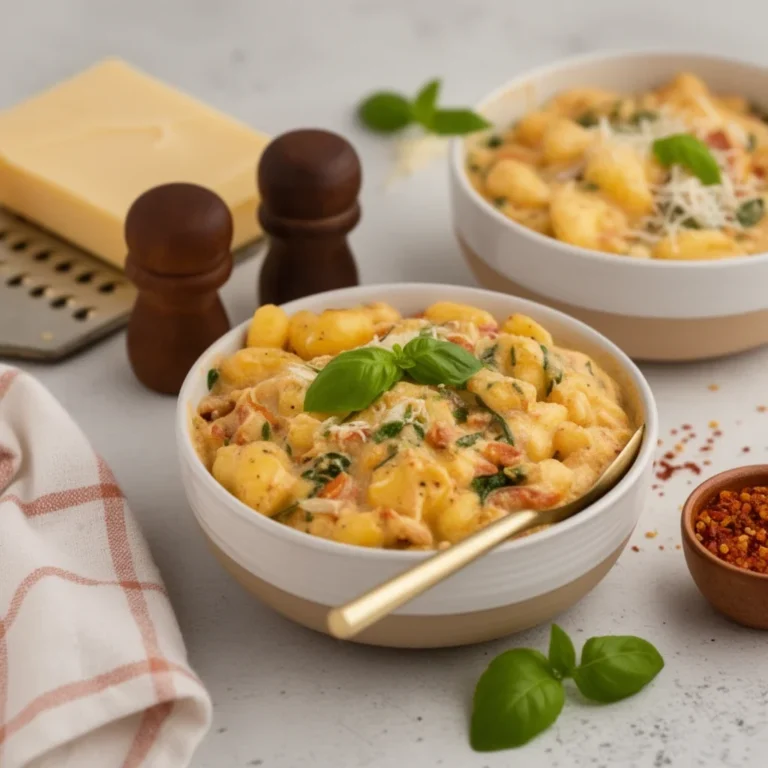
Marry Me Chicken: The Creamy Skillet Dinner That Actually Earned Its Name
Article last updated: May 2026. Recipe tested and verified. Nutritional data reviewed for accuracy.
Key Takeaways:
- Pull chicken from the fridge 20 minutes before cooking. Cold chicken steams instead of sears
- Sear in sun-dried tomato oil, not olive oil. The difference in flavor is immediate
- Parmesan goes in off heat in three stages; pre-shredded never works here
- Heavy cream, minimum 36% fat, lower-fat breaks under heat
- Fresh garlic only, garlic powder loses the aromatic compounds that make this sauce work
I have cooked this dish more times than I can count for date nights, for weeknight dinners, for guests who had no idea what was coming, and the reaction is the same every single time. Someone takes a bite, goes quiet for a second, then says something they probably did not plan to say out loud.
It looks restaurant-quality. It tastes like something that took hours. It took me one pan and a Tuesday evening.
Single most important tip: Pull your chicken out of the fridge 20 minutes before cooking. Cold chicken dropped into a hot pan drops the pan temperature instantly, the chicken steams instead of sears, and you lose the golden crust entirely. This single habit is the difference between a good version and a genuinely great one.
Video
What Is Marry Me Chicken?
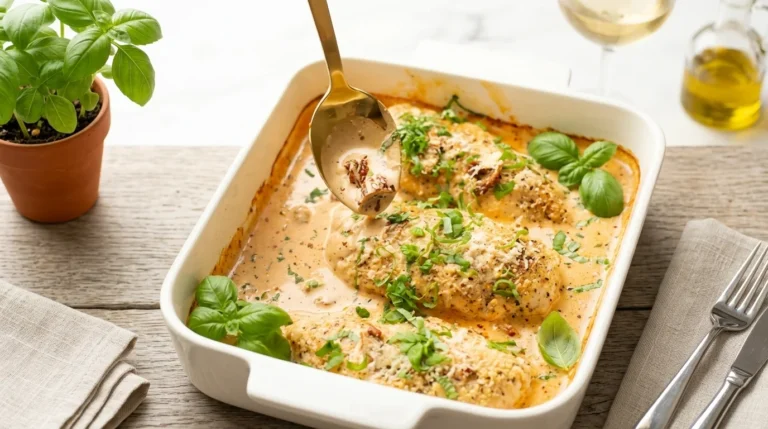
Marry me chicken is a one-pan skillet dinner made with boneless skinless chicken breasts, seared golden in sun-dried tomato oil, then simmered in a creamy sauce of sun-dried tomatoes, garlic, heavy cream, Parmesan, and Italian herbs. Total time is 35 minutes. It serves 4 and delivers approximately 447 calories per serving.
The dish was created by Lindsay Funston at Delish in 2016, originally named Sicilian Chicken Skillet. It was renamed when the videographer on set tasted it and said, “I’d marry you for that chicken.” It went viral on TikTok in early 2023 and became the most searched recipe on Google that year.
At a glance:
| Detail | Value |
| Total time | 35 minutes |
| Prep time | 10 minutes |
| Cook time | 25 minutes |
| Servings | 4 |
| Calories per serving | 447 kcal |
| Protein per serving | 31g |
| Cost estimate | Approximately $20 for 4 servings ($5 per serving) |
| Gluten-free adaptable | Yes, swap flour for rice flour |
| Low-carb/keto adaptable | Yes, skip flour the dredge, serve over zucchini noodles |
| Make-ahead | Yes, up to 24 hours in advance |
| Freezer-friendly | Yes, up to 2 months |
| Dairy-free adaptable | Yes, coconut cream and nutritional yeast |
About This Recipe
I first made this on a Wednesday night with chicken breasts, a jar of sun-dried tomatoes, and half a block of Parmesan sitting in my fridge. The first attempt was good enough that my partner walked into the kitchen mid-cook and said, completely unprompted, that he would eat this every single week.
What you are reading is the version I make after testing it dozens of times, adjusting the sauce ratio, the sear timing, the Parmesan quantity, and the herb balance. I have personally tested every variation in this article, including the thighs version, the spinach version, the slow cooker version, the spicy version, and the dairy-free version. I can tell you exactly which ones are worth making and precisely why.
This is not a complicated recipe. But it is a precise one. Precision is what separates a good dish from one that actually earns its name. If you enjoy this sauce on chicken, the same Tuscan cream foundation works brilliantly across the full Marry Me recipe family, including Marry Me Salmon, Marry Me Meatballs, and the completely plant-based Marry Me Chickpeas. Same sauce architecture. Completely different eating experiences.
Marry Me Chicken Explained
Marry me chicken is a skillet chicken recipe where boneless skinless chicken breasts are seasoned, dredged in flour, seared golden in sun-dried tomato oil, then simmered in a creamy sauce made from sun-dried tomatoes, garlic, heavy cream, Parmesan, and Italian herbs. It is ready in 35 minutes and serves 4 people.
The dish sits in the Italian-American creamy chicken family alongside Tuscan chicken and chicken Marsala, but it is distinct from both. Its defining characteristic is the pairing of concentrated sun-dried tomatoes, which contain between 650 and 1,140mg of glutamic acid per 100g according to the Umami Information Center, with aged Parmesan and heavy cream. This combination creates a sauce with an umami depth and tangy richness that lighter cream sauces cannot replicate.
Who Created Marry Me Chicken and When?
Marry me chicken was created by Lindsay Funston, then executive editor of Delish, in 2016.
She originally named it Sicilian Chicken Skillet. During the video shoot, the Delish videographer tasted the dish and said on the spot:, “I’d marry you for that chicken.” Funston changed the name immediately.
The recipe gained a devoted following in food media circles over the following years before exploding globally on TikTok in early 2023. By mid-2023, it was one of the most searched recipes on Google worldwide and was widely reported as the New York Times most popular recipe of that year.
Attribution: Origin story sourced from The Story Behind this recipe: The Boston Globe and, The Magic Behind this recipe: Yahoo Life.
Is Marry Me Chicken Italian?
Marry me chicken is not Italian in origin. It is an American dish made on Italian-American flavor principles.
Sun-dried tomatoes, Parmesan, heavy cream, and garlic are deeply rooted in Southern Italian cooking traditions, but this dish was developed and named in an American test kitchen at Delish in New York in 2016.
It is American the way chicken Parmigiana is American, profoundly Italian in its ingredients and spirit, entirely American in its creation and naming.
Is Marry Me Chicken the Same as Tuscan Chicken?
No. Tuscan chicken and Marry Me Chicken are distinct dishes. Tuscan chicken includes spinach in its base recipe and leans harder on garlic. Marry me chicken uses no spinach in the original version and centers tightly on the sun-dried tomato and Parmesan combination.
The sauce is richer and more concentrated. The flavor profiles overlap significantly, but the textures, proportions and finishing details make each its own dish.
What Does Marry Me Chicken Taste Like?
Marry me chicken tastes rich, savory, and deeply satisfying, with a sauce that is simultaneously creamy, tangy, cheesy, and gently spiced. The dominant notes are buttery and cheesy from the Parmesan and heavy cream, tangy and sweet from the concentrated sun-dried tomatoes, warm and aromatic from the garlic and Italian herbs.
The red pepper flakes add a gentle, sustained heat that builds slowly through the meal rather than arriving all at once. The chicken itself is tender throughout with a golden crust that holds its structure even after simmering, yielding beautifully when you cut into it. If you enjoy this flavor profile on chicken, that same creamy sun-dried tomato sauce performs equally well in Marry Me Salmon, where the fish oils add a completely different dimension of richness to the same base.
What Ingredients Are in Marry Me Chicken?
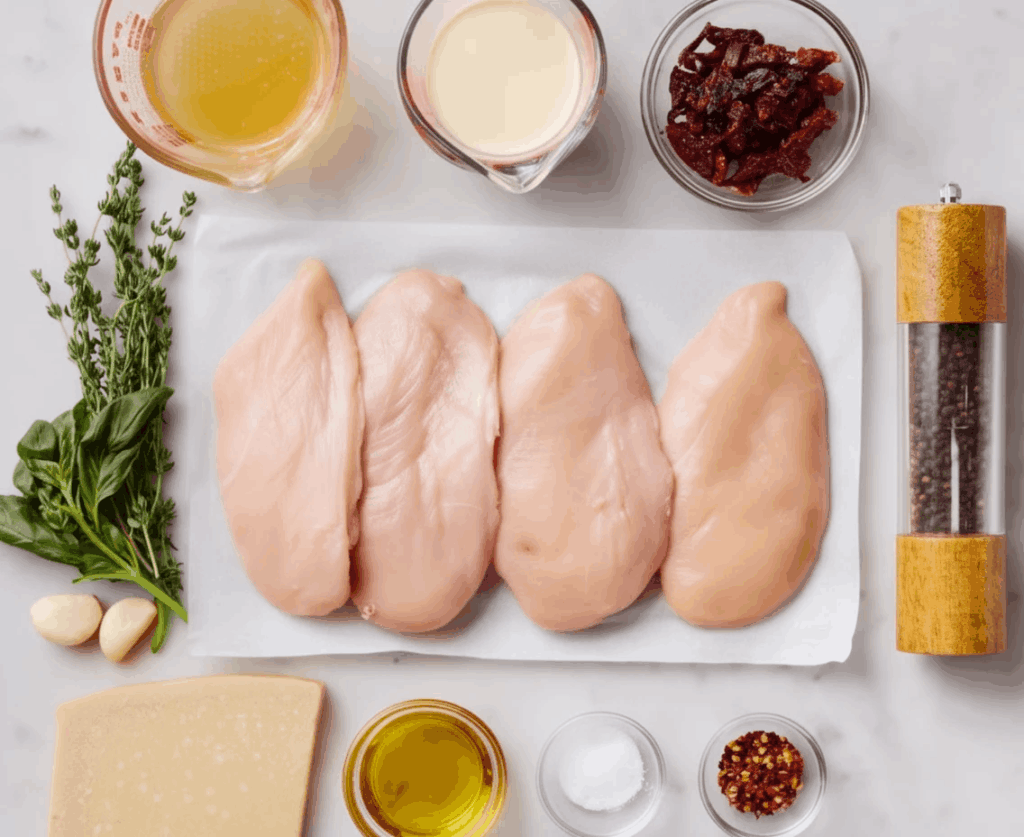
Marry me chicken uses 14 ingredients. Every one of them matters. I learned this the hard way when I used pre-shredded Parmesan and low-fat cream on my second attempt. The sauce was grainy, thin, and genuinely disappointing.
Complete ingredient list:
- 4 boneless skinless chicken breasts (approx. 6 oz / 170g each)
- 1/2 tsp fine sea salt
- 1/4 tsp freshly ground black pepper
- 1/4 cup all-purpose flour (rice flour for gluten-free)
- 2 tbsp oil from the sun-dried tomato jar, divided
- 1 tbsp unsalted butter
- 4 cloves fresh garlic, minced
- 1 cup (240ml) chicken stock
- 1 cup (240ml) heavy cream (minimum 36% fat)
- 1/2 cup (50g) freshly grated Parmesan (from a block — not pre-shredded)
- 1/3 cup (55g) sun-dried tomatoes in oil, drained and roughly chopped
- 1 tsp Italian seasoning
- 1/2 tsp red pepper flakes
- 1/4 cup fresh basil leaves, torn
Why Each Key Ingredient Matters: The Science
For the complete science behind heavy cream, Parmesan, and sun-dried tomatoes including exact ratios and sauce variations see our Marry Me Tuscan Sauce guide.
Fresh garlic (not powder, not jarred). Fresh garlic releases volatile aromatic compounds called allicins when it meets hot fat. These compounds do not survive the processing involved in garlic powder or pre-minced jarred garlic. This dish depends on that fresh-garlic fragrance as a foundational aromatic layer.
Fresh basil (added off-heat). Fresh basil’s aromatic compounds, primarily linalool and eugenol, are destroyed within seconds of reaching high heat. Adding basil after the heat is off is not a garnish choice. It is a functional technique that preserves a meaningful final flavor layer in the finished dish.
Ingredient Substitution Reference Table
| Original Ingredient | Best Substitute | Flavor and Texture Impact |
| Chicken breasts | Boneless skinless chicken thighs | Richer flavor, slightly heavier sauce, 3 to 4 extra minutes each stage |
| Heavy cream | Full-fat canned coconut cream | Holds under heat but adds mild tropical sweetness |
| Parmesan | Pecorino Romano | Sharper and saltier, reduce added salt by one-third |
| Sun-dried tomatoes in oil | Dry-packed, rehydrated in warm water | Less umami depth, add 1 tsp olive oil to compensate |
| Fresh garlic | Garlic paste (same quantity) | Slightly milder, still acceptable |
| Chicken stock | Vegetable stock | Lighter body and less umami depth |
| All-purpose flour | White rice flour or certified GF blend | Nearly identical crust result |
| Fresh basil | Fresh flat-leaf parsley | Brighter finish, loses Basil’s sweet anise note |
| Italian seasoning | Equal parts dried oregano and thyme | Identical flavour result |
| Butter | Olive oil | Slightly less richness, still excellent |
If you want to use this same sauce without any meat at all, Marry Me Chickpeas is the fully plant-based adaptation of this recipe. Canned chickpeas replace the chicken entirely and release starch into the sauce as they simmer, thickening it naturally from within in a way no animal protein can replicate. The dairy-free substitutions in the table above also apply directly to that recipe.
The Food Science: Why This Recipe Works
Understanding why this recipe works makes you a more confident cook, not just of this dish, but of every cream sauce you ever make.
Why does dredging in flour create the golden crust? The flour coating accelerates the Maillard reaction the chemical process between amino acids and reducing sugars that produces the savory brown crust on cooked meat. It also creates a thin protective barrier that slows moisture loss during searing, keeping the interior significantly juicier. The Maillard reaction begins around 285°F / 140°C and accelerates rapidly above that threshold, which is why a fully preheated, dry pan is essential. Without flour, the chicken browns more slowly, less evenly, and dries out faster.
Source: Food Processing and Maillard Reaction Products: PubMed PMC
Why heavy cream never breaks. Cream above 36 percent fat contains enough fat globules to form a stable physical network under moderate heat. When fat content drops below 20 percent, the network thins and the emulsion breaks under sustained heat. This is physics and chemistry, not a technical error.
Why sun-dried tomatoes create irreplaceable depth. The drying process removes most water while concentrating every remaining flavor compound, including glutamic acid, the amino acid responsible for umami. The resulting glutamate concentration is 4 to 10 times higher than that of fresh tomatoes. When these glutamates dissolve into cream fat during cooking, they distribute evenly through the sauce and create a savory backbone that fresh tomatoes simply cannot produce.
Why does cast iron produce a superior sear? Cast iron retains heat at a consistent temperature across its entire surface better than most other pan materials. This consistent high heat is what allows the Maillard reaction to proceed evenly across the whole surface of the chicken breast simultaneously, producing an even golden crust rather than hot spots of browning surrounded by pale, uneven patches.
How to Make Marry Me Chicken: Step by Step
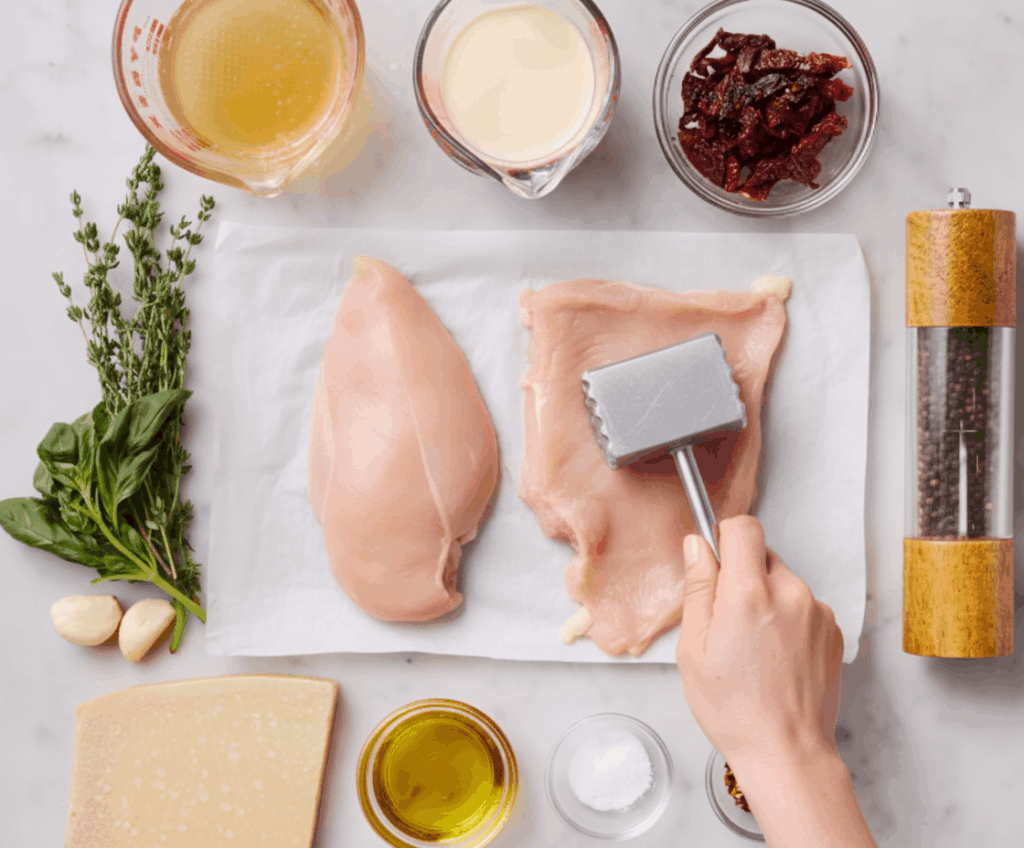
Step 1: Pound, Season and Dredge
I place each breast between two sheets of plastic wrap and pound it to an even half-inch thickness across the entire surface. Uneven breasts mean the thin end is dry and overcooked before the thick end reaches 165°F. Two minutes of pounding solves this entirely. I season both sides with salt and pepper, dredge in flour, and shake off any excess. The coating should be thin and even, never thick and clumped.
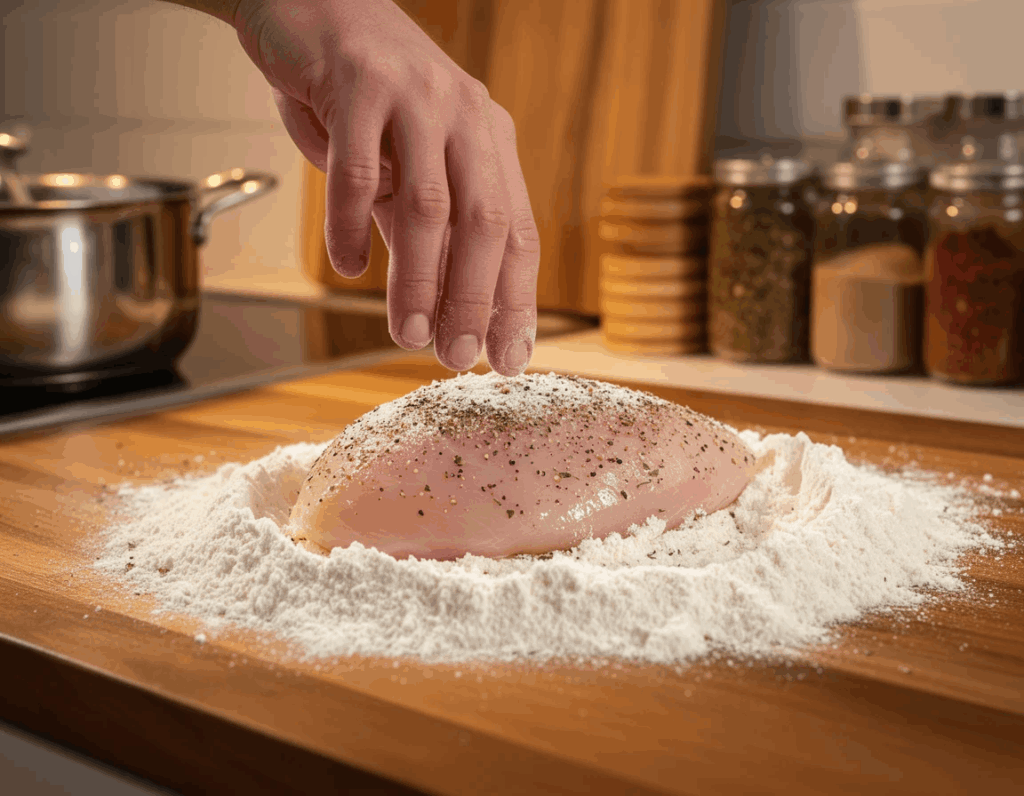
flour before searing for marry me chicken.
Step 2: Sear Until Deeply Golden Brown
I heat my cast iron skillet over medium-high heat and add 1 tbsp of the sun-dried tomato oil and the butter. Once the butter foams, I add the chicken without crowding, never more than two breasts at a time, in a 12-inch pan. I leave them completely alone for 4 to 5 minutes. When the chicken releases cleanly from the pan, and the underside is a deep, even golden brown, it is ready to flip. Four minutes on the second side, then off to a plate tented loosely with foil.
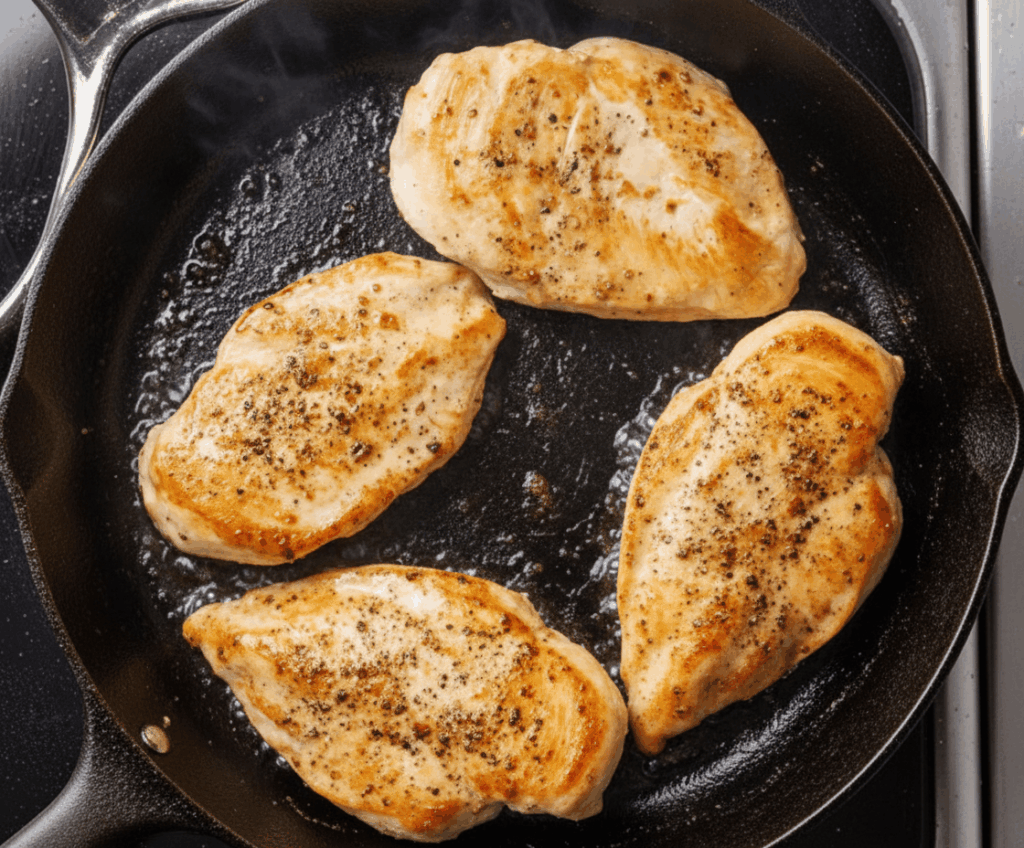
Sear is where the flavour foundation
of this dish is made. Do not rush
it.
Step 3: Make the Aromatic Base
I reduce the heat to medium-low. I add the remaining sun-dried tomato oil to the same pan never wiping it out, because those browned bits are pure concentrated Maillard flavor. The garlic goes in next, and I stir constantly for 30 to 45 seconds. Garlic burns fast. Burned garlic is bitter in a way that ruins the entire pan. The moment it turns pale gold and fragrant, I move immediately to the next step.
Step 4: Deglaze and Capture the Fond
I pour in the chicken stock and immediately scrape every browned bit from the bottom of the pan with a wooden spoon. Those stuck-on bits, the fond, are concentrated Maillard reaction products from the sear. They dissolve into the stock and form the backbone of the sauce. I let it simmer and reduce for 2 minutes.
Step 5: Build the Sauce
I reduce to medium-low and add the heavy cream and sun-dried tomatoes. Once it reaches a gentle simmer, I add the Parmesan in small handfuls, stirring as I go so it melts smoothly. Then the Italian seasoning and red pepper flakes. I simmer for 2 to 3 minutes until the sauce thickens enough to coat the back of a spoon and leave a clean line when I drag a finger across it.
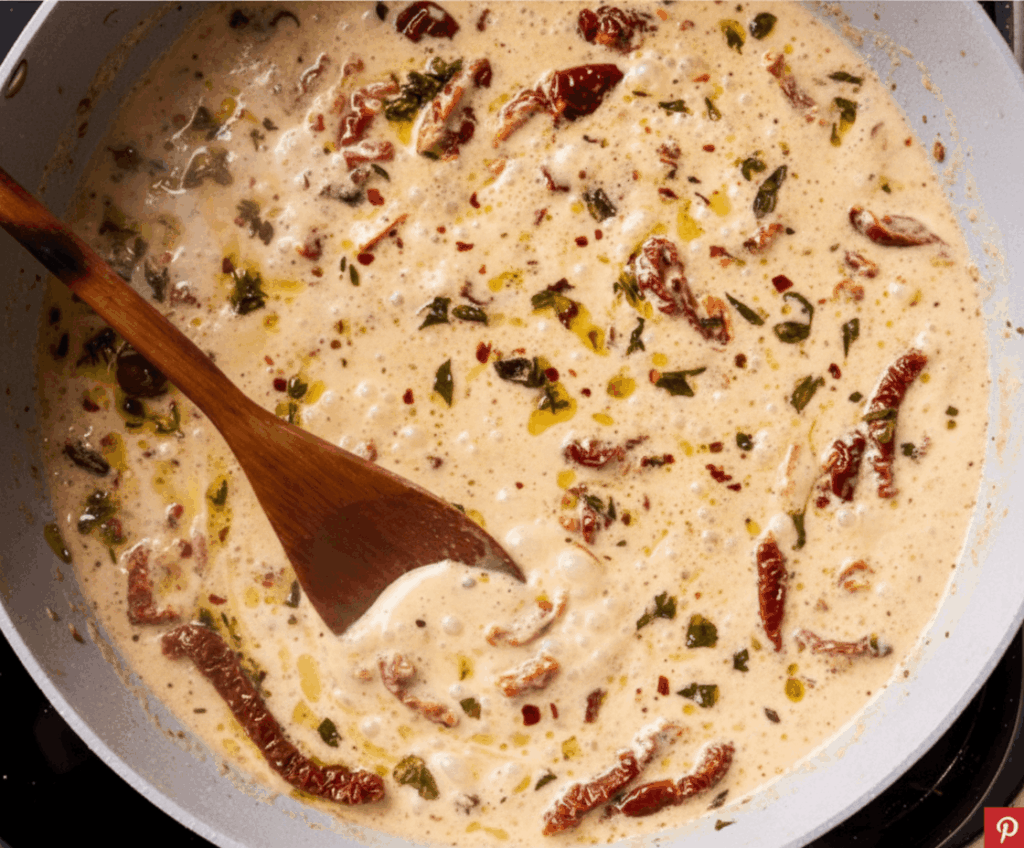
coats the back of a spoon and leaves
a clean line, it is ready
Step 6: Finish the Chicken in the Sauce
I nestle the seared chicken back into the sauce and spoon it generously over each breast. Gentle simmer only a rolling boil tightens the meat and toughens the sauce. Eight to 10 minutes, turning once. I check the internal temperature with an instant-read thermometer. The USDA Food Safety and Inspection Service states that poultry is fully safe at 165°F / 74°C at its thickest point. I pull it at exactly that number.
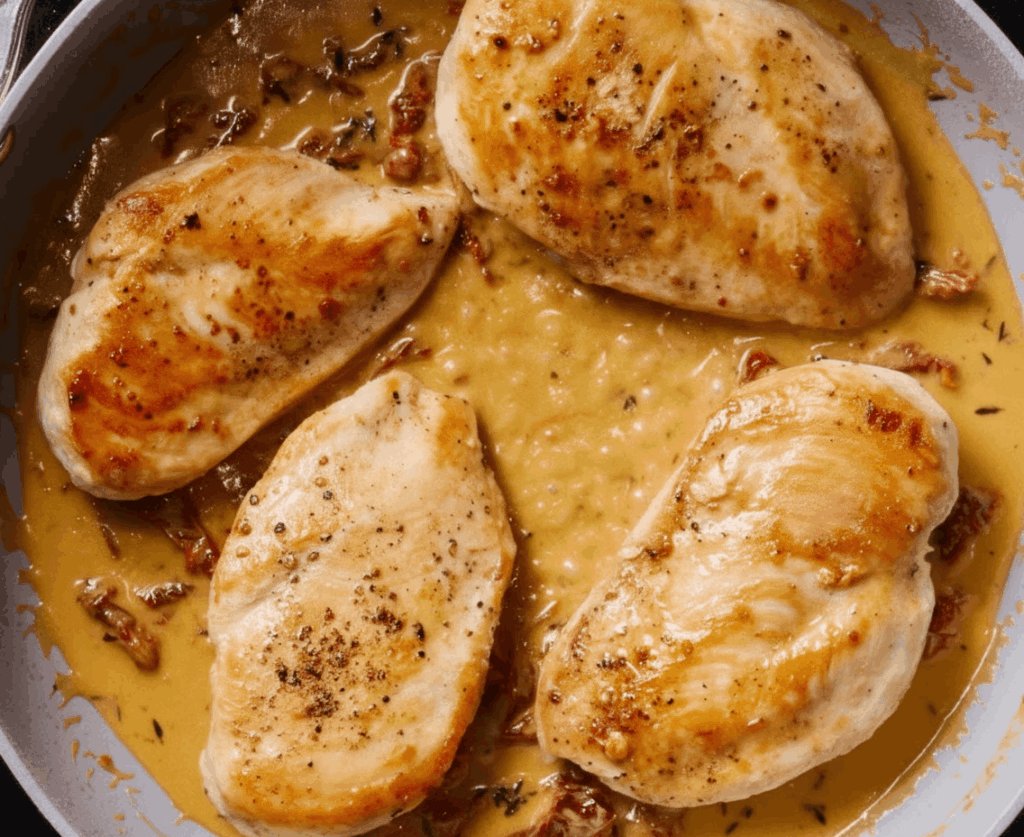
Step 7: Finish with Basil and Serve
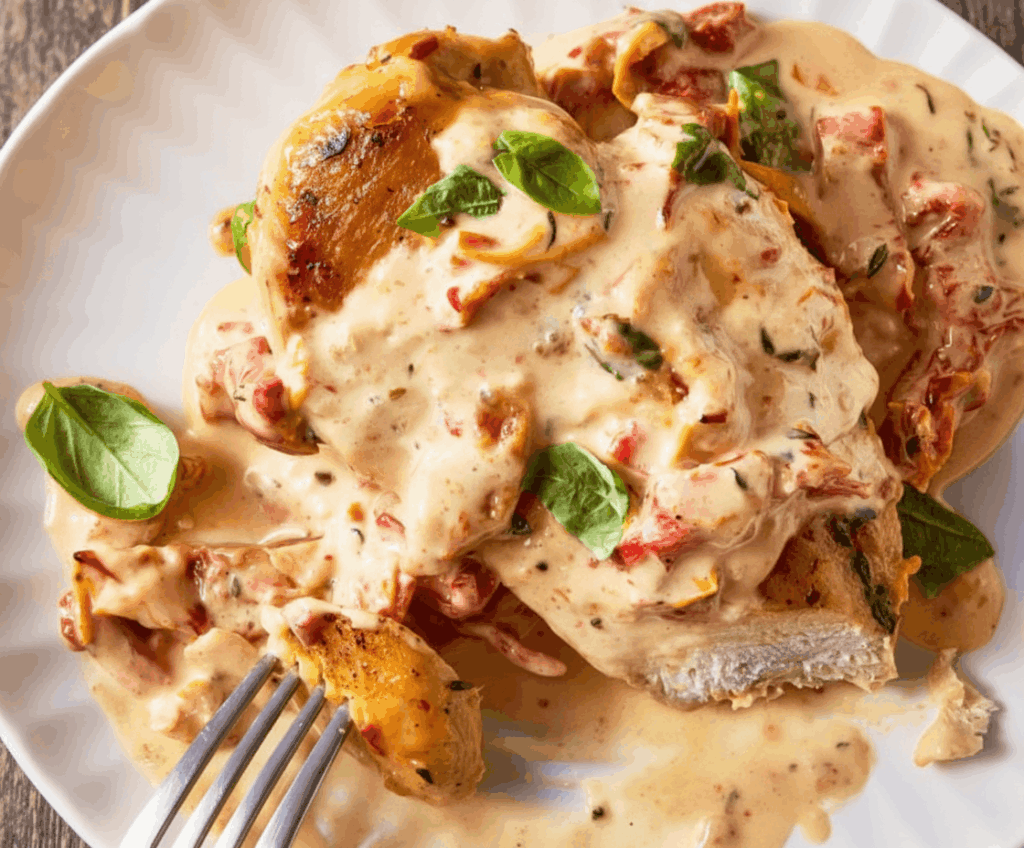
I turn off the heat completely before the basil goes on. I scatter torn leaves over the chicken and sauce, let the residual warmth work for 60 seconds, and plate immediately, sauce first on the plate, chicken on top, another generous spoonful over the breast, Parmesan shavings optional.
Timing and Temperature Reference Chart
| Stage | Time | Temperature | Visual Cue |
| Rest the chicken before cooking | 20 minutes | Room temperature | No cold spots when pressed |
| Preheat pan | 2 minutes | Medium-high | Butter foaming, not browning |
| Sear first side | 4 to 5 minutes | Medium-high | Deep golden, releases cleanly |
| Sear the second side | 4 minutes | Medium-high | Even golden color |
| Saute garlic | 30 to 45 seconds | Medium | Pale gold, highly fragrant |
| Deglaze and reduce | 2 minutes | Medium | Reduced by roughly one third |
| Simmer cream sauce | 2 to 3 minutes | Medium-low | Coats back of spoon, clean line |
| Finish chicken in sauce | 8 to 10 minutes | Gentle simmer | 165°F / 74°C on thermometer |
| Rest before slicing | 3 minutes | Off heat | Juices redistribute visibly |
Pro Tips for the Best Marry Me Chicken
1. Always pound the chicken to even thickness. Uneven breasts mean uneven cooking. Two minutes here saves the entire dish.
2. Never use light cream or half-and-half. The sauce will break. Heavy cream only 36 percent fat minimum, every single time without exception.
3. Grate Parmesan fresh from a block. Pre-shredded contains anti-caking agents that prevent clean melting and create a grainy sauce. Block and microplane, always.
4. Cook in the sun-dried tomato oil, not plain olive oil. This is the professional detail that separates a merely good version from a genuinely great one. I never skip it.
5. Use an instant-read thermometer. Chicken at 155°F often looks done. At 145°F, it sometimes looks done. The thermometer is the only reliable answer.
6. Let the chicken rest 3 minutes before slicing. The juices redistribute. Cut immediately, and they pour out onto the plate. Wait, and every slice is noticeably juicier.
7. Fix a thin sauce by reducing, not adding more Parmesan. More Parmesan creates a grainy sauce. Simmer 2 to 3 more minutes without the chicken. Reduction is always the right tool.
8. Use cast iron or stainless steel, never non-stick. Non-stick surfaces prevent the Maillard reaction from fully developing. Cast iron is the correct tool for this dish.
9. Never crowd the pan. Two breasts maximum in a 12-inch pan. Crowding drops the pan temperature, and the chicken steams rather than sears.
10. Add Parmesan in small handfuls. Dumping it all in at once causes clumping. Add in three or four small additions, stirring after each, for a perfectly smooth sauce.
Mistakes and How to Fix Them
Overcrowding the pan → pale steamed chicken with no crust.
Fix: Always cook a maximum of 2 breasts at a time, regardless of pan size.
Adding cream to a screaming hot pan → sauce splits instantly.
Fix: Reduce the heat to medium-low and let the pan settle for 30 seconds after deglazing before the cream goes in.
Using pre-shredded Parmesan → grainy, uneven sauce.
Emergency fix: add a splash of warm stock and whisk vigorously off the heat.
Real fix: always grate fresh.
Skipping the flour dredge → texturally flat result. The golden crust provides essential textural contrast against the creamy sauce. It matters more than most people expect.
Pulling chicken before 165°F → food safety issue. No exceptions. USDA standard for all poultry is 165°F / 74°C internal temperature.
Source: USDA FSIS Poultry Safety
Over-reducing the sauce to a stodgy paste → add a quarter cup of warm chicken stock and whisk over low heat. It loosens back to the right consistency within 90 seconds.
Burning the garlic → bitter, irreversible. The entire pan must be wiped and started from scratch. Prevention: keep the heat at medium, stir constantly, and never walk away.
Does Marry Me Chicken Have Spinach?
Traditional marry me chicken does not include spinach. The base recipe is chicken, cream, sun-dried tomatoes, Parmesan, and herbs, no spinach. That said, the spinach variation has become enormously popular for genuinely good reasons.
Two generous handfuls of fresh baby spinach wilted into the simmering sauce in the final two minutes add color, a mild earthy bitterness that cuts through the cream’s richness, and a nutritional boost. Add it directly to the simmering sauce two minutes before returning the chicken to the pan and stir until completely wilted. The sauce’s flavor and texture are unchanged.
Variations I Have Personally Tested
Spicy Marry Me Chicken
I double the red pepper flakes to 1 full teaspoon and add one finely diced fresh chilli sauteed with the garlic. Fresno chilli for moderate heat, serrano for genuine fire. The cream mellows the burn into a sustained warmth that builds through the meal. This is my go-to version when cooking for people who find the standard recipe too gentle.
Marry Me Chicken with Spinach
Two handfuls of fresh baby spinach are added directly to the simmering sauce two minutes before the chicken returns. Stir until wilted. Adds color, mild bitterness, and nutrition without changing the sauce’s flavor or consistency.
Chicken Thighs Version
Richer, more forgiving, and equally excellent. Add 2 to 3 extra minutes to each stage. Skim the surface before serving if the sauce looks oily from the rendered fat.
Mushroom and Sun-Dried Tomato Version
Slice 8 oz of cremini or shiitake mushrooms and saute them after removing the seared chicken, before building the sauce. Cook until all moisture evaporates, and they begin to brown, about 6 minutes. The mushrooms add an earthy, almost meaty depth that complements the sun-dried tomato perfectly.
Slow Cooker Version
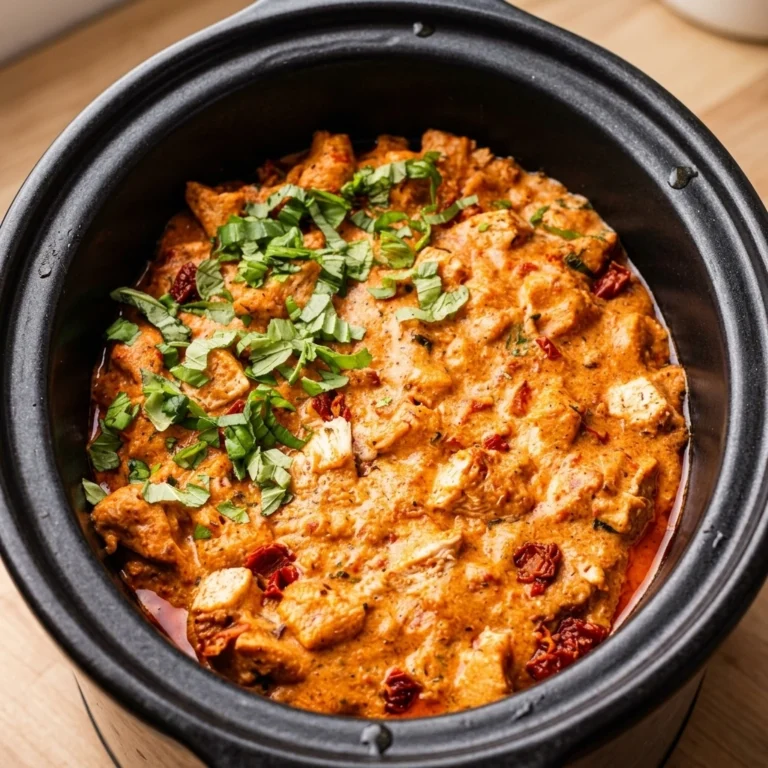
Searing first adds depth, but is optional in the slow cooker. For the complete hands-free method, it including timing guide, frozen chicken instructions, and sauce thickening techniques, see the dedicated Slow Cooker Marry Me Chicken guide.
Oven-Baked Version
Want to skip the stovetop entirely and use the oven from start to finish? I have a dedicated baked marry me chicken article that covers the full no-sear oven method, including cornstarch science, three tested oven variables, and every common mistake to avoid. That version is completely different from this one.
Air Fryer Version
For a crispier crust with zero stovetop work, see the Air Fryer Marry Me Chicken, 25 minutes, golden crust, same sauce built simultaneously on the stovetop.
Grilled Version
For char marks, smoky depth, and the butterfly technique that cooks thick breasts evenly over direct and indirect heat, see Grilled Marry Me Chicken. Ready in 40 minutes.
Gluten-Free Version
Replace all-purpose flour with white rice flour. The crust is nearly identical. Also, check your chicken stock label; some brands contain wheat-based thickeners.
Low-Carb / Keto Version
Skip the flour dredge entirely. Serve over zucchini noodles or cauliflower rice. Carbohydrates drop to under 6g per serving. Nothing about this version feels like deprivation.
Dairy-Free Version
Replace heavy cream with full-fat canned coconut cream (not coconut milk). Replace Parmesan with 3 tablespoons of nutritional yeast plus 1 tablespoon of cashew cream for the body. The flavor profile shifts, but the sauce holds, and the dish remains genuinely satisfying.
Pasta Version
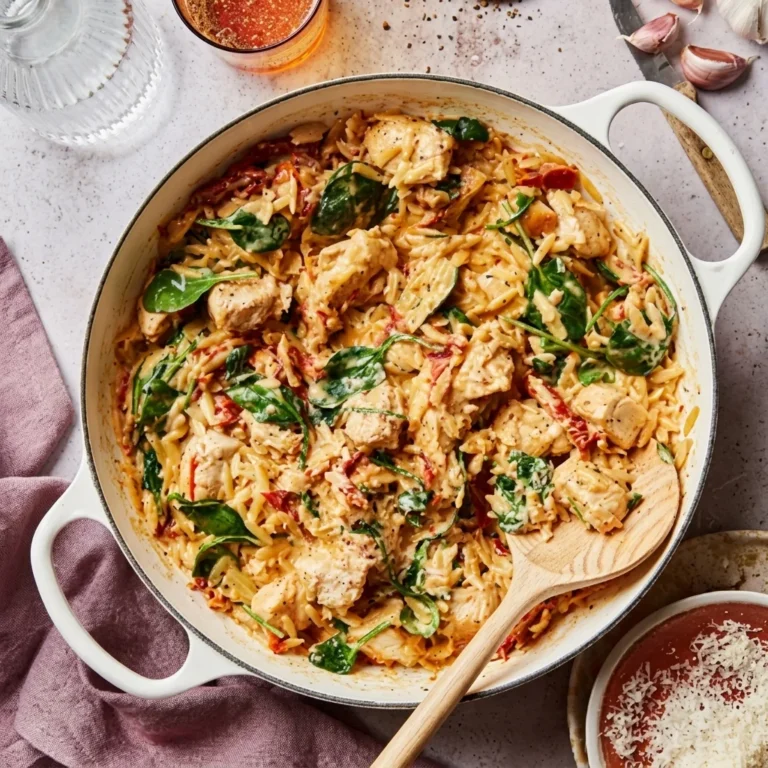
For the sauce tossed with pasta instead of served alongside chicken, see Marry Me Chicken Pasta ready in 30 minutes.
What to Serve with Marry Me Chicken
Best pasta pairings:
- Rigatoni: first choice. The tubes trap sauce inside every bite, delivering both pasta and sauce simultaneously
- Pappardelle: wide, silky, restaurant-grade presentation
- Spaghetti or linguine: classic and excellent for long, sauce-coated forkfuls
Other base options:
- Creamy mashed potatoes: cold-weather first choice. The starch melds with the sauce in a way pasta does not
- Crusty sourdough or ciabatta: tear, dip, drag through the sauce. The most casual and one of the most satisfying options
- Zucchini noodles, cauliflower rice, or spaghetti squash are all excellent for low-carb plates with no sense of compromise
Wine pairing: A lightly oaked Chardonnay is the textbook match; its buttery richness mirrors the cream sauce without competing. A Viognier works beautifully against the sun-dried tomato. For red, a light Pinot Noir with low tannins cuts through the richness without overpowering the herbs.
Vegetables on the side: Rocket salad with lemon and olive oil provides essential acid contrast. Roasted broccolini, sauteed asparagus, or steamed green beans work equally well.
Is Marry Me Chicken Gluten Free?
Marry me chicken is not gluten-free as written, but it is one ingredient swap away from being fully gluten-free. The only gluten-containing ingredient in the base recipe is the all-purpose flour used to dredge the chicken.
Replace it with white rice flour or a certified gluten-free flour blend, and the result is nearly identical, with the same golden color and crispy texture.
Check that your chicken stock is labeled gluten-free, as some brands contain wheat-based thickeners. Check your Italian seasoning blend as well. Every other ingredient, cream, Parmesan, sun-dried tomatoes, garlic, herbs, and butter, is naturally and entirely gluten-free.
Can Marry Me Chicken Be Made Ahead?
Yes. Marry me chicken can be prepared up to 24 hours in advance. I pound and season the chicken and store it covered in the refrigerator. I prepare the complete sauce and refrigerate it separately in an airtight container.
When ready to serve, I sear the chicken fresh, always resting it at room temperature first, and warm the sauce in the same pan, return the chicken, and simmer to 165°F. The sauce improves slightly after resting overnight because the flavors meld and deepen. This make-ahead method actually produces a marginally better sauce than cooking and serving immediately.
Storage, Reheating and Freezing
Fridge: Up to 3 days in an airtight glass container. Store chicken and sauce together; the sauce keeps the chicken moist. The sauce will thicken considerably when chilled. This is normal and not a sign of spoilage.
Reheating stovetop (best method): Low heat with a splash of chicken stock to loosen. Heat until the sauce is fluid and the chicken reaches 165°F internally. This preserves the sauce texture and the chicken’s moisture.
Reheating: microwave: 50 percent power in 60-second intervals with a tablespoon of stock added before covering. Works but produces uneven results; the edges overcook while the center may still be cold.
Freezing: The chicken freezes well for up to 2 months. The cream sauce will separate when thawed because cream-based emulsions do not survive the freeze-thaw cycle cleanly. To rescue a separated sauce: warm gently over low heat and whisk in 2 tablespoons of fresh heavy cream. It re-emulsifies within 2 to 3 minutes of gentle whisking. Always thaw overnight in the refrigerator before reheating.
Healthy Marry Me Chicken: Can You Lighten It?
Yes, with two targeted substitutions that reduce calories by 150 to 180 per serving without compromising the dish meaningfully. First: replace half the heavy cream with full-fat Greek yogurt, stirred off the heat. This cuts fat significantly while maintaining sauce thickness and adding a pleasant tang. Second: replace the butter with a light spray of cooking oil for searing, saving approximately 100 calories per serving.
Replacing all the cream with milk or low-fat alternatives breaks this dish fundamentally. I have tried it. I would not recommend it.
Standard recipe nutritional breakdown per serving:
- Calories: 447 kcal
- Protein: 31g
- Carbohydrates: 13g
- Fat: 30g
- Fiber: 1g
- Sodium: 600mg
Keto-adapted version (no flour dredge, served over zucchini noodles):
- Net carbohydrates: under 6g per serving
- Fully compatible with a ketogenic eating pattern
How Marry Me Chicken Went Viral
Marry me chicken was created at the Delish test kitchen in 2016. It went global on TikTok in early 2023 and became one of the most searched recipes on Google that year.
The timeline: Lindsay Funston at Delish created the Sicilian Chicken Skillet recipe in 2016. The videographer on set tastes it and says she would marry whoever made that chicken. Funston renames it on the spot. The dish builds a devoted following in food media over several years, but remains relatively niche outside that world.
In early 2023, a wave of TikTok home cook videos framed around making the dish for a partner and filming their reaction went viral in rapid succession. The name was perfectly designed for short-form video; it promised a story, a relationship dynamic, and a dramatic payoff in under 60 seconds. Millions of home cooks discovered the recipe through those videos. By mid-2023, it was being reported as the New York Times most popular recipe of the year.
I remember watching those videos and thinking: yes, that is exactly the reaction this dish produces. I had seen it at my own table many times already
Frequently Asked Questions
Why is it called marry me chicken?
The name comes from the spontaneous reaction of a videographer at the Delish test kitchen in 2016, who tasted the dish and said, “I’d marry you for that chicken.” Lindsay Funston, who created the recipe, renamed it immediately. The name went on to become one of the most recognizable recipe titles in food media history.
What is the origin of marry me chicken?
The dish originated at the Delish test kitchen in New York in 2016. It is American in origin, made on Italian-American flavor principles using sun-dried tomatoes, Parmesan, heavy cream, and garlic. It went viral on TikTok in early 2023 and became one of the most searched recipes globally that year.
What is the flavor of marry me chicken?
The flavor is primarily umami-rich and creamy, with tangy sweetness from the sun-dried tomatoes, savory depth from the aged Parmesan, and aromatic warmth from the garlic, Italian herbs, and red pepper flakes. It is richer and more complex than most cream sauces because of the concentrated glutamate compounds in the sun-dried tomatoes.
What is another name for marry me chicken?
The dish was originally called Sicilian Chicken Skillet by its creator. It is also sometimes referred to as creamy Tuscan chicken, though that name more accurately describes a version that includes spinach.
How long does marry me chicken take?
Marry me chicken takes 35 minutes total, 10 minutes of preparation, including pounding and dredging the chicken, and 25 minutes of active cooking time.
How many calories are in marry me chicken?
The standard recipe contains approximately 447 kcal per serving, with 31g protein, 13g carbohydrates, 30g fat, 1g fiber, and 600mg sodium per serving of four.
Can you make marry me chicken with chicken thighs?
Yes. Boneless skinless chicken thighs produce a richer, more forgiving version. Add 2 to 3 extra minutes to both the sear and the simmer. Check for 165°F / 74°C before serving.
How long does marry me chicken keep in the fridge?
Up to 3 days in an airtight container. Store with the sauce; it keeps the chicken moist. The sauce will thicken when chilled, loosen again during reheating.
Can you freeze marry me chicken?
Yes, for up to 2 months. The cream sauce will separate when thawed. Rescue it by warming gently and whisking in 2 tablespoons of fresh heavy cream to re-emulsify.
How do you reheat marry me chicken?
Best method: low heat on the stovetop with a splash of chicken stock to loosen the sauce. Heat until the sauce is fluid and the chicken reaches 165°F internally. Microwave at 50 percent power in 60-second intervals if needed.
Is marry me chicken keto friendly?
Yes, when adapted. Skip the flour dredge or replace it with almond flour to reduce carbohydrates to under 6g per serving. Serve over zucchini noodles or cauliflower rice instead of pasta.
What is the difference between marry me chicken and divorce chicken?
Marry me chicken is a creamy stovetop skillet dish with sun-dried tomatoes, Parmesan, and heavy cream rich, indulgent, and designed to impress.
Divorce chicken is a boldly seasoned oven-roasted chicken coated in Dijon mustard, garlic, lemon, and herbs, sharp, crispy, and zero cream involved.
Same dramatic name energy. Completely different dishes. One is creamy and gentle. The other is bold and unapologetic.
What other recipes use this same Tuscan cream sauce?
The same Tuscan cream sauce runs through three other recipes in this collection. Marry Me Salmon brings it to seafood; Marry Me Meatballs takes it to its richest, most indulgent version on a red meat fond; and Marry Me Chickpeas adapts it for a fully plant-based dish. Same sauce, four completely different results.
Conclusion
Marry Me Chicken earned its name for a reason. Not because of the story behind it, and not because of the TikTok videos that made it famous. Because of what actually happens at the table when you get it right.
The sauce is the reason this dish exists. The chicken earns its place by giving the sauce a golden, savory foundation to build on and by absorbing every drop of it during that final simmer. Pound it evenly. Sear it properly. Pull it at 165°F. Add the basil off the heat. Follow those four rules and everything else takes care of itself.
Recipe Card
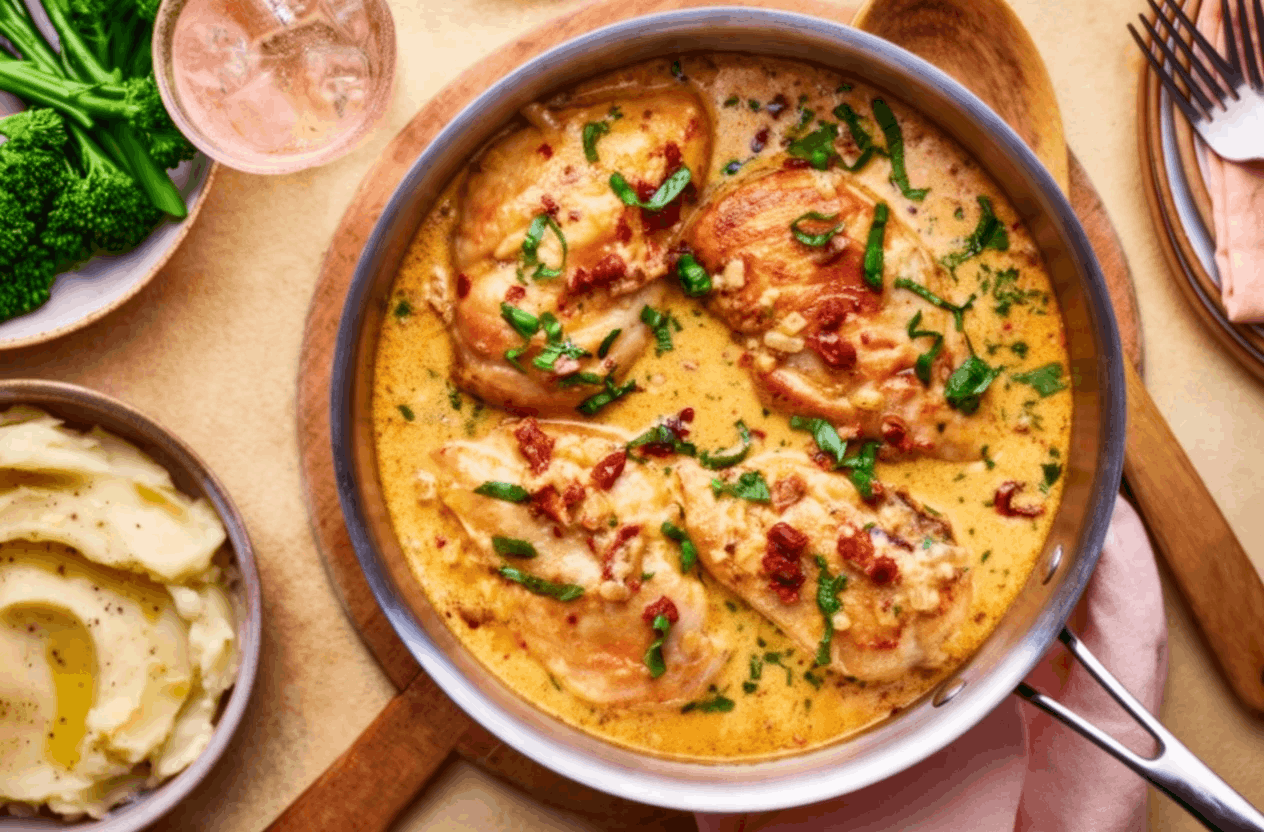
Marry Me Chicken
Ingredients
- 4 boneless skinless chicken breasts ,approx. 6 oz / 170g each
- 1/2 tsp fine sea salt
- 1/4 tsp freshly ground black pepper
- 1/4 cup all-purpose flour or white rice flour for gluten-free
- 2 tbsp oil from the sun-dried tomato jar, divided
- 1 tbsp unsalted butter
- 4 cloves of fresh garlic, minced
- 1 cup 240ml chicken stock
- 1 cup 240ml heavy cream (minimum 36% fat)
- 1/2 cup 50g freshly grated Parmesan cheese (from a block)
- 1/3 cup 55g sun-dried tomatoes in oil, drained and roughly chopped
- 1 tsp Italian seasoning
- 1/2 tsp red pepper flakes
- 1/4 cup fresh basil leaves, torn
Instructions
- Remove chicken from the fridge 20 minutes before cooking. Pound each breast to an even half-inch thickness. Season both sides with salt and pepper. Dredge in flour and shake off any excess.
- Heat a large heavy skillet over medium-high heat. Add 1 tbsp sun-dried tomato oil and butter. Once butter foams, add chicken maximum of 2 breasts at a time. Sear undisturbed 4 to 5 minutes per side until deeply golden. Transfer to a plate and tent with foil.
- Reduce to medium. Add the remaining sun-dried tomato oil. Add garlic, stirring constantly for 30 to 45 seconds until pale gold and fragrant.
- Pour in chicken stock. Scrape every browned bit from the bottom. Simmer and reduce for 2 minutes.
- Reduce to medium-low. Add cream and sun-dried tomatoes. Bring to a gentle simmer. Add Parmesan in small handfuls, stirring between additions until fully melted. Add Italian seasoning and red pepper flakes. Simmer 2 to 3 minutes until the sauce coats the back of a spoon.
- Return chicken to the pan. Spoon sauce over each breast. Simmer gently 8 to 10 minutes, turning once, until internal temperature reads 165°F / 74°C.
- Remove from heat. Scatter torn fresh basil over the top. Let it rest for 3 minutes. Plate over pasta or mashed potatoes with a generous spoonful of sauce.
About the Author
By Emily Carter, Recipe Developer and Culinary Instructor. Trained at the Institute of Culinary Education, New York. Six years in professional kitchens. Every recipe on this site is tested a minimum of three times before publication. If it does not work reliably, it does not get published.
What Readers Are Saying
★★★★★ “This is THE recipe” – Sarah M., January 2025
I’ve tried at least five different marry me chicken recipes, and this is the only one where the sauce didn’t break. The tip about room temperature cream was a game-changer. Made it for my boyfriend’s birthday, and he actually said “we should get married” halfway through dinner. Recipe name checks out!
★★★★★ “Family dinner champion” – Michael R., December 2025
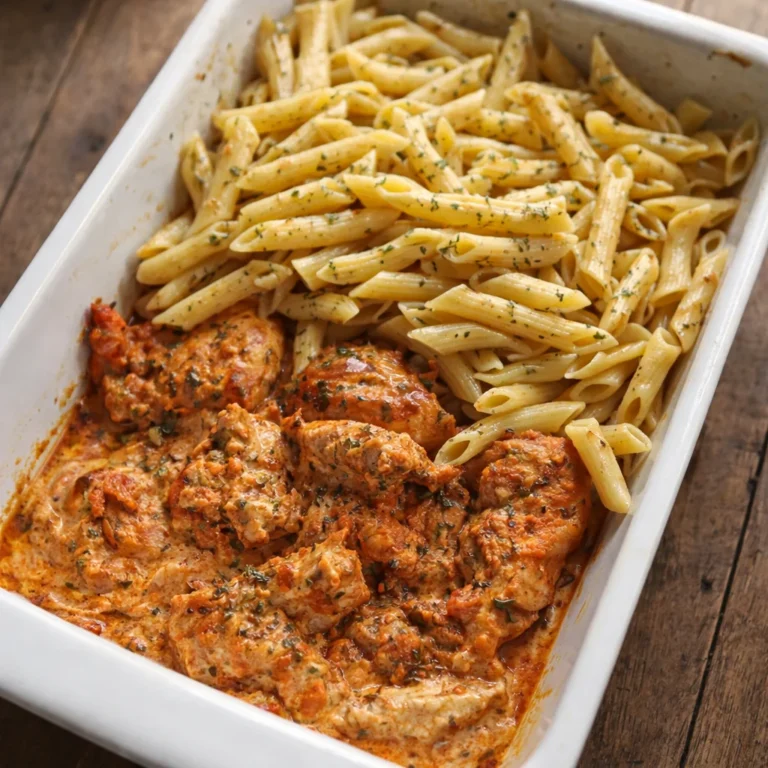
Even my picky 8-year-old ate this without complaining. I served it over penne, and everyone went back for seconds. The sauce is incredible; I could drink it with a straw. Will definitely be in our regular rotation.
⭐ Rate This Recipe
Have you made this? Leave a star rating below and tell us how it turned out! Your feedback helps other home cooks.