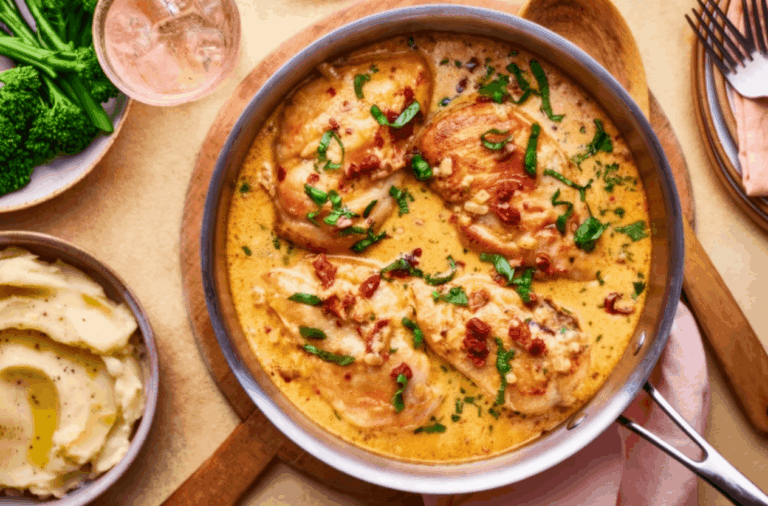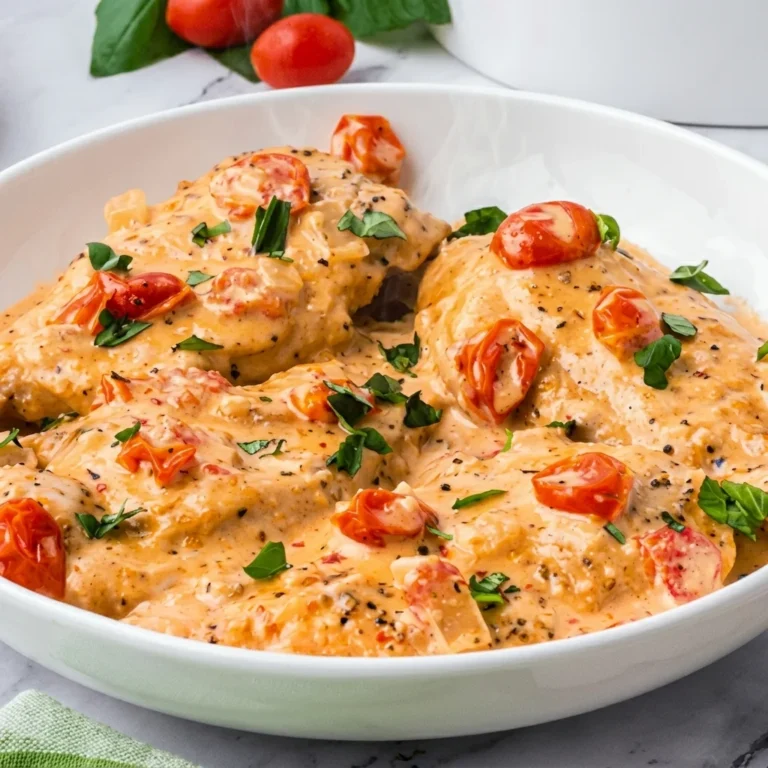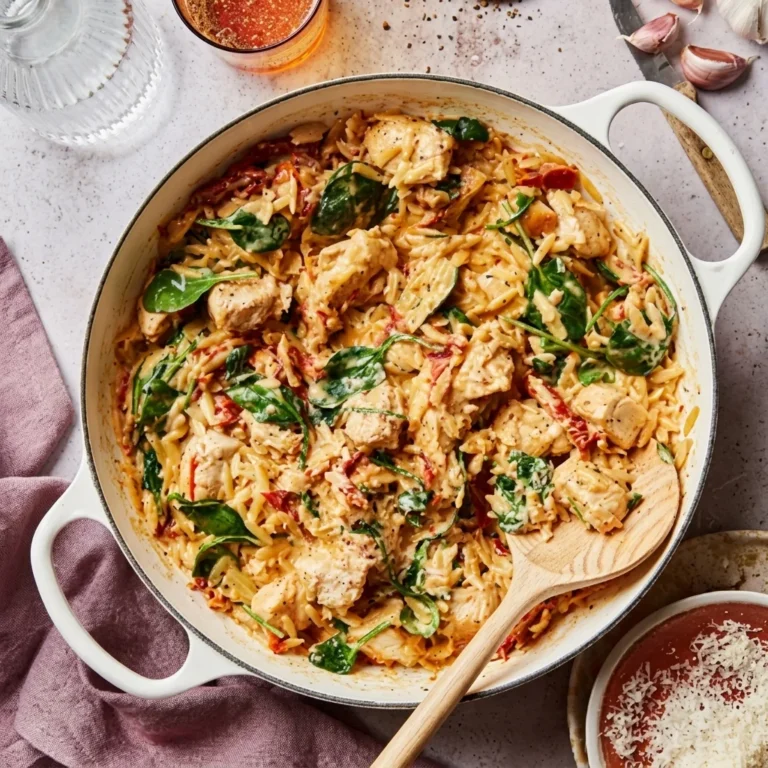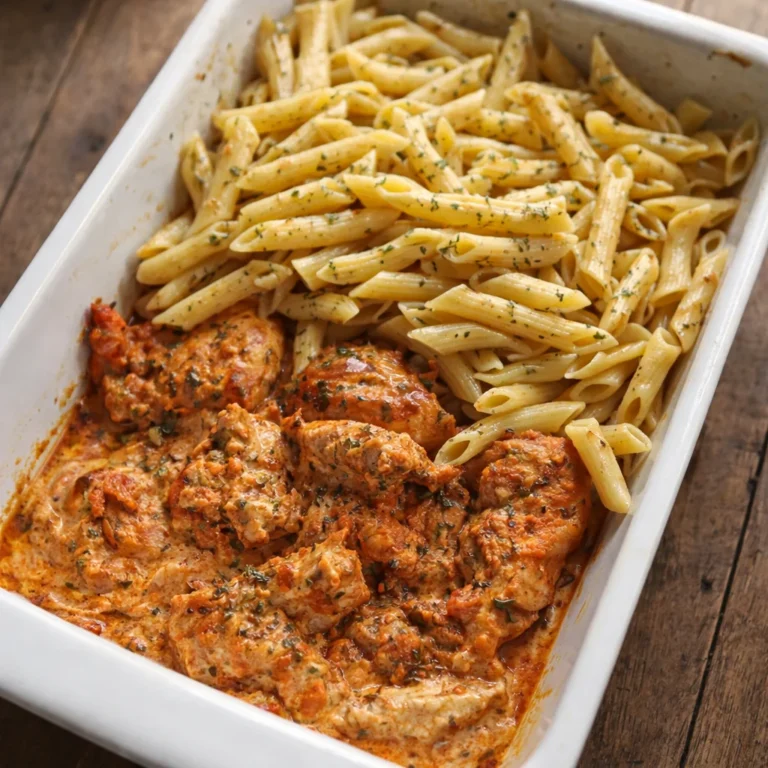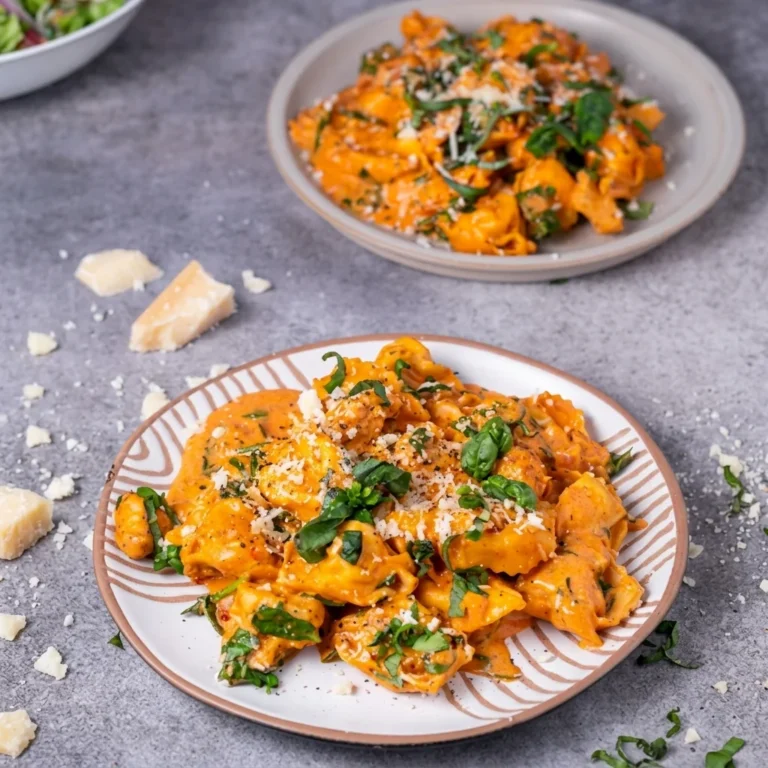
Marry Me Chicken Pasta: The 30-Minute Recipe That Finally Gets The Sauce Right
By Emily Carter. Last updated: May 2026. Recipe tested and verified. Nutritional data reviewed for accuracy.
Marry Me Chicken became the most searched recipe on Google in 2023. The pasta version took that same creamy sun-dried tomato sauce and gave it somewhere better to get into the ridges of rigatoni, coating every surface, pooling at the bottom of the bowl in a way that makes someone reach for bread before they have even finished the pasta.
This is not a shortcut version of the original. This is a completely different dish, and the 30 minutes it takes to make it is the most valuable half hour in this recipe collection.
⭐⭐⭐⭐⭐“Made this on a weeknight with no expectations. The sauce coated every piece of pasta so well that my daughter scraped the pan with bread before I even sat down. She is seven. She does not do that for anything.” Lauren K., verified recipe tester
Sear bite-sized chicken in sun-dried tomato oil. Build the sauce in the same pan. Cook pasta separately and reserve pasta water. Combine off heat. The pasta water step is the one everyone skips and the one that changes everything.
Key Takeaways:
- No roux: Parmesan emulsification thickens this sauce correctly
- Reserve pasta water: mandatory, not optional
- Ridged tubular pasta only: rigatoni or penne rigate
- Two pots always: the one-pot method consistently fails
- Cornstarch on chicken: creates restaurant-quality golden crust
Video:
What Is Marry Me Chicken Pasta?
Marry me chicken pasta is bite-sized seared chicken breast tossed with penne or rigatoni in a creamy sun-dried tomato Parmesan sauce made with garlic, heavy cream, double-concentrated tomato paste, and fresh basil. It is ready in 30 minutes, serves 4, and delivers approximately 620 calories per serving, including pasta.
Why Is It Called Marry Me Chicken Pasta?
The name comes from the original Marry Me Chicken a dish reportedly coined by Delish in the mid-2010s after testing a creamy sun-dried tomato chicken recipe so good that one editor said it was proposal-worthy. The name stuck. When cooks started adding pasta to the sauce rather than serving the chicken alongside it, the pasta version inherited the name and the reputation.
The pasta version earns it independently. The sauce coats every piece of rigatoni. The chicken pieces sit inside that sauce rather than on top of it. The combination of glutamic acid from the sun-dried tomatoes, Parmesan emulsification, and the starch from the pasta water creates something that the standalone chicken version cannot replicate.
At a Glance
| Detail | Value |
| Total time | 30 minutes |
| Prep time | 8 minutes |
| Cook time | 22 minutes |
| Servings | 4 |
| Calories per serving | ~620 kcal (with pasta) |
| Protein per serving | 42g |
| Pasta quantity | 300g / 10.5 oz dry |
| Gluten-free adaptable | Yes, GF pasta works |
| Dairy-free adaptable | Yes |
| Make-ahead | Partially sauce only |
What Makes This Recipe Different From Every Other Version
The Roux Problem: Why Flour Ruins This Sauce
Six of the ten most popular marry me chicken pasta recipes online thicken their sauce with a flour roux, butter plus flour cooked together before the cream is added. This produces a sauce that is thick, yes, but also carries a faint starchy aftertaste that competes with the sun-dried tomatoes and Parmesan.
The Marry Me sauce was never designed to be thickened with flour. It was designed to be thickened by Parmesan emulsification and pasta water starch two mechanisms that add body without adding any flavor of their own. Flour thickening is a shortcut borrowed from béchamel. It does not belong here.
The Correct Method: Parmesan Emulsification
When freshly grated Parmesan from a block is added off heat to warm cream, the proteins in the aged cheese act as emulsifiers, binding fat molecules in the cream into a stable, cohesive sauce that clings to pasta rather than pooling underneath it. This is why pre-shredded Parmesan fails: the cellulose anti-caking coating prevents the proteins from dissolving properly and leaves white chalky patches that no amount of stirring removes.
Add Parmesan in three stages. Add the first third and stir until no white streaks remain. Add the second, third. Add the final third. Three stages give the emulsion time to absorb each addition. All at once produces clumps.
Which Pasta Shape Works Best And Why
The Science Behind Ridged Tubular Pasta
The best pasta for this sauce is ridged and tubular rigatoni, penne rigate, or tortiglioni. The reason is surface area and sauce capture.
A ridged surface multiplies the contact points between sauce and pasta. The ridges act as grooves that the creamy sauce fills on the way into the bowl and stays in while eating. The tube shape traps pockets of sauce inside each piece, so every bite contains sauce from both inside and outside the pasta simultaneously.
Smooth pasta linguine, fettuccine, spaghetti relies entirely on the sauce clinging to its outer surface. With a sauce this rich, smooth pasta produces a result where the sauce slides off rather than adheres. By the time the bowl reaches the table, the sauce has pooled at the bottom, and the pasta sits dry on top.
Pasta Shape Comparison Table
| Shape | Sauce Retention | Best For | Avoid If |
| Rigatoni | Excellent ridges + tube | Best overall choice | Feeding very young children |
| Penne rigate | Excellent ridges + tube | Second best is easier to find | Never always suitable |
| Tortiglioni | Excellent deep ridges | Maximum sauce per bite | Never always suitable |
| Farfalle | Good sauce catches in folds | Lighter sauce versions | The sauce is very thick |
| Fettuccine | Moderate surface only | If you prefer long pasta | The sauce is thin |
| Spaghetti | Poor sauce pools below | Never for this sauce | Always wrong shape |
If you want the same sauce with filled pasta instead, where the cheese filling merges into the cream and creates a double-cheese effect no other pasta can replicate, Marry Me Chicken Tortellini uses the same sauce base with a completely different technique.
For a version where the starch does the thickening instead of the pasta, Marry Me Chicken Gnocchi uses the same sauce with potato gnocchi cooked directly in the pan.
Is Marry Me Chicken Pasta The Same As Alfredo?
What Alfredo Actually Is
Classic Fettuccine Alfredo, the original Roman version created by Alfredo di Lelio in the early 1900s, contains three ingredients: pasta, butter, and Parmesan. No cream. No garlic. No herbs. The modern American alfredo that most people know adds heavy cream, garlic, and sometimes chicken. It is pale, rich, and mild.
Why Marry Me Pasta Sauce Is Different And Better
Marry me pasta sauce is not Alfredo. The presence of sun-dried tomatoes, double-concentrated tomato paste, and chicken stock makes it fundamentally different in flavor profile. It is savory, tangy, and deeply umami rather than rich and mild.
When people search for marry me chicken alfredo pasta, they are usually looking for a creamy chicken pasta with sun-dried tomatoes, which is exactly what this is. The sauce contains Parmesan and cream, which share DNA with alfredo, but the sun-dried tomato glutamates, the caramelized tomato paste, and the fresh basil take it somewhere alfredo has never been.
The sun-dried tomato alfredo sauce recipe that most people imagine when they search for it is this one, whether they know it by that name or not.
Ingredients And Why Everyone Matters
Complete Ingredient List
For the chicken:
- 600g / 1.3 lb boneless skinless chicken breasts cut into 1-inch bite-sized pieces
- ½ tsp fine sea salt
- ¼ tsp freshly ground black pepper
- ½ tsp garlic powder
- ½ tsp smoked paprika
- 1 tsp cornstarch creates a light golden crust and subtly thickens the sauce
For the sauce:
- 2 tbsp oil from the sun-dried tomato jar
- 4 cloves fresh garlic, minced
- 1 tbsp double-concentrated tomato paste
- ⅓ cup (55g) sun-dried tomatoes in oil, drained and roughly chopped
- ½ cup (120ml) dry white wine, Pinot Grigio or Sauvignon Blanc
- ½ cup (120ml) low-sodium chicken stock
- 1 cup (240ml) heavy cream, minimum 36% fat
- ½ cup (50g) freshly grated Parmesan from a block
- ¼ tsp red pepper flakes
- ½ tsp Italian seasoning
- ¼ cup fresh basil leaves, torn, added completely off heat
For the pasta:
- 300g / 10.5 oz rigatoni or penne rigate
- Reserved pasta water, minimum ½ cup, do not discard
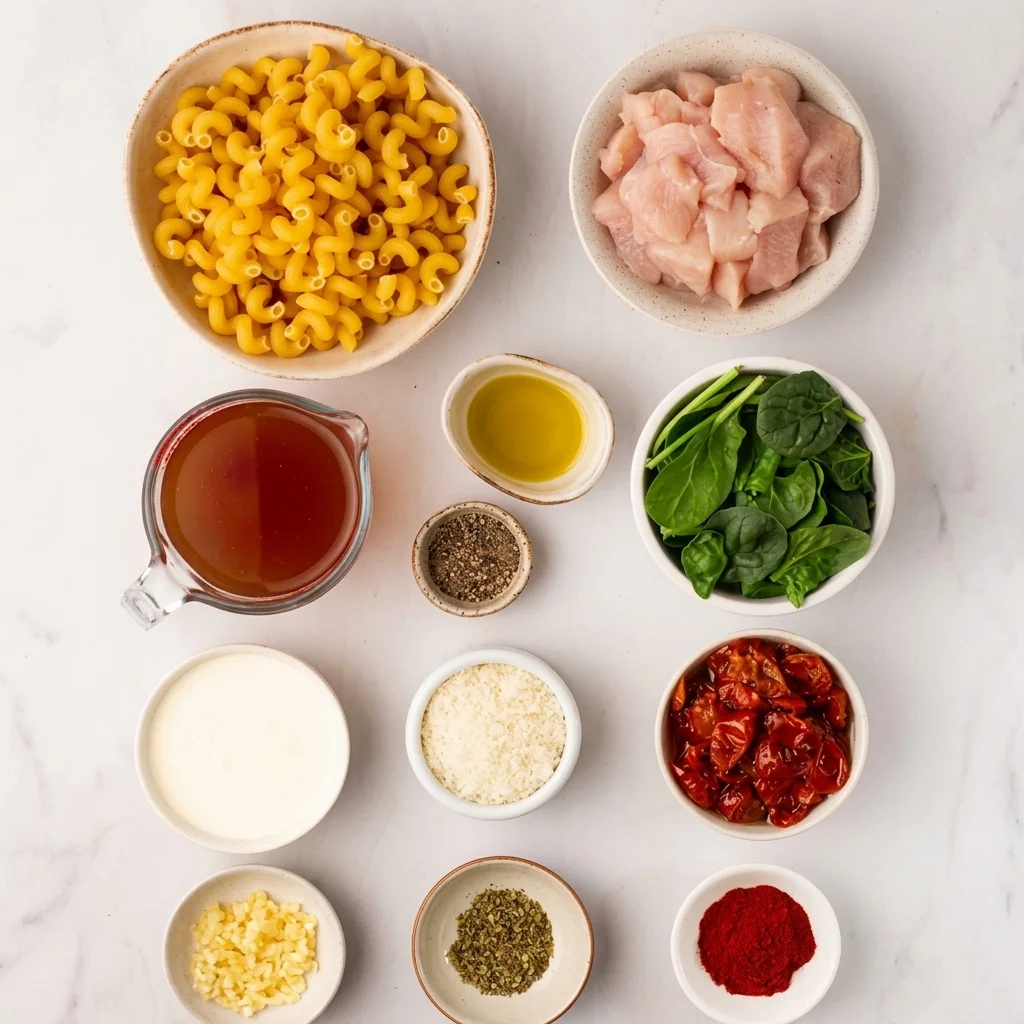
Why cornstarch on the chicken: Tossing bite-sized chicken pieces in cornstarch before searing creates a thin golden crust that holds up inside the sauce without going soggy. It also releases a small amount of starch into the sauce during cooking that contributes to body without any roux needed. This is the technique that produces restaurant-quality chicken pieces rather than pale, soft chunks.
Why white wine: The wine deglazes the pan after searing, dissolving every Maillard compound from the chicken crust into the sauce. It also adds brightness that cuts through the cream. Replaced with extra stock, the sauce is noticeably flatter.
Why Chicken Cut Matters
Bite-sized pieces sear faster and more evenly than whole breasts. Each piece develops its own crust. In a whole breast version, only two sides sear in a bite-sized version, multiple sides develop Maillard browning, multiplying the fond left in the pan and deepening the sauce flavor.
Cut the chicken into pieces of approximately 1 inch. Uniform size is non-negotiable; pieces of different sizes produce some that are overcooked and some that are undercooked in the same pan.
Ingredient Substitutions
| Original | Best Substitute | Impact |
| Rigatoni | Penne rigate, tortiglioni | Minimal same sauce retention |
| Heavy cream 36%+ | Full-fat canned coconut cream | Holds under heat, slight sweetness |
| Parmesan from a block | Pecorino Romano | Sharper reduces salt by ¼ tsp |
| White wine | Extra stock + 1 tsp white wine vinegar | Slightly less complexity |
| Double-concentrated paste | Regular tomato paste (2 tbsp) | Milder depth |
| Chicken stock | Vegetable stock | Lighter, fully vegetarian |
| Chicken breasts | Boneless skinless thighs | Richer and more forgiving if overcooked |
How To Make Marry Me Chicken Pasta: Step By Step
Step 1: Season And Sear The Chicken
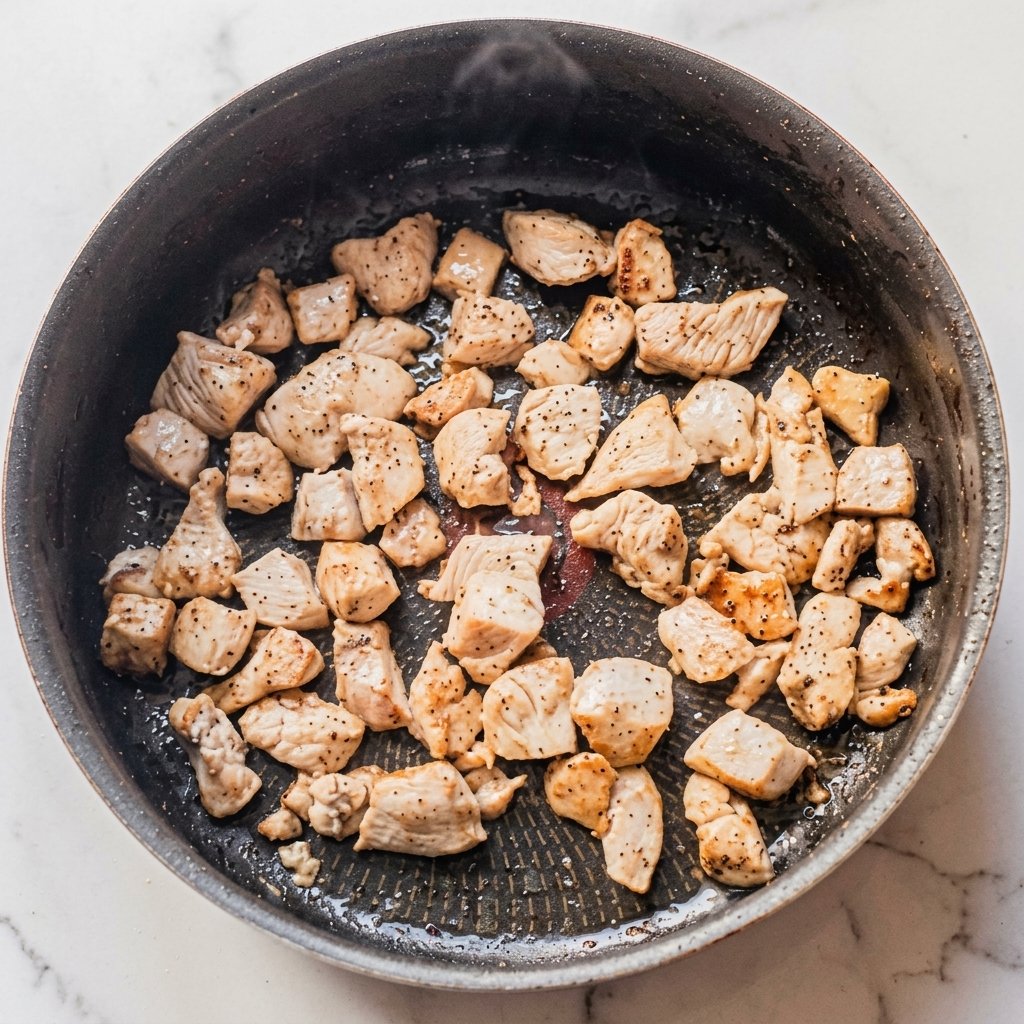
Pat chicken pieces completely dry. Toss with salt, pepper, garlic powder, smoked paprika, and cornstarch until every piece is evenly coated. Heat the sun-dried tomato oil in a large skillet over medium-high heat. When it shimmers, add chicken in a single layer; do not crowd. Sear for 3 to 4 minutes without moving, then toss and sear for a further 2 minutes. The chicken should be golden on multiple sides and just cooked through at 165°F / 74°C. Transfer to a plate. Do not wipe the pan.
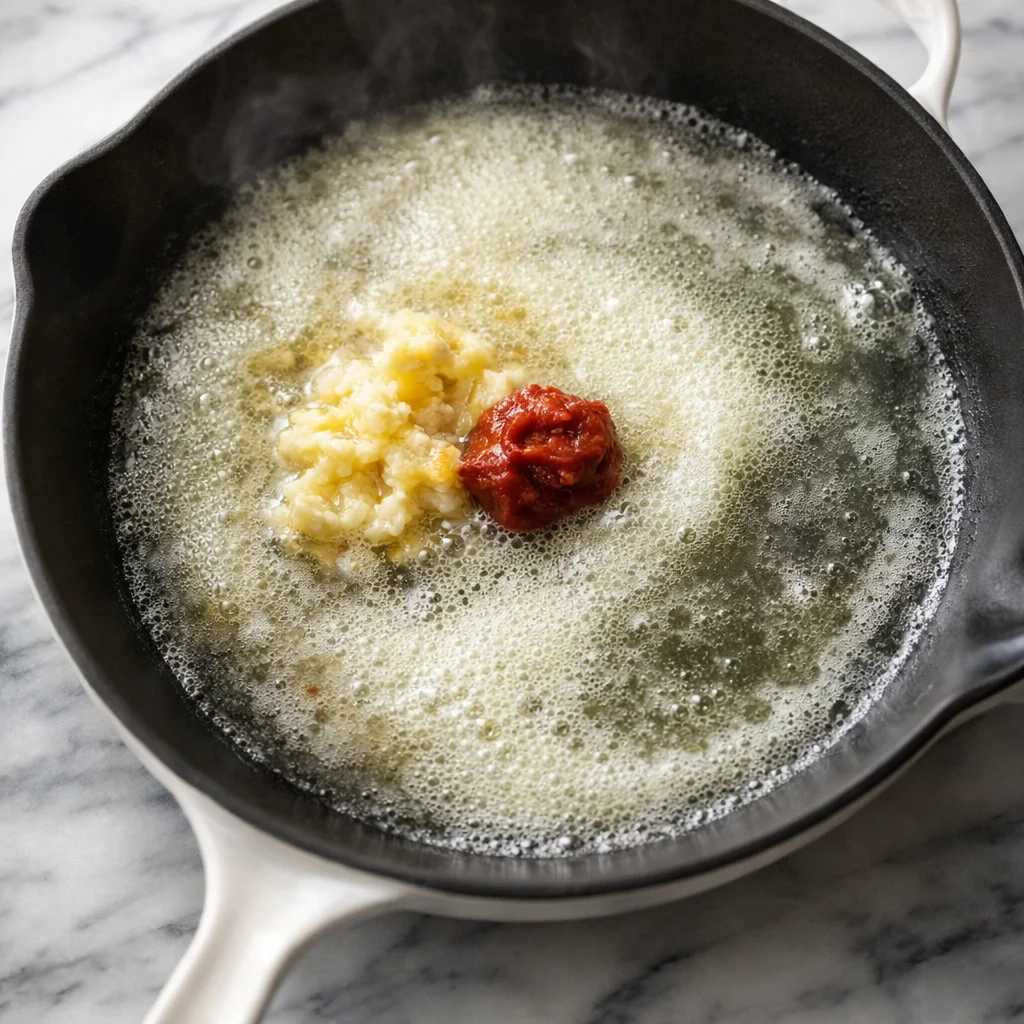
Step 2: Build The Sauce Base
Still over medium-high, add the garlic directly to the pan with the chicken fond. Stir for 60 seconds until pale gold. Add the double-concentrated tomato paste and stir for 90 seconds. It will darken to brick red. This caramelization is not optional. Caramelized tomato paste has twice the flavor depth of uncooked paste dissolved into liquid.
Add the sun-dried tomatoes. Stir 30 seconds.
Pour in the white wine. Scrape every browned bit from the pan bottom; that fond is the backbone of this sauce. Let the wine reduce for 90 seconds until the sharp alcohol smell fades.
Add the stock. Reduce for 2 minutes. Reduce the heat to medium-low. Add cream, red pepper flakes, and Italian seasoning. Simmer gently, never boil, for 3 to 4 minutes until the sauce coats the back of a spoon.
Remove from heat. Add Parmesan in three stages, stirring fully between each. Taste for salt.
Step 3: Cook The Pasta Separately
Bring a large pot of water to a boil. Salt it generously; it should taste like the sea. Cook rigatoni until 1 minute before al dente, and it will finish cooking in the sauce. Before draining, reserve at minimum ½ cup of pasta cooking water. This step is mandatory. Drain the pasta.
Step 4: The Pasta Water Step Nobody Does
Add 3 tablespoons of the reserved pasta water to the sauce and stir.
The starch dissolved in that water released from the pasta during boiling acts as a natural emulsifier. It helps the cream sauce bond to the surface of each piece of pasta rather than sliding off. It also adjusts consistency without diluting flavor.
Add the drained pasta directly to the saucepan. Toss over low heat for 60 seconds. Add more pasta water, tablespoon by tablespoon, if needed to reach the right consistency. The sauce should coat every surface without pooling at the bottom.
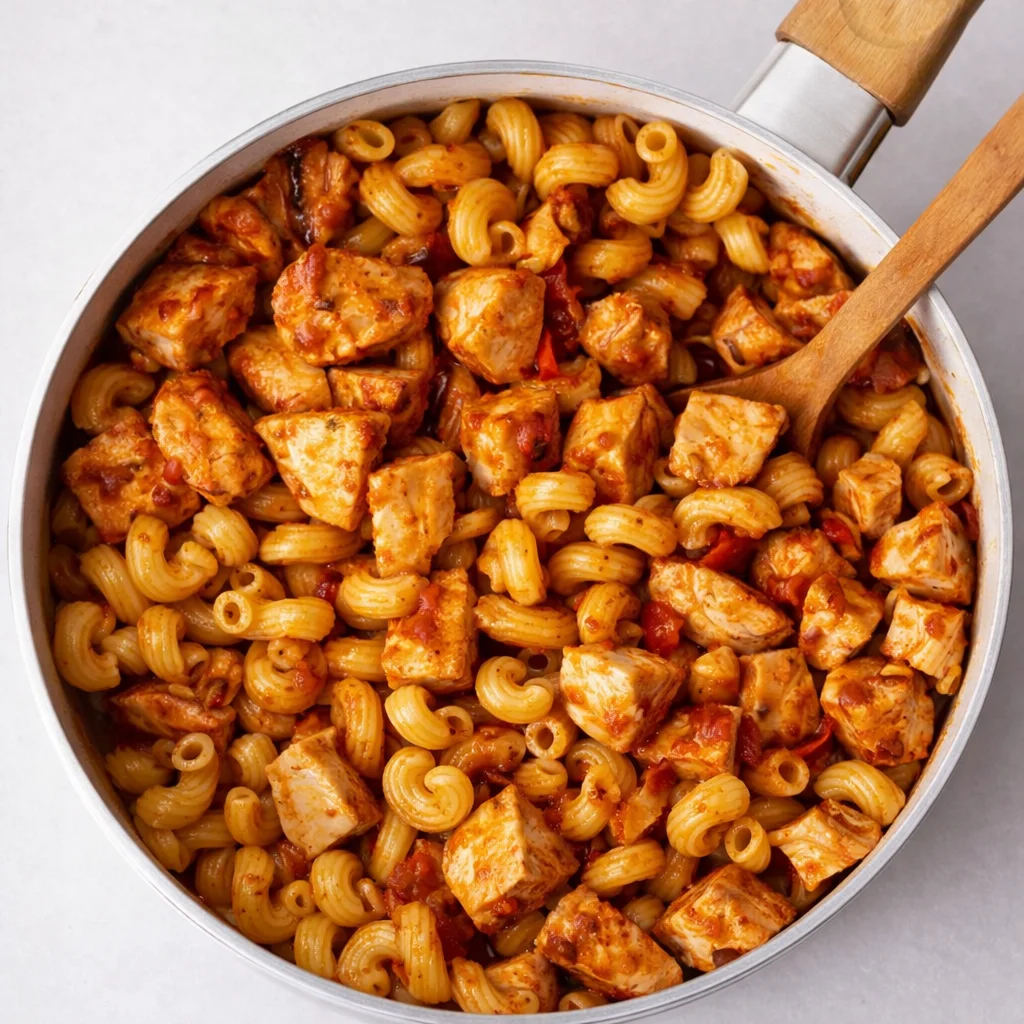
Step 5: Combine And Finish
Return the chicken pieces to the pan. Toss gently to combine. Taste for salt and pepper. Remove from heat. Scatter torn fresh basil completely off the heat. Direct heat destroys basil’s volatile aromatic compounds within 30 seconds. Serve immediately in warmed bowls.
Marry Me Chicken Pasta: One Pot Does It Work?
Why One Pot Fails Real Reader Results
The one-pot method of cooking pasta directly in the sauce liquid is appealing in theory. In practice, it produces two consistent problems.
First, pasta cooked in cream-based liquid absorbs the cream and stock as it hydrates, leaving the sauce with insufficient liquid to coat the pasta properly by the time it is done. Readers attempting Half Baked Harvest’s one-pot version reported having to double the liquid to 4 cups for a standard quantity of pasta.
Second, pasta cooked directly in cream releases starch continuously into the sauce, but without the controlled addition of reserved pasta water, that starch builds unevenly and produces a gluey texture rather than a silky one.
The Two Methods Compared
| One Pot | Two Pot (This Recipe) | |
| Sauce consistency | Unpredictable often gluey | Controlled always silky |
| Pasta texture | Often mushy | Al dente finishes in the sauce |
| Cleanup | One pan | One pan + one pot |
| Reliability | Low liquid ratio critical | High works every time |
| Pasta water control | None | Full control |
Verdict: Two pots. Every time. The extra pot takes 3 minutes to fill, and the result is incomparably better.
How To Thicken Marry Me Chicken Pasta Sauce
Cause And Fix Table
| Cause | Why It Happens | Exact Fix |
| Too much stock | Liquid ratio too high | Simmer uncovered 2 to 3 extra minutes before adding pasta |
| Cream below 36% fat | Thin cream does not reduce properly | Use a minimum 36% heavy cream only |
| Parmesan was added to the boiling sauce | Proteins break, the sauce stays thin | Add off heat in three stages only |
| Pasta water not used | No starch to bind the sauce to the pasta | Add 3 tbsp pasta water and toss over low heat |
| Pre-shredded Parmesan used | Cellulose coating prevents melting | Always grate fresh from a block |
| Pasta overcooked before being combined | Pasta absorbs sauce instead of carrying it | Cook pasta 1 minute under al dente |
Three Tests That Changed How I Make This
Test 1 Roux vs No Roux
Roux version: thick sauce with a faint starchy aftertaste that competed with the sun-dried tomatoes. Parmesan emulsification version: silky sauce that tasted entirely of the ingredients in it, nothing else.
Verdict: No roux. Ever. The Parmesan does the job better in every measurable way.
Test 2 One Pot vs Two Pot
One pot: had to add nearly double the liquid for the pasta to cook through. The sauce was gluey rather than silky. Pasta lacked texture. Two pot: pasta finished in the sauce for 60 seconds, sauce consistency was perfect, pasta was al dente throughout.
Verdict: Two pots. The cleanup cost of one extra pot is worth it every time.
Test 3 Pasta Water vs No Pasta Water
Without pasta water, the sauce slid off the rigatoni and pooled at the bottom of the bowl within 90 seconds of plating. With 3 tablespoons of pasta water added before tossing, the sauce adhered to every surface of every piece of pasta and stayed there.
Verdict: Reserve pasta water. Add it before you combine. Do not skip this step.
How To Make Marry Me Chicken Pasta In A Crock Pot
The crock pot version works, but the method is different. Cook the sauce ingredients and seared chicken in the slow cooker on low for 3 hours. Cook the pasta separately on the stovetop as directed above. Add pasta and pasta water to the slow cooker in the final 5 minutes on high. Toss to combine and serve immediately.
For the full slow cooker method and timing, the Slow Cooker Marry Me Chicken covers the complete crockpot technique. Adapt it by adding separately cooked pasta at the end rather than serving the chicken over pasta.
Variations Worth Trying
With Spinach
Add two large handfuls of fresh baby spinach directly to the sauce after the Parmesan is fully incorporated and before adding the pasta. Stir until wilted, approximately 60 seconds. The spinach releases a small amount of water that slightly thins the sauce compensate by using 1 tablespoon less pasta water when combining.
For the shrimp pasta version, see Marry Me Shrimp Pasta.
Lighter Version
Replace half the heavy cream with additional chicken stock. Extend the simmering time by 3 to 4 extra minutes to allow the larger liquid volume to reduce. The sauce will be noticeably lighter but retain most of the flavor that the sun-dried tomatoes and Parmesan carry to the dish, even at reduced cream quantities.
Dairy-Free Version
Replace heavy cream with full-fat canned coconut cream, not cartons, which are too thin. Replace Parmesan with 2 tablespoons nutritional yeast plus 1 teaspoon white miso paste. The miso provides the glutamate depth and salt that aged Parmesan contributes. Add both after removing the pan from the heat exactly as directed.
What To Serve With Marry Me Chicken Pasta
This dish is a complete meal on its own. Sides should contrast rather than compete.
Vegetables that work:
- Roasted broccolini: the char contrasts directly with the cream sauce richness
- Sautéed spinach with garlic mirrors the flavors without duplicating them
- Roasted cherry tomatoes: amplify the sun-dried tomato character
- Steamed green beans with lemon: the acidity cuts through the cream
- Roasted zucchini: absorbs sauce beautifully if placed in the bowl
What Vegetables Go With Marry Me Chicken Pasta?
The best vegetables for this pasta are those with slight bitterness or acidity qualities that cut through the richness of the cream and Parmesan. Broccolini, asparagus, arugula served alongside, and roasted cherry tomatoes all work for this reason. Avoid starchy vegetables like corn or peas, as they add the same texture as the pasta and nothing else.
Other sides:
- Crusty sourdough or ciabatta for the sauce left in the bowl
- Simple green salad with lemon vinaigrette acidity balances the richness
- Garlic bread, the classic pairing that needs no explanation
How To Store, Reheat, and Freeze
How Long Does Marry Me Chicken Pasta Last In The Fridge?
4 days in an airtight container. Store pasta and sauce together; they continue to meld overnight, and the flavor the next day is actually better. The sauce thickens significantly when cold, as the cream and Parmesan set. This is normal.
How To Reheat Without Breaking The Sauce
Reheat gently in a saucepan over low heat. Add 2 to 3 tablespoons of chicken stock or water before heating and stir continuously as it warms. Never reheat the cream emulsion on high heat, as the cream emulsion breaks under rapid temperature change, leaving visible fat pools that do not reincorporate regardless of stirring.
Microwave reheating works in 30-second bursts at 50% power with stirring between each burst, but stovetop reheating produces a better result.
Can You Freeze Marry Me Chicken Pasta?
Freeze the sauce only without the pasta. Assembled pasta becomes mushy after thawing as the pasta continues absorbing liquid in the freezer. Freeze sauce after the cream step but before Parmesan, for up to 2 months. Thaw overnight in the refrigerator. Reheat gently, add fresh Parmesan in three stages, then toss with freshly cooked pasta and pasta water.
Frequently Asked Questions
Can I use rotisserie chicken?
Yes, skip the searing steps and shred rotisserie chicken directly into the sauce at Step 7. There is no chicken fond to build from, so the sauce is slightly less complex, but the result is excellent and reduces the total time to 15 minutes. Add the chicken at the end, only it is already cooked and needs warming through, not simmering.
Can I use chicken thighs instead of breasts?
Yes, boneless skinless thighs are actually the better choice for this recipe. Higher fat content prevents the drying that chicken breast pieces can suffer when seared at high heat. Cut into the same 1-inch pieces and sear for the same time. The fond from thighs is richer, and the sauce noticeably deeper.
Can I substitute heavy cream with half-and-half?
Technically, yes, but the sauce will be noticeably thinner, and there is a higher risk of breaking. Half-and-half contains significantly less fat than heavy cream, which means it has less structural stability under heat. If you use it, add 1 teaspoon of cornstarch dissolved in 2 tablespoons of cold stock before adding to the pan. This partially compensates for the reduced fat content.
Can I make this ahead of time?
Make the sauce up to 24 hours ahead and refrigerate without Parmesan. Cook pasta fresh when serving pasta stored in sauce overnight, as it becomes mushy as it continues absorbing liquid. Reheat the sauce gently, add fresh Parmesan in three stages, cook fresh pasta, combine with pasta water, and serve.
Why did my Parmesan not melt into the sauce?
Pre-shredded Parmesan was used. The cellulose anti-caking coating that prevents clumping in the bag also prevents the proteins from dissolving properly in warm cream. The result is white chalky patches that no amount of stirring removes. Always grate Parmesan fresh from a block with a microplane or box grater, add it off heat, and add it in three stages.
Is this the same as Tuscan chicken pasta?
Similar but not identical. Tuscan chicken typically includes spinach as a core ingredient and uses a lighter cream ratio. Marry me chicken pasta uses a more concentrated sun-dried tomato and Parmesan ratio without spinach in its base. The flavor is deeper and richer. For the complete sauce science, see the Marry Me Tuscan Sauce guide.
What can I add to make it more filling?
Add baby spinach, two large handfuls, stirred in after the Parmesan. Add mushrooms, sliced cremini sautéed with the garlic, to add earthy depth and bulk. Increase pasta to 400g for a larger yield. Add white beans, one drained can added with the stock, adds protein and body without changing the flavor profile.
Recipe Card:
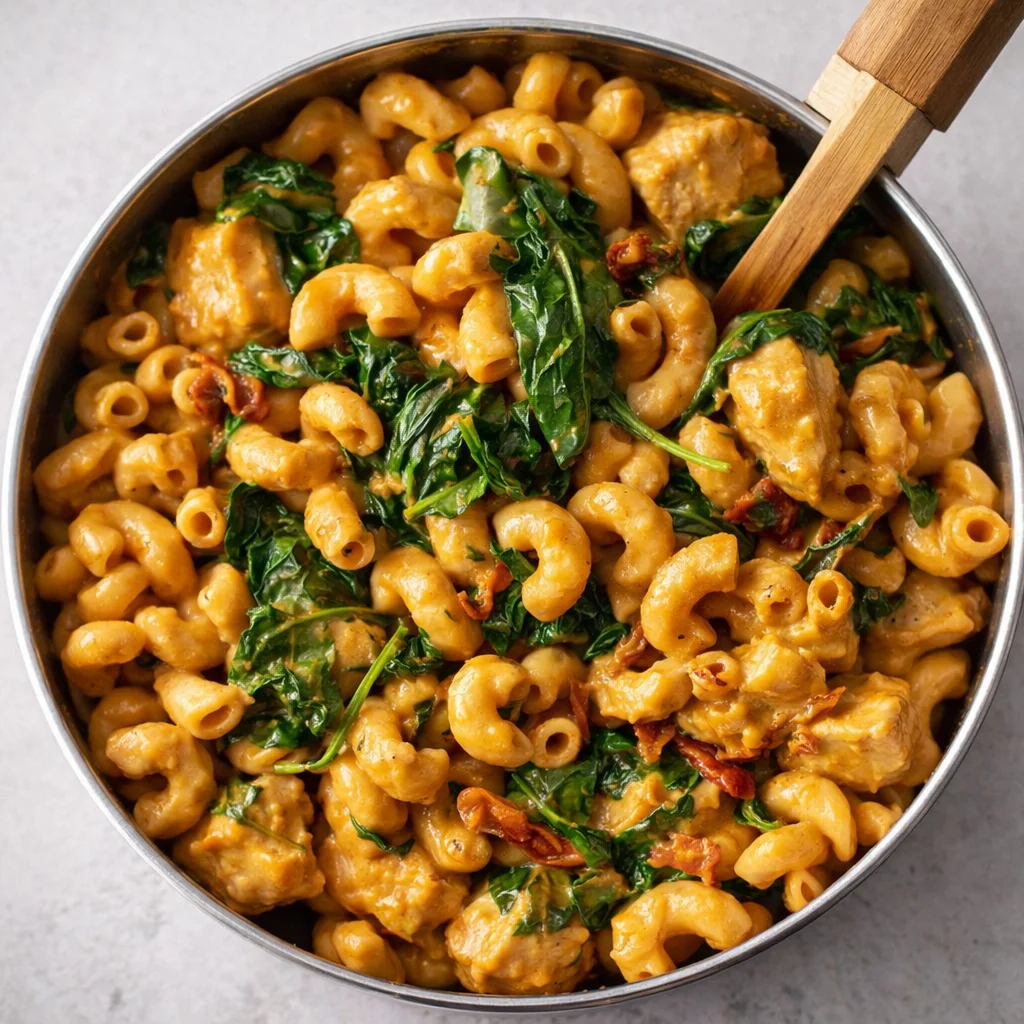
Marry Me Chicken Pasta
Ingredients
Chicken:
- 600 g / 1.3 lb boneless skinless chicken breasts cut into 1-inch pieces
- ½ tsp fine sea salt · ¼ tsp black pepper · ½ tsp garlic powder · ½ tsp smoked paprika · 1 tsp cornstarch
Sauce:
- 2 tbsp sun-dried tomato jar oil · 4 garlic cloves minced
- 1 tbsp double-concentrated tomato paste
- ⅓ cup 55g sun-dried tomatoes, drained and chopped
- ½ cup 120ml dry white wine
- ½ cup 120ml low-sodium chicken stock
- 1 cup 240ml heavy cream, minimum 36% fat
- ½ cup 50g freshly grated Parmesan from a block
- ¼ tsp red pepper flakes · ½ tsp Italian seasoning
- ¼ cup fresh basil torn off heat only
Pasta:
- 300 g / 10.5 oz rigatoni or penne rigate
- ½ cup of reserved pasta water mandatory
Instructions
- Toss chicken pieces with salt, pepper, garlic powder, paprika, and cornstarch until evenly coated.
- Heat tomato oil in large skillet over medium-high. Sear chicken in a single layer 3 to 4 min without moving, then toss and sear 2 more min until golden and 165°F / 74°C. Transfer to plate.
- Same pan, add garlic, stir 60 sec. Add tomato paste, stir 90 sec until brick red. Add sun-dried tomatoes, stir 30 sec.
- Add wine to scrape the pan bottom. Reduce 90 sec. Add stock, reduce for 2 min. Reduce to medium-low. Add cream, red pepper flakes, Italian seasoning. Simmer gently 3 to 4 min.
- Meanwhile, boil rigatoni in well-salted water until 1 min before al dente. Reserve ½ cup pasta water before draining.
- Remove sauce from heat. Add Parmesan in 3 stages, stirring fully between each.
- Add 3 tbsp pasta water to sauce. Add drained pasta. Toss over low heat 60 sec. Add more pasta water tablespoon by tablespoon for correct consistency.
- Return chicken. Toss gently. Taste for salt. Scatter basil off heat. Serve immediately in warmed bowls.
Notes
This recipe uses the same sauce foundation as every recipe in this collection. For the complete sauce science, exact ratios, and all variations Marry Me Tuscan Sauce guide
The Pasta That Makes The Sauce Better
Every other method in this collection serves the sauce alongside the chicken. This one puts the sauce inside the pasta, around the pasta, and on top of the pasta simultaneously.
The combination of Parmesan emulsification, pasta water starch, and rigatoni’s ridged surface creates a coating that does not slide off, does not pool at the bottom of the bowl, and does not need flour to hold it together.
This is the version of this dish that becomes a summer chicken pasta for outdoor dinners, a pasta dinner idea for weeknights when you need something that impresses without effort, and the recipe that earns the name it was given.
For the classic stovetop version served without pasta, see Marry Me Chicken.
About the Author
By Emily Carter, Recipe Developer and Culinary Instructor. Trained at the Institute of Culinary Education, New York. Six years in professional kitchens. Every recipe on this site is tested a minimum of three times before publication. If it does not work reliably, it does not get published.
⭐ Rate This Recipe
Have you made this? Leave a star rating below and tell us how it turned out. Your feedback helps other home cooks find this recipe and trust it before they make it.