
Marry Me Tuscan Sauce: The Complete Guide to the Sauce Behind Every Marry Me Recipe
By Emily Carter. Last updated: April 2026. Recipe tested and verified. Nutritional data reviewed for accuracy.
Every Marry Me recipe on this website starts in the same place. Not with the protein. Not with the pan. With this sauce.
The creamy sun-dried tomato sauce you find in Marry Me Chicken, Marry Me Salmon, Marry Me Meatballs, and Marry Me Chickpeas is not a supporting character. It is the reason people go quiet after the first bite. It is the reason someone at the table asks for bread just to clean the pan. Understanding this sauce completely, how it works, why it works, and how to make it standalone changes how you cook every single recipe in this collection.
This is the only page on this website dedicated entirely to the sauce itself, without any protein attached.
What Is Marry Me Tuscan Sauce
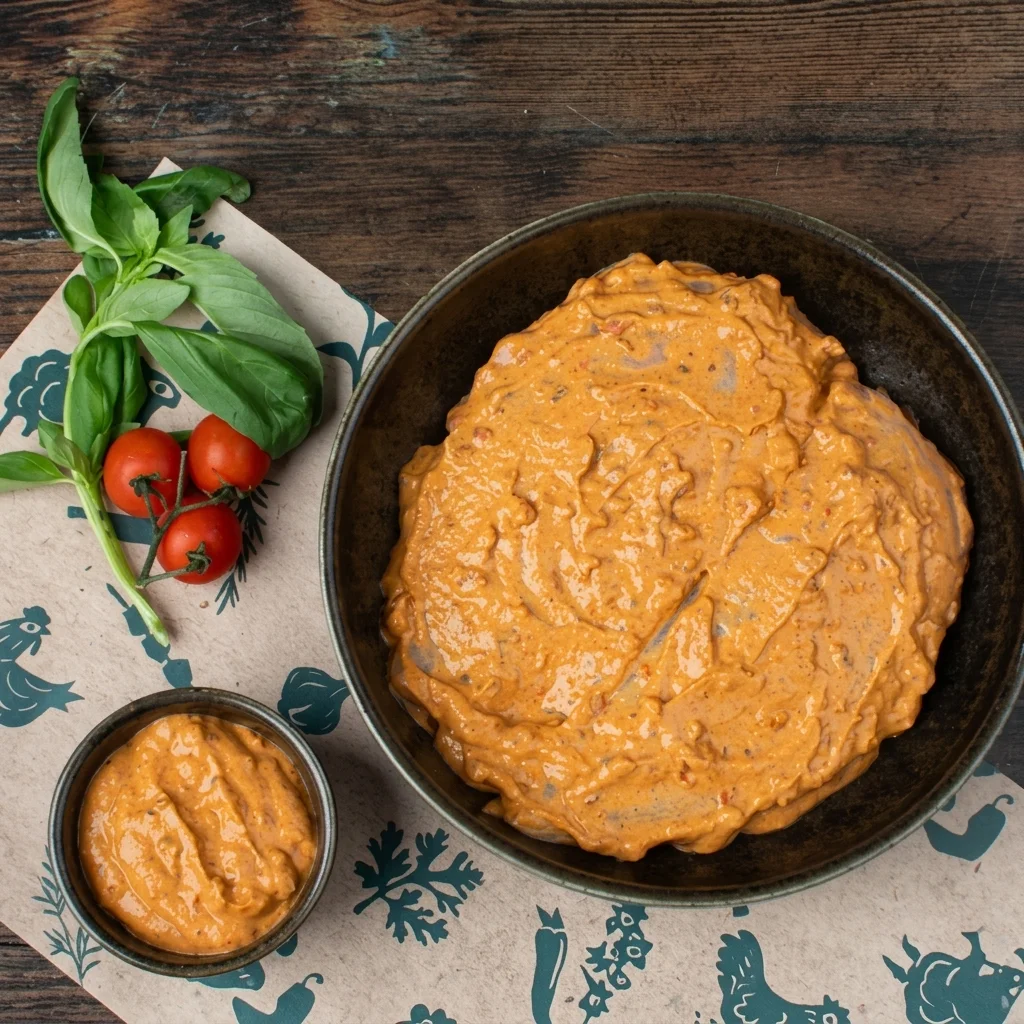
Marry Me Tuscan Sauce is a creamy sun-dried tomato cream sauce made with garlic, heavy cream, Parmesan, sun-dried tomatoes, chicken or vegetable stock, and fresh basil. It is Tuscan-inspired in its flavor profile, savory, tangy, deeply rich, and forms the foundation of every recipe in the Marry Me collection.
It is not a tomato sauce. It is not a béchamel. It sits in a category of its own: a cream-reduced pan sauce built on an aromatic base, thickened by Parmesan emulsification rather than flour or starch, and given its defining character by the concentrated glutamate depth of oil-packed sun-dried tomatoes.
Made standalone without any protein, it takes 15 minutes and pairs with pasta, gnocchi, roasted vegetables, crusty bread, rice, or anything else you want to drown in something extraordinary.
Why This Sauce Works
Most cream sauces taste flat because they rely on cream alone for richness. Cream is fat. Fat carries flavor. But fat without acid, without umami, without aromatic depth tastes one-dimensional.
This sauce layers three distinct flavor mechanisms simultaneously.
First: concentrated umami from sun-dried tomatoes. Sun-dried tomatoes contain between 650 and 1,140mg of glutamic acid per 100g, according to the Umami Information Center. That concentration is what gives this sauce a savory depth that normal fresh tomatoes cannot produce. The drying process removes 90% of the water content, leaving only concentrated flavor compounds that dissolve directly into the cream.
Second: Parmesan emulsification. Parmesan added off-heat to warm cream does not just add flavor. The proteins in aged Parmesan act as emulsifiers, binding fat molecules in the cream into a stable, cohesive sauce. This is why the sauce stays silky rather than greasy. This is also why pre-shredded Parmesan fails: the cellulose anti-caking coating prevents the proteins from dissolving properly.
Third: fond absorption. When this sauce is made in a pan after cooking any protein, it lifts and dissolves the browned fond from the pan surface. That fond contains hundreds of Maillard reaction compounds produced during searing. Those compounds add complexity that no amount of seasoning can replicate. Made standalone, the tomato paste caramelization step creates a small but meaningful version of this same effect.
The result is a sauce that tastes as if it were cooked for two hours in twenty minutes.
Every Ingredient and Why It Matters
I use 10 core ingredients in this sauce. Every single one earns its place.
Sun-dried tomatoes packed in oil. Oil-packed tomatoes are non-negotiable. The packing oil carries concentrated tomato flavor compounds that plain olive oil does not. I use that oil as the cooking fat at the start of the sauce. Dry-packed tomatoes work but need 10 minutes in warm water to rehydrate first, and they produce a slightly less rich result.
Double-concentrated tomato paste. Regular tomato paste adds mild acidity. Double-concentrated paste has twice the carotenoid and glutamate concentration. It caramelizes faster in the pan and produces a deeper, darker flavor that makes the sauce taste as though it simmered for far longer than it did.
Fresh garlic. Four cloves minimum, always fresh. Jarred minced garlic has been processed with citric acid, which shifts its flavor profile away from the sharp, aromatic character fresh garlic delivers. Sixty seconds in hot oil is all it needs. Beyond that, it burns and turns bitter.
Heavy cream, minimum 36% fat. According to published research on cream emulsion stability, cream with a fat content above 36% forms a stable physical network that holds together at simmering temperature. Lower-fat alternatives break under heat, leaving visible fat pools in the sauce. There is no workaround. Full-fat heavy cream only.
Dry white wine. Pinot Grigio or Sauvignon Blanc. The wine deglazes the pan and dissolves any caramelized tomato paste stuck to the bottom. The alcohol cooks off in 90 seconds, leaving behind bright acidity that balances the richness of the cream. Without it, the sauce tastes flat. Chicken broth with a teaspoon of white wine vinegar works as a substitute.
Chicken or vegetable stock. Low sodium. Sun-dried tomatoes already carry significant salt. Full-sodium stock risks producing a sauce with no way to correct over-salting. Stock adds body and savory depth before the cream enters the pan.
Freshly grated Parmesan from a block. Grate it yourself. Pre-shredded Parmesan is coated in cellulose to prevent clumping in the bag. That coating prevents proper melting and leaves white, chalky patches throughout the sauce that no amount of stirring removes. A block of Parmesan and a box grater. Ninety seconds. The difference is immediate and obvious.
Red pepper flakes. Quarter teaspoon at minimum. The heat builds slowly through the meal rather than arriving all at once. It balances the fat in the cream without competing with the sun-dried tomatoes.
Italian seasoning and dried oregano. Dried herbs added to the sauce during the cream stage distribute their flavor evenly through the liquid. Fresh herbs added at this stage lose their volatile aromatics under heat. Save fresh basil for the finish.
Fresh basil, added off heat. Add basil after removing the pan from the heat. Heat destroys basil’s aromatic compounds within 30 seconds of direct contact. Off-heat, the residual warmth of the sauce releases the oils gently and keeps the brightness intact.
Ingredient Substitutions Table
| Original Ingredient | Best Substitute | Flavor and Texture Impact |
| Heavy cream (36%+) | Full-fat canned coconut cream | Holds under heat, adds slight sweetness |
| Dry white wine | Extra stock + 1 tsp white wine vinegar | Slightly less complexity, still bright |
| Sun-dried tomatoes in oil | Dry-packed, rehydrated 10 min in warm water | Less umami depth, add 1 tsp olive oil |
| Double-concentrated tomato paste | Regular tomato paste (double the quantity) | Milder depth, needs longer caramelization |
| Freshly grated Parmesan | Pecorino Romano, reduce salt by ¼ tsp | Sharper and saltier, excellent alternative |
| Chicken stock | Vegetable stock | Lighter body, fully vegetarian |
| Fresh basil | Fresh flat-leaf parsley | Brighter finish, loses basil’s anise note |
| Fresh garlic | Garlic paste, same quantity | Slightly milder, still acceptable |
The Exact Sauce Ratio
After testing this sauce dozens of times across six different proteins, one ratio produces the most consistent, balanced result:
240ml heavy cream: 120ml stock: 50g Parmesan: 60g sun-dried tomatoes: 4 garlic cloves
This ratio produces a sauce that coats the back of a spoon without being heavy, clings to pasta without pooling at the bottom of the bowl, and holds together through reheating without separating.
If you need it thicker: Simmer uncovered for 2 to 3 additional minutes before adding Parmesan. Evaporation reduces the liquid and concentrates the flavor simultaneously.
If you need it thinner: Add stock in 2-tablespoon increments after the Parmesan is fully incorporated. Never add stock before Parmesan cold liquid hitting a warm Parmesan sauce causes it to seize.
For pasta specifically: Reserve 60ml of pasta cooking water before draining. Add it to the sauce after tossing with pasta. The starch in pasta water helps the sauce cling to every surface of the noodle.
The Science Behind the Sauce
Three things happen in this sauce that most recipes never explain.
Tomato paste caramelization. When double-concentrated tomato paste hits a hot pan with sun-dried tomato oil, the sugars in the paste begin to caramelize. The color shifts from bright red to dark brick red. The flavor shifts from raw tomato acidity to something deeper, almost sweet, with a roasted edge. This caramelization takes 90 seconds at medium heat. Skipping it, adding the paste with the liquid produces a sauce that tastes raw in the background.
Cream emulsion stability. Heavy cream is an oil-in-water emulsion. When heated above 85°C, the emulsion can break fat separates from the water and pools visibly in the sauce. Two things prevent this: keeping the heat at a gentle simmer after adding cream, and the Parmesan proteins, which reinforce the emulsion structure. This is why the recipe specifies medium-low heat for the cream stage. High heat is the single most common cause of a broken sauce.
Parmesan as an emulsifier. Aged Parmesan contains proteins that behave similarly to lecithin; they sit at the interface between fat and water molecules and hold the emulsion together. Adding Parmesan in three stages rather than all at once gives these proteins time to distribute evenly before the next addition arrives. Adding all the Parmesan at once overwhelms the sauce’s ability to absorb it, producing clumps.
How To Make Marry Me Tuscan Sauce: Step by Step
Prep time: 5 minutes Cook time: 15 minutes Total time: 20 minutes Yield: Enough sauce for 4 servings with pasta or any protein
Ingredients
For the sauce:
- 2 tbsp oil from the sun-dried tomato jar
- 4 cloves fresh garlic, minced
- 1 tbsp double-concentrated tomato paste
- 60g (⅓ cup) sun-dried tomatoes in oil, drained and roughly chopped
- 60ml (¼ cup) dry white wine
- 120ml (½ cup) chicken or vegetable stock, low sodium
- 240ml (1 cup) heavy cream, minimum 36% fat
- ½ tsp dried oregano
- ½ tsp Italian seasoning
- ¼ tsp red pepper flakes
- ½ tsp fine sea salt
- ¼ tsp freshly ground black pepper
- 50g (½ cup) freshly grated Parmesan from a block
- ¼ cup fresh basil leaves, torn
Step 1: Build the Aromatic Base
Heat a skillet or wide saucepan over medium-high heat. Add the sun-dried tomato oil. Let it heat for 60 seconds until it shimmers.
Add the minced garlic. Stir continuously for exactly 60 seconds. The garlic should turn pale gold and fragrant. Do not let it brown. Brown garlic turns bitter and cannot be corrected.
Add the double-concentrated tomato paste directly on top of the garlic. Stir constantly for 90 seconds. Watch for the color to shift from bright red to a darker brick red. That color change signals that the sugars in the paste have caramelized. That caramelization is flavor. Do not rush this step.
Step 2: Add the Sun-Dried Tomatoes
Add the chopped sun-dried tomatoes to the pan. Stir to combine with the garlic and paste. Cook for 2 minutes over medium heat, stirring occasionally. The tomatoes will begin to soften and release their concentrated flavor into the oil.
Step 3: Deglaze
Pour in the white wine. Use a wooden spoon to scrape any caramelized bits from the bottom of the pan. They are flavor. Every bit matters. Let the wine simmer for 90 seconds until the sharp alcohol smell fades.
Step 4: Reduce the Stock
Add the stock. Increase the heat to medium-high. Cook uncovered for 3 to 4 minutes until the liquid reduces by roughly one-third. The sauce should look slightly thicker and more concentrated. This step removes excess moisture before the cream arrives, preventing a watery final sauce.
Step 5: Add the Cream and Herbs
Reduce the heat to medium-low. Pour in the heavy cream. Add the oregano, Italian seasoning, red pepper flakes, salt, and pepper. Stir gently to combine.
Critical point: Do not let the sauce boil from this step forward. A gentle simmer small bubbles at the surface is correct. A rolling boil breaks the cream emulsion. Maintain medium-low heat.
Simmer for 4 to 5 minutes, stirring occasionally, until the sauce thickens slightly and coats the back of a spoon.
Step 6: Add the Parmesan
Remove the pan from the heat or reduce to the lowest possible setting. Add the freshly grated Parmesan in three stages:
Add the first third. Stir until completely melted and no white streaks remain. Add the second, third. Stir again until smooth. Add the final third. Stir until the sauce is silky and cohesive.
If you add all the Parmesan at once, the proteins hit the sauce simultaneously and clump. Three stages give the emulsion time to absorb each addition fully.
Step 7: Finish and Serve
Taste for salt. Remember that Parmesan is already significantly salty add extra salt cautiously.
Remove from heat completely. Scatter the torn fresh basil over the sauce. The residual heat releases the aromatic oils in the basil without destroying them.
The sauce is ready. Add any cooked protein directly to the pan and toss to coat, or pour over pasta, spoon over roasted vegetables, or serve alongside crusty bread.
How This Sauce Behaves Differently With Each Protein
The base sauce is the same across every Marry Me recipe. What changes is how each protein interacts with it during cooking.
With chicken (stovetop). Chicken seared in sun-dried tomato oil leaves a fond of browned flour dredge and chicken fat. When the sauce builds in that same pan, it dissolves every Maillard compound from the sear into the cream. The result is a sauce that carries the sear’s flavor throughout. This is why the stovetop chicken version has a depth that no other method fully replicates. See the full Marry Me Chicken recipe for the complete stovetop method.
With chicken (oven). In the baked version, the sauce is built cold and poured around the chicken before baking. The chicken fat renders slowly into the surrounding cream as it bakes, enriching the sauce from the bottom up. A small amount of cornstarch in the cold sauce prevents splitting at oven temperature. The result is thicker and more uniform than the stovetop version. See the full Baked Marry Me Chicken recipe.
With chicken (slow cooker). Low, sustained heat over 3 to 4 hours causes the chicken collagen to break down into gelatin, which dissolves into the sauce and adds a silky body that neither stovetop nor oven methods produce. The cream is added in the final 30 minutes only — earlier addition causes splitting under prolonged heat. See the full Slow Cooker Marry Me Chicken recipe.
With meatballs. A 50/50 beef and pork blend releases more Maillard compounds during searing than any other protein in the collection. The rendered beef and pork fat from the sear dissolves into the fond before the cream arrives, producing the richest version of this sauce across the entire recipe family. The sauce in the meatball version is noticeably deeper and more complex than the chicken versions. See the full Marry Me Meatballs recipe.
With salmon. Salmon releases natural fish oils during the sear. Those oils enrich the sauce base before a single drop of cream is added. The fish fat adds a different kind of richness lighter than red meat, more mineral than chicken, that creates a sauce with a unique brightness. Lemon zest added to the salmon version cuts through the fat without the acidity risk of lemon juice. See the full Marry Me Salmon recipe.
With chickpeas. Chickpeas release starch into the sauce as they simmer. That starch thickens the sauce from within, creating a cohesion that no animal protein can produce. The longer the chickpeas simmer, the richer the sauce becomes without any additional thickening agent. Not rinsing canned chickpeas preserves the aquafaba, the starchy liquid in the can, which adds further natural thickening and depth. See the full Marry Me Chickpeas recipe.
Sauce Variations Worth Making
Spicy Version
Double the red pepper flakes to ½ tsp and add 1 tsp of smoked paprika with the dried herbs. The paprika adds color and gentle smokiness that deepens the sun-dried tomato character without competing with it.
Dairy-Free Version
Replace heavy cream with full-fat canned coconut cream, never cartons, which are too thin. Replace Parmesan with 2 tbsp nutritional yeast plus 1 tsp white miso paste. The miso provides the glutamate depth and saltiness that Parmesan normally contributes. The coconut cream holds together at a simmering temperature, but requires lower heat than dairy cream. Keep it at the lowest possible simmer to prevent splitting.
Lighter Version
Replace half the heavy cream with low-sodium chicken or vegetable stock. The sauce will be thinner, so extend the simmering time by 3 to 4 minutes to compensate for the reduction. Reduce Parmesan to 35g. The result is noticeably lighter with most of the flavor intact.
Extra Umami Version
Add 1 tsp of white miso paste with the tomato paste at the caramelization stage. Miso is exceptionally high in glutamic acid and amplifies the umami depth of the sun-dried tomatoes without adding any identifiable miso flavor to the finished sauce.
Spinach Version
Add two generous handfuls of fresh baby spinach directly to the finished sauce, off heat. Stir until wilted, about 60 seconds. The spinach releases a small amount of water that slightly thins the sauce. If consistency matters, add spinach before the final Parmesan stage and let it wilt fully before adding the cheese.
Wine-Free Version
Replace white wine with an equal amount of chicken or vegetable stock plus 1 tsp of white wine vinegar. The vinegar provides the acidity and brightness that wine normally contributes. Add it when you would add the wine and let it reduce for the same 90 seconds.
Common Sauce Mistakes and Exact Fixes
| Mistake | Why It Happens | Exact Fix |
| Sauce splits, fat pools visibly | Cream below 36% fat, or heat too high after cream is added | Use 36%+ heavy cream only. Reduce to medium-low before adding cream. Never boil after cream enters the pan |
| Grainy, chalky texture throughout | Pre-shredded Parmesan with cellulose coating, or Parmesan added all at once to a sauce that is too hot | Always grate from a block. Remove the pan from the heat or reduce to the lowest setting before adding Parmesan in three stages |
| Sauce too thin after Parmesan | Cream below 36% fat, or insufficient reduction of stock before cream | Simmer uncovered 2 to 3 more minutes before adding Parmesan. Do not add extra Parmesan to thicken it will clump |
| Sauce too thick, pastes to the pan | Over-reduced before the Parmesan stage, or too much Parmesan | Add stock in 2 tbsp increments, stirring after each addition, until the desired consistency |
| Garlic taste is bitter, harsh | Garlic overcooked or browned | Start again. Burnt garlic cannot be corrected. The bitterness intensifies throughout the whole sauce |
| Tomato paste tastes raw and acidic | Tomato paste was not caramelized long enough | Always cook paste for a full 90 seconds until the color shifts to dark brick red before adding any liquid |
| Basil turns dark, loses freshness | Basil added over direct heat | Always add basil completely off heat. Residual warmth is sufficient to release the aromatics |
How To Store and Freeze the Sauce
Refrigerator: Store in an airtight container for up to 4 days. The sauce thickens significantly when cold due to the cream and Parmesan setting. Reheat gently in a saucepan over low heat with 2 to 3 tablespoons of stock stirred in to restore consistency. Never reheat on high heat; the emulsion that held together during cooking will break under rapid reheating.
Freezer: Freeze the sauce before adding Parmesan. Parmesan proteins behave unpredictably through freeze-thaw cycles and often produce a grainy texture when reheated. Freeze the sauce at the end of Step 5 after cream and herbs, before Parmesan. Freeze in portions of 240ml in airtight containers for up to 2 months. Thaw overnight in the refrigerator. Reheat gently over low heat, then add fresh Parmesan in three stages as directed in Step 6.
Make ahead: The sauce can be made up to 24 hours in advance and refrigerated without Parmesan. Reheat gently, then add fresh Parmesan before serving.
Frequently Asked Questions
What is Marry Me Tuscan Sauce made of?
It is made from sun-dried tomatoes in oil, garlic, double-concentrated tomato paste, white wine, chicken or vegetable stock, heavy cream, Parmesan, Italian herbs, and fresh basil.
Can I make this sauce without wine?
Yes. Replace the wine with equal parts stock plus 1 teaspoon of white wine vinegar. The result is slightly less complex but still excellent.
Why does my sauce taste flat?
The two most common causes: the tomato paste was not caramelized long enough, or regular tomato paste was used instead of double-concentrated. The caramelization step and the concentrated paste are what create the sauce’s depth.
Can I use this sauce with pasta?
Yes. Toss hot cooked pasta directly in the finished sauce. Reserve 60ml of pasta cooking water before draining, and add it to the sauce when tossing the starch, which helps the sauce coat every surface of the pasta evenly.
Why did my sauce turn grainy?
Almost certainly the Parmesan. Either pre-shredded Parmesan was used, or it was added to a sauce that was too hot, or it was added all at once. Always use freshly grated block Parmesan, remove the pan from the heat before adding it, and add it in three stages.
Can I use this sauce with vegetables only?
Yes. Pour it over roasted cauliflower, roasted broccoli, gnocchi, or any grain. The sauce stands completely on its own without any protein.
How do I stop the cream from splitting?
Use cream with at least 36% fat content. Reduce the heat to medium-low before adding cream. Never let the sauce boil after cream is added. Add Parmesan off the heat in three stages.
Is this the same sauce as Tuscan chicken sauce?
Similar, but not identical. Tuscan chicken sauce typically includes spinach as a core ingredient and uses a different herb balance. Marry Me Tuscan Sauce specifically does not include spinach in its base recipe and uses a tighter sun-dried tomato and Parmesan ratio that produces a more concentrated, richer result.
Recipe Card
Marry Me Tuscan Sauce
Ingredients
- 2 tbsp oil from the sun-dried tomato jar
- 4 cloves fresh garlic minced
- 1 tbsp double-concentrated tomato paste
- 60 g sun-dried tomatoes in oil drained and roughly chopped
- 60 ml dry white wine
- 120 ml low-sodium chicken or vegetable stock
- 240 ml heavy cream minimum 36% fat
- ½ tsp dried oregano
- ½ tsp Italian seasoning
- ¼ tsp red pepper flakes
- ½ tsp fine sea salt
- ¼ tsp freshly ground black pepper
- 50 g freshly grated Parmesan from a block
- ¼ cup fresh basil leaves torn
Instructions
- Heat sun-dried tomato oil in a skillet over medium-high heat. Add garlic, stir 60 seconds until pale gold.
- Add tomato paste. Stir constantly for 90 seconds until the color shifts to dark brick red.
- Add sun-dried tomatoes. Cook 2 minutes, stirring occasionally.
- Add white wine. Scrape the pan bottom. Simmer 90 seconds until the alcohol smell fades.
- Add stock. Increase to medium-high. Reduce by one-third, about 3 to 4 minutes.
- Reduce to medium-low. Add cream, oregano, Italian seasoning, red pepper flakes, salt, and pepper. Simmer gently 4 to 5 minutes. Never boil.
- Remove from heat. Add Parmesan in three stages, stirring fully between each addition.
- Taste for salt. Add torn basil to the heat. Serve immediately or add cooked protein.
About This Sauce Across the Recipe Collection
This sauce appears in every recipe on this website in a form adapted to each protein and cooking method. The base is always the same. What changes is how the protein interacts with it.
If you want to see this sauce at its most classic, start with Marry Me Chicken.
If you want the deepest, most complex version, make Marry Me Meatballs.
If you want the lightest, brightest version, make Marry Me Salmon.
If you want a plant-based version where the sauce thickens entirely on its own, make Marry Me Chickpeas.
For the one pan shrimp version, see Marry Me Shrimp.
For the pork chop version, see Marry Me Pork Chops.
They all start here.
About the Author
By Emily Carter, Recipe Developer and Culinary Instructor. Trained at the Institute of Culinary Education, New York. Six years in professional kitchens. Every recipe on this site is tested a minimum of three times before publication. If it does not work reliably, it does not get published.
⭐ Rate This Recipe
Have you made this? Leave a star rating below and tell us how it turned out. Your feedback helps other home cooks find this recipe and trust it before they make it.