Marry Me Meatballs: The Fat is the Secret
Article last updated: January 2026. Recipe tested and verified. Nutritional data reviewed for accuracy.
Most meatball recipes focus on the meatball. This one is about what happens when the meatball meets the sauce.
Marry Me Meatballs are tender beef and pork meatballs seared golden, then simmered in a creamy Tuscan sun-dried tomato sauce made with garlic, heavy cream, Parmesan, and fresh basil. According to the USDA, ground beef reaches a safe internal temperature of 160°F (71°C), but the technique that gets you there without drying out the meatball is what every recipe misses. I have made this dish dozens of times in professional kitchens and at home. The reaction is the same every time. Someone takes a bite and goes completely quiet. Then asks for the recipe.
Key Takeaways
- Use a 50/50 beef and pork blend for the best fat ratio
- Never skip the panade, breadcrumbs soaked in milk keep meatballs tender
- Sear meatballs in batches, never crowd the pan
- Build the sauce in the same pan after searing; the fond is everything
- Add parmesan in four additions for the smoothest sauce on red meat
- Cook meatballs to 160°F (71°C) internal temperature per USDA guidelines
- Never boil the sauce; gently simmer only after the meatballs return to the pan
- Use sun-dried tomato oil to sear; it builds the richest fond of all Marry Me proteins
What Are Marry Me Meatballs?
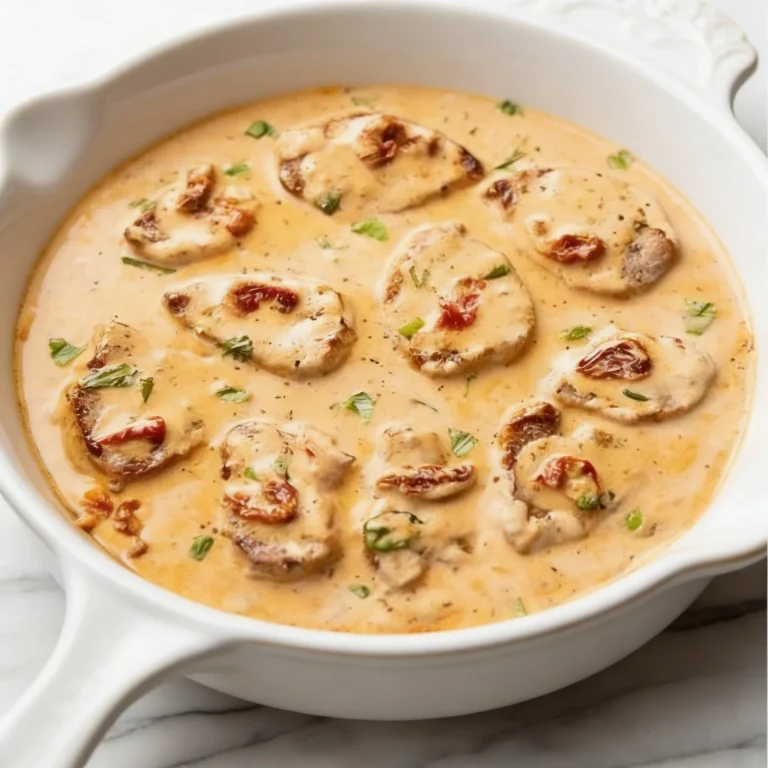
Marry Me Meatballs are tender beef and pork meatballs seared golden, then simmered in a creamy Tuscan sun-dried tomato sauce with garlic, heavy cream, parmesan, and fresh basil. Ready in 40 minutes, one pan, and named for producing the same reaction as the original viral Marry Me Chicken.
Marry Me Meatballs are homemade meatballs made from a blend of ground beef and ground pork, seasoned with garlic, Italian herbs, and Parmesan, then simmered in the signature Marry Me cream sauce, featuring sun-dried tomatoes, heavy cream, garlic, and fresh basil. The dish is a meatball adaptation of the viral Marry Me Chicken recipe that took TikTok by storm in 2023.
The key difference between this and every other meatball recipe is the sauce. Most meatball dishes use a tomato base. This one uses a Tuscan cream sauce that absorbs the rendered beef and pork fat during cooking, creating a depth that tomato alone cannot produce.
I have made this dish for skeptics who said they did not like cream sauces. Not one of them left anything in the pan.
Bottom line: One pan. 40 minutes. The richest Marry Me sauce of any protein in the entire recipe family.
Video
Why This Recipe Works
When meatballs sear in sun-dried tomato oil, beef and pork fat render into the pan. That rendered fat becomes part of the fond, the browned layer on the pan bottom. This fond is richer and more complex than the fond left by chicken or salmon because red meat produces more Maillard compounds during browning.
When the sauce builds in the same pan, every drop of that rendered fat dissolves into the cream. The result is a sauce that carries more depth than any other Marry Me version.
The 50/50 beef and pork blend matters specifically here. Beef provides iron-rich savory depth. Pork provides fat that keeps meatballs tender and adds sweetness to the sauce. Neither protein alone produces the same result.
What matters most: The meatball is not just the protein. It is the tool that builds the richest possible fond for this sauce to absorb.
Is Marry Me Meatballs Healthy?
A serving of Marry Me Meatballs delivers approximately 28 grams of protein. The beef and pork blend adds more saturated fat than the chicken or salmon versions. Swapping to a turkey or chicken meatball reduces fat by 40% while keeping the sauce intact. Serving vegetables instead of pasta keeps total calories reasonable.
The beef and pork blend makes this the richest version of the Marry Me recipe family nutritionally. According to the USDA FoodData Central database, ground beef provides significant iron, zinc, and B12 per serving. Ground pork adds thiamine and additional fat-soluble nutrients.
The cream sauce adds saturated fat across all Marry Me recipes. This version carries more than the chicken or salmon versions because the meat blend itself contributes additional fat to the dish.
Lighter options exist without sacrificing the sauce. The Marry Me Chicken Meatball section below covers this fully.
In short: Rich and satisfying. The most indulgent Marry Me version. Worth every bite when you want the full experience
How To Make Tender Meatballs: The Science Explained
No. Tuscan chicken and Marry Me chicken are distinct dishes. Tuscan chicken includes spinach in its base recipe and leans harder on garlic. Marry me chicken uses no spinach in the original version and centers tightly on the sun-dried tomato and Parmesan combination.
The sauce is richer and more concentrated. The flavor profiles overlap significantly, but the textures, proportions, and finishing details make each its own dish.
Why The Panade Changes Everything
A panade is breadcrumbs soaked in milk. It is the single most important technique in meatball making that most home cooks skip entirely.
When breadcrumbs absorb milk, they become a starch paste. Mixed into the meat, that paste coats the protein strands and physically interrupts them. This interruption prevents the tight protein contraction that happens when ground meat hits heat.
Without a panade, ground meat tightens into a dense, rubbery ball as proteins contract. With a panade, the starch paste cushions that contraction, and the meatball stays tender even when fully cooked.
One tablespoon of fresh breadcrumbs per 100 grams of meat is the correct ratio. Below that ratio, the meatball is still too dense. Above it, the meatball falls apart in the sauce.
Why The Fat Ratio Matters
The 50/50 beef and pork blend delivers approximately 20% fat content per serving. That fat level has two functions. First, it keeps the meatball moist through the sear and the sauce simmer. Second, it renders into the pan during searing and becomes part of the sauce foundation.
All-beef meatballs at standard supermarket fat content run 15 to 17% fat. They are drier and produce a less complex fond. All-pork meatballs are too fatty, the sauce becomes greasy and, is difficult to stabilize. The 50/50 blend is the correct fat ratio for this specific dish.
Why Meatball Size Directly Affects Cooking Time
Meatball diameter directly affects sauce cooking time and sauce absorption. I make these at 40 to 45 grams each, roughly 1.5 inches in diameter. At this size, the meatball cooks through in the sauce within 8 to 10 minutes at a gentle simmer.
Larger meatballs, 60 grams or more, need longer sauce time, which risks splitting the cream. Smaller meatballs under 30 grams overcook before the flavors fully develop.
INTERNAL TEMPERATURE GUIDE TABLE
| Doneness | Temp °F | Temp °C | Texture |
| Undercooked | Below 155°F | Below 68°C | Pink center, food safety risk |
| USDA Safe Minimum | 160°F | 71°C | No pink, fully cooked, moist |
| Well Done | 165°F | 74°C | Firm, slightly drier |
| Overcooked | Above 170°F | Above 77°C | Dry, dense, tough |
Always pull meatballs at 160°F (71°C) per USDA Food Safety and Inspection Service guidelines for ground meat. Meatballs carry over 2 to 3°F from residual heat. Pull at 158°F if using an instant-read thermometer.
Ingredients You Need And Why Every One Matters
For The Meatballs
Ground beef: 80/20 lean to fat ratio. The 20% fat content provides the rendering needed to build a rich pan fond. Leaner beef produces a drier meatball and a thinner fond.
Ground pork: Equal ratio to beef. Pork fat is softer and more neutral than beef fat. It blends into the sauce without making it heavy and keeps the meatball tender through the full cooking time.
Fresh breadcrumbs: From white bread with crusts removed. Blitz in a food processor for 10 seconds. Never use dried packaged breadcrumbs here; they absorb differently and produce a denser texture.
Whole milk: Used to soak the breadcrumbs and create the panade. Full fat only. Skimmed milk does not carry enough fat to coat the breadcrumb starch properly.
Egg: One large egg per 500 grams of meat. The yolk adds fat and emulsifying proteins. The white adds structure. Both are needed.
Freshly grated parmesan: Added directly into the meat mixture. It adds seasoning throughout the meatball and aged protein structures that help bind without tightening.
Fresh garlic: Minced into the meat mixture. Not jarred. Jarred garlic processed in citric acid tastes different inside cooked meat.
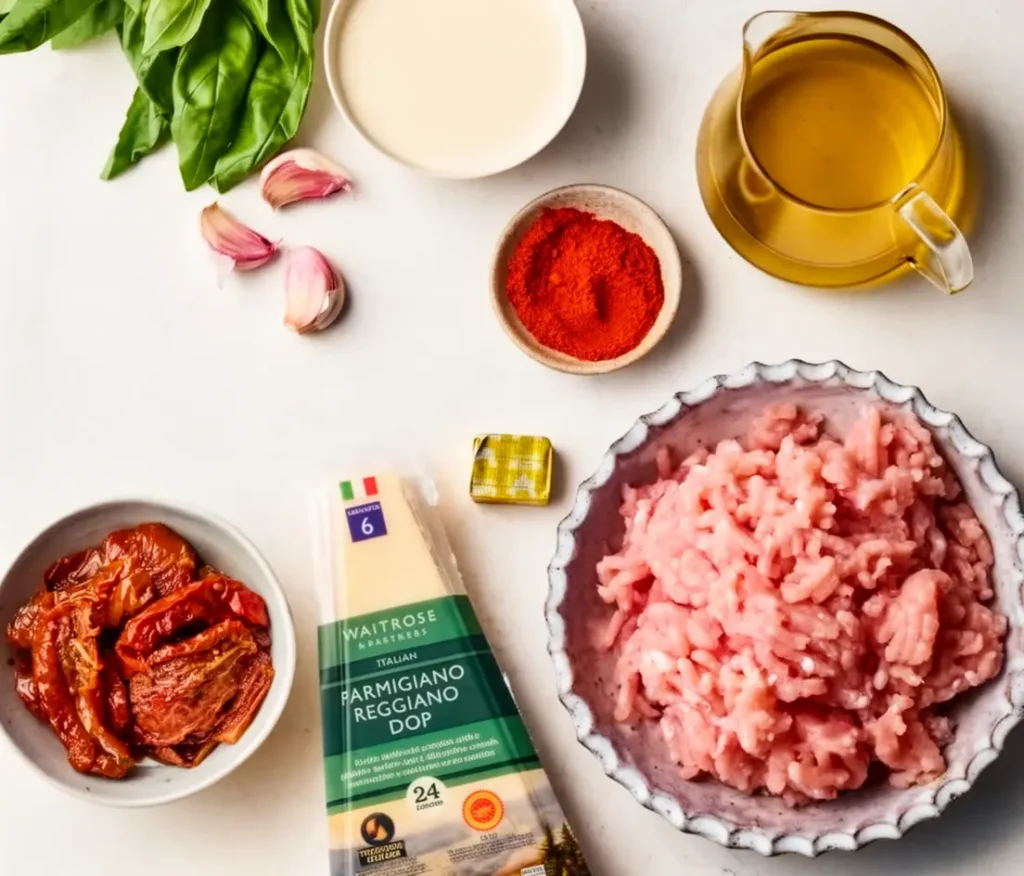
For The Marry Me Sauce
Sun-dried tomatoes packed in oil: Oil-packed only. Use the packing oil to sear the meatballs. That oil picks up rendered beef and pork fat during the sear and creates the deepest possible fond before cream is added.
Heavy cream: Full-fat, minimum 36%. The fat network holds stable against the rendered beef and pork fat in the sauce. Lower-fat alternatives break immediately.
Freshly grated parmesan: Four additions into the finished sauce, more than the salmon version’s three and more than the chickpea version’s two. Red meat cream sauce carries more fat and needs slower parmesan integration to stay smooth.
Garlic: Four cloves minimum. Added to the pan after the meatballs are removed. The beef and pork fond is deep and forgiving; garlic has more protection from bitterness here than in the salmon or chickpea versions.
Chicken broth: Low sodium. Used to deglaze and capture the fond. The fond from red meat browning is the most flavor-dense of all Marry Me proteins.
Fresh basil: Always off the heat. This rule does not change regardless of protein.
Tomato paste: One tablespoon cooked in the pan after deglazing. In a meatball dish, the tomato paste deepens the already rich beef and pork fond, creating a double umami layer that chicken or fish fond cannot produce. Cook for 2 full minutes until brick-red.
For the complete standalone sauce guide: Marry Me Tuscan Sauce
INGREDIENT SUBSTITUTIONS TABLE
| Ground beef 80/20 | Ground turkey 93/7 | Leaner, lighter sauce, less fond depth |
| Ground pork | Ground veal | Milder, more delicate, similar fat content |
| Fresh breadcrumbs | Panko breadcrumbs | Slightly coarser texture, still tender |
| Whole milk | Full-fat oat milk | Slightly sweeter, dairy-free panade |
| Heavy cream | Full-fat coconut milk | Sweeter, thinner, tropical undertone |
| Parmesan in the sauce | Pecorino Romano | Sharper, saltier, use 20% less |
| Chicken broth | Beef broth | Deeper, richer use half the amount |
| Sun-dried tomatoes | Roasted cherry tomatoes | Sweeter, less concentrated umami |
| Fresh basil | Fresh parsley | Brighter, more herbal finish |
| Tomato paste | Double concentrate | Use half the amount, more intense |
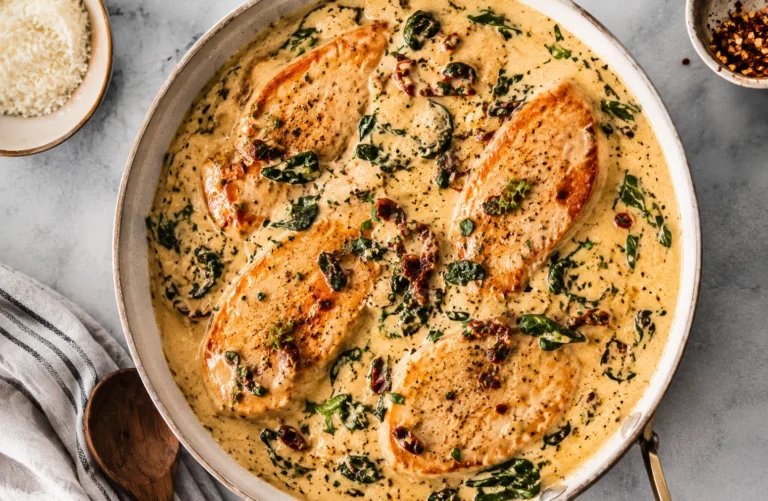
Love this sauce on meatballs? My original Marry Me Chicken make this same sauce architecture first, with the same Tuscan foundation, entirely different protein experience.
How To Choose The Best Mince For Meatballs
Fat Content Is Everything
For this recipe, you need 80/20 ground beef, 80% lean, 20% fat. Fat renders during searing and builds the fond that the sauce needs. It also keeps the interior moist while the exterior browns. Leaner beef 90/10 or 93/7 produces a drier meatball and a thinner, less complex fond.
For ground pork, standard supermarket ground pork runs 20 to 25% fat. That is the correct range for this blend.
Fresh vs Pre-Packaged
Fresh ground meat from a butcher is always preferable. Ask for a 50/50 blend ground together. Many butchers will do this without extra charge. The texture is finer and more consistent than mixing two pre-packaged products at home.
Pre-packaged works fine if fresh produce is unavailable. Mix thoroughly with your hands for a minimum of 2 minutes until completely uniform.
Temperature Before Mixing
Keep meat cold until the moment of mixing. Cold fat distributes more evenly through the mixture. Warm meat becomes greasy during mixing, and the fat separates before cooking begins.
Bottom line: 80/20 beef, standard fat pork, cold from the refrigerator, mixed thoroughly. These four rules produce the correct meatball foundation every time.
How Long Do Meatballs Take At 350°F?
Meatballs baked at 350°F (175°C) take 20 to 25 minutes, depending on size. A 40-gram meatball reaches 160°F (71°C) in approximately 22 minutes. Always verify with an instant-read thermometer; visual cues alone are unreliable for ground meat.
For this recipe, I sear rather than bake. The sear creates the fond that the sauce needs. An oven provides no fond.
If you choose to bake for a lighter version, here is the exact timing guide by size at 350°F.
| Meatball Weight | Diameter | Time at 350°F |
| 25 grams | 1 inch | 15 to 18 minutes |
| 40 grams | 1.5 inches | 20 to 25 minutes |
| 55 grams | 2 inches | 25 to 30 minutes |
| 70 grams | 2.5 inches | 30 to 35 minutes |
Always use an instant-read thermometer. Pull at 158 to 160°F (70 to 71°C). Carryover heat adds 2 to 3°F.
How To Make Marry Me Meatballs Step By Step
Make the panade, mix the meat, form meatballs, sear in batches in sun-dried tomato oil, remove, build the sauce in the same pan with garlic, tomato paste, sun-dried tomatoes, chicken broth, heavy cream, and parmesan in four additions. Return meatballs to the sauce and simmer gently to 160°F (71°C). Finish with basil off the heat.
Step 1 : Make The Panade
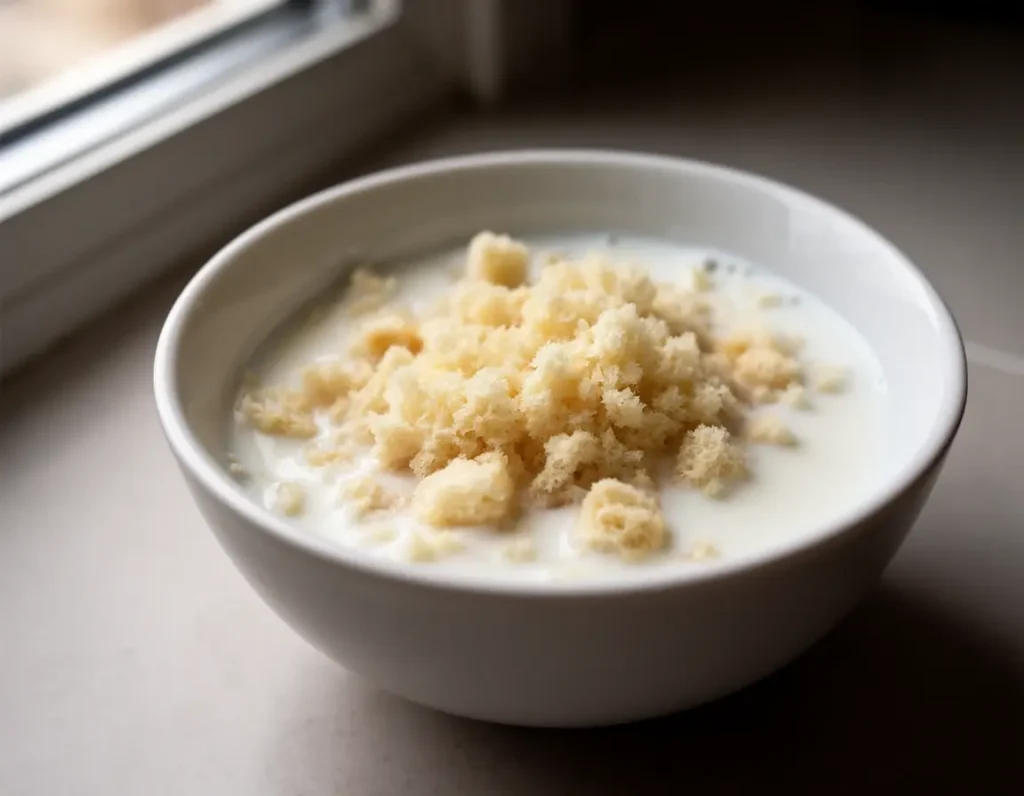
Combine 60 grams of fresh white breadcrumbs with 4 tablespoons of whole milk. Stir and press until all milk is absorbed. The mixture should look like a thick paste. Let it sit for 2 minutes before adding it to the meat.
Step 2 : Mix The Meat
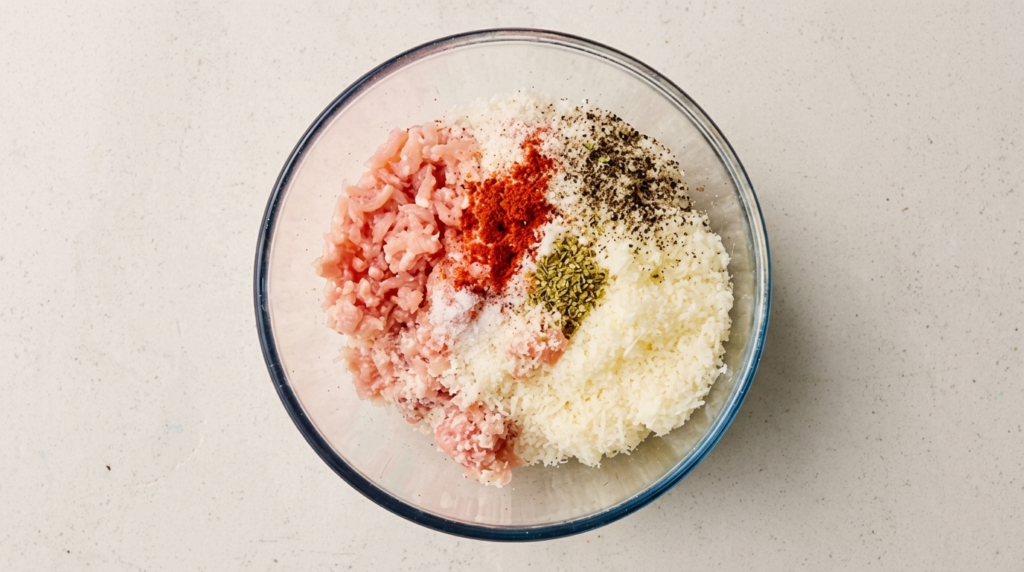
In a large bowl, combine 250 grams ground of beef and 250 grams ground of pork. Add the panade, 1 egg, 40 grams freshly grated parmesan, 3 minced garlic cloves, 1 teaspoon Italian seasoning, half a teaspoon salt, and a quarter teaspoon each of black pepper and red pepper flakes. Mix with your hands for 2 full minutes until completely uniform.
Step 3 : Form The Meatballs
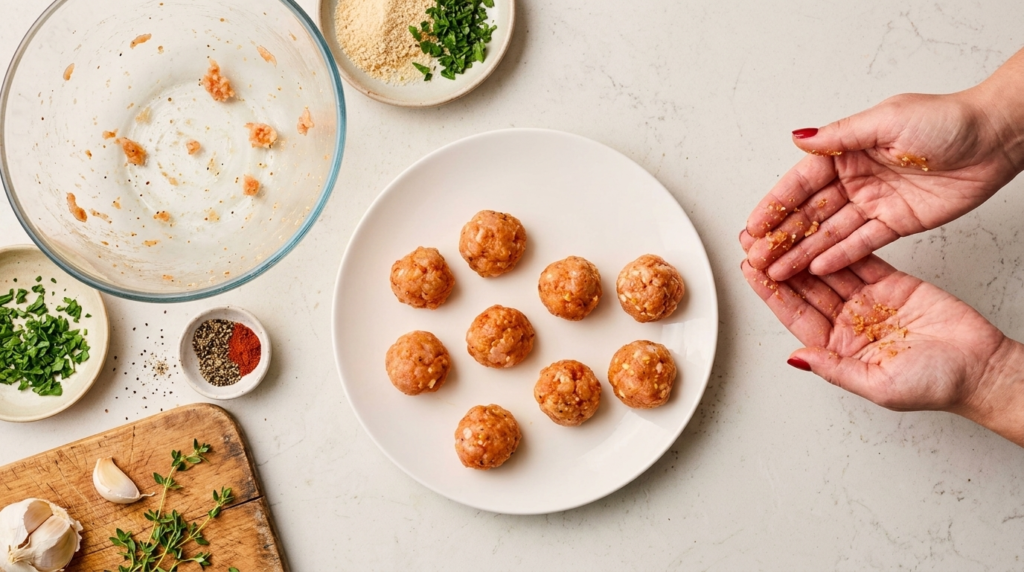
Portion the mixture into 40-gram balls using a kitchen scale. Roll between your palms using light pressure. Do not compress tightly; compression produces a dense meatball. Refrigerate on a lined tray for 10 minutes before searing. Cold meatballs hold their shape better in the pan.
Step 4 : Sear The Meatballs
Heat a large heavy skillet over medium-high heat for 2 minutes. Add 2 tablespoons of sun-dried tomato oil from the jar. When the oil shimmers, add meatballs in a single layer, a maximum of 6 to 8 at a time, in a 12-inch pan. Do not move them for 2 to 3 minutes. When they release cleanly from the pan with a deep brown crust, turn. Sear all sides approximately 6 to 8 minutes total per batch. Remove to a plate. They will finish cooking in the sauce.
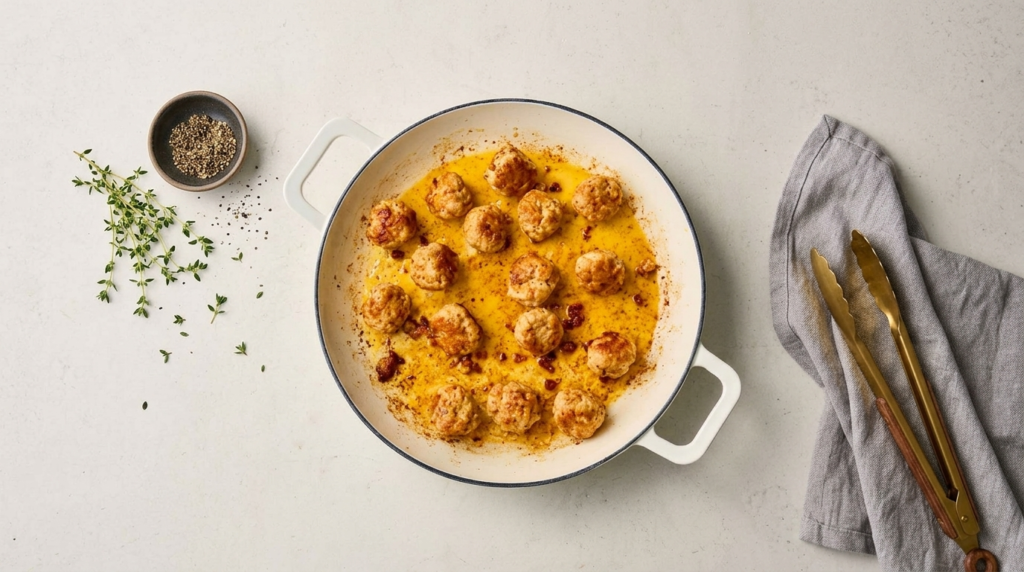
Step 5 : Build The Sauce Base
Reduce the heat to medium. Do not wipe the pan. Add 1 tablespoon of butter. Once melted, add 4 minced garlic cloves. Stir constantly for 40 to 45 seconds until pale gold. Add 1 tablespoon of tomato paste. Cook for 2 full minutes, pressing into the fond until it darkens to brick-red. Add half a cup of chopped oil-packed sun-dried tomatoes and stir for 30 seconds.
Step 6 : Deglaze And Build The Cream Sauce
Add half a cup of low-sodium chicken broth. Scrape every bit of fond from the pan. Reduce by half over 2 minutes. Reduce the heat to medium-low. Add 1 cup of heavy cream. Stir gently for 3 to 4 minutes. Never let it boil. Add half a cup of freshly grated parmesan in four separate additions, stirring between each. The four-stage addition is specific to red meat cream sauce; the higher fat content from beef and pork fond requires slower parmesan integration than chicken or plant-based versions.
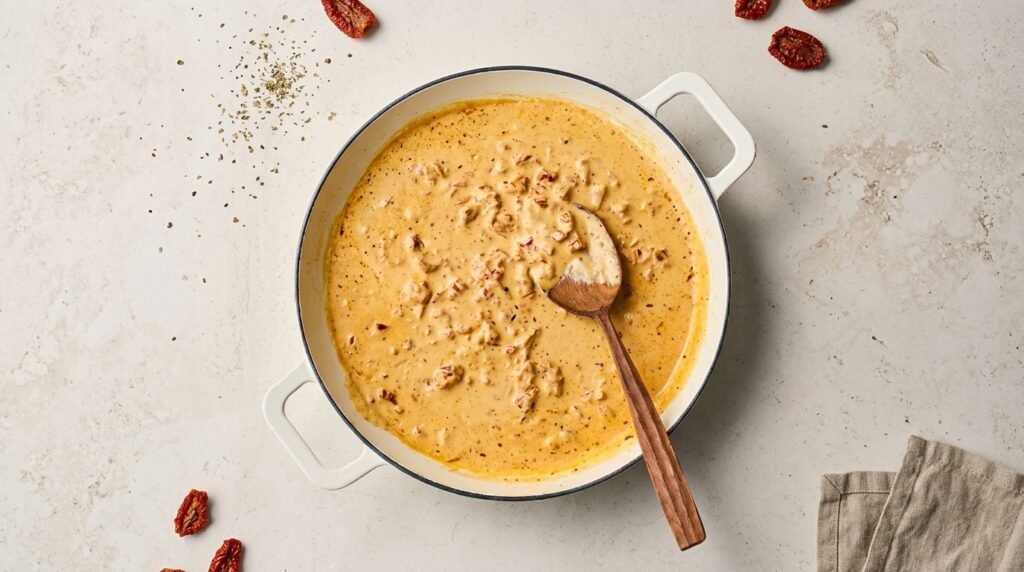
Step 7 : Finish The Meatballs In The Sauce
Return meatballs to the pan. Nestle them into the sauce. Spoon sauce generously over each one. Reduce heat the to low. Cover and simmer gently for 8 to 10 minutes until meatballs reach 160°F (71°C). Turn once at the halfway point.
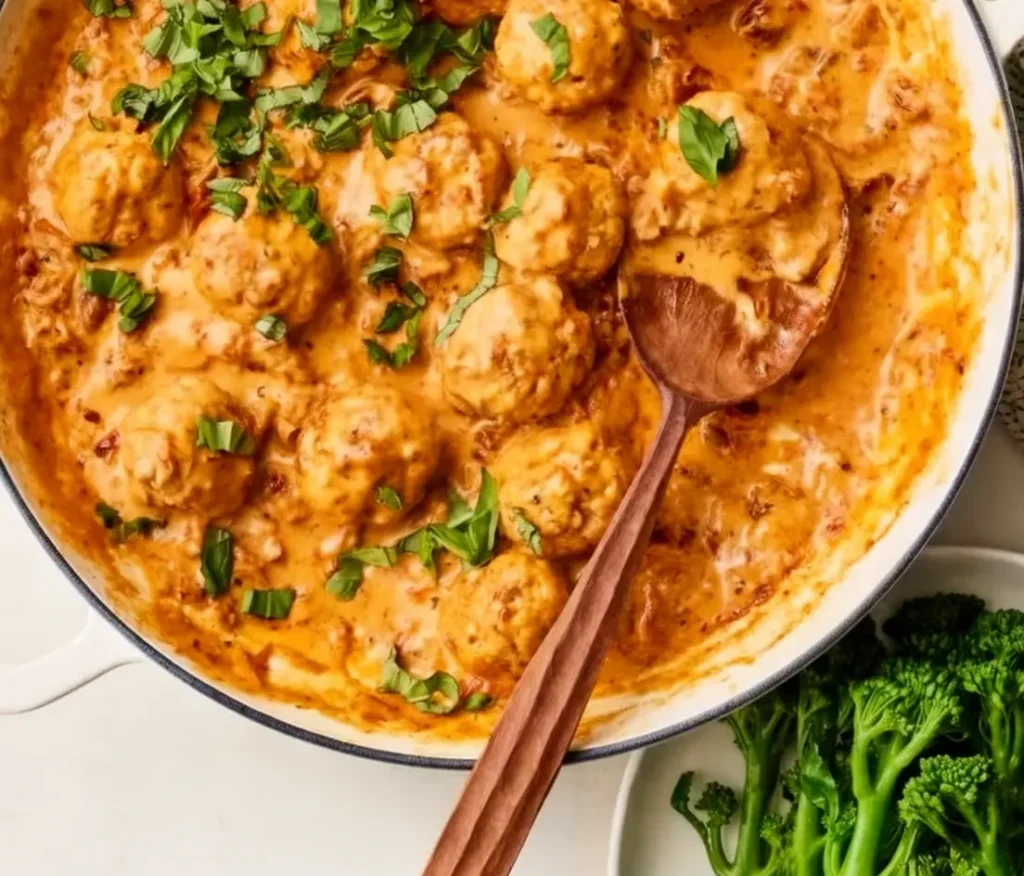
Step 8 : Rest And Serve
Remove from heat. Add fresh basil and lemon zest off the heat. Rest for 3 minutes. The sauce thickens slightly during resting. Serve immediately over pasta, gnocchi, or with crusty bread.
Bottom line: Eight steps. 40 minutes. One pan. Every step has a reason.
How To Make Marry Me Meatballs In A Crockpot
Sear the meatballs first, non-negotiable for fond. Build sauce in the same pan. Transfer to the slow cooker. Cook on low for 3 to 4 hours. Add parmesan in four additions in the final 15 minutes. Basil goes in off the heat before serving.
The crockpot version works. But one rule does not change regardless of cooking method. Sear the meatballs first.
The fond from the sear is what gives this sauce its depth. Skip the sear and place raw meatballs directly into a slow cooker, and you get grey meatballs in a flat, thin sauce. I have tested this. The result is not acceptable.
Crockpot Method:
Step 1: Sear meatballs as directed
Step 2: Make the sauce base in the same skillet
Step 3: Deglaze and add cream
Step 4: Do not add Parmesan yet
Step 5: Transfer meatballs and sauce to the slow cooker
Step 6: Cook on LOW 3 to 4 hours or HIGH 1.5 to 2 hours
Step 7: In the final 15 minutes, stir in freshly grated Parmesan in four additions
Step 8: Add fresh basil off the heat before serving
Parmesan added to a slow cooker at the start clumps against the ceramic surface. It also separates from the cream over 3 hours of sustained heat. Add it at the end only.
The sauce will thin slightly during slow cooking as the meatballs release moisture. Stir in 2 tablespoons of Parmesan as a final thickener if needed.
What Meatballs Teach You That No Other Marry Me Recipe Can
Meatballs are the only Marry Me protein where the interior actively enriches the sauce during cooking.
Chicken breast is a solid muscle. Salmon is a solid fillet. Chickpeas are whole legumes. None of them releases their internal fat into the sauce during simmering. They absorb it. But they do not contribute back.
Meatballs are different. Ground meat mixed with fat and bound with egg has a porous structure. As the meatball simmers, the rendered fat seeps outward through the porous matrix and enters the cream sauce continuously throughout the entire simmer time.
The result is a sauce that becomes progressively richer the longer the meatballs sit in it. This does not happen with any other Marry Me protein.
Do not rush the final simmer. Every additional minute adds depth that no other recipe in this collection can replicate.
Here is the takeaway: Meatballs are the only Marry Me protein that actively improves the sauce during cooking. Give them the time they need.
Four Meatball Tests That Changed Everything I Knew About This Sauce
I tested this recipe four ways before publishing. Each test changed one variable.
Test 1 : All-Beef vs 50/50 Beef and Pork Blend
All-beef meatballs were denser and produced a thinner fond. The sauce made on all-beef fond lacked the sweetness that pork fat contributes. The 50/50 blend produced a noticeably lighter meatball with a richer, sweeter fond. The cream absorbed the pork fat differently; it became rounder and less sharp. Verdict: A 50/50 blend is non-negotiable for this specific sauce.
Test 2 : With Panade vs Without Panade
The no-panade meatballs were dense and slightly rubbery after 10 minutes in the sauce. The panade meatballs stayed tender through the full simmer and beyond. The texture difference was significant enough that I would not serve the no-panade version to a guest. Verdict: The panade is not optional. It is the technique that makes this meatball worth making.
Test 3 : Parmesan Added All At Once vs Four Additions
All-at-once parmesan clumped immediately and left visible white streaks that never fully melted. The four-addition method produced a perfectly smooth, glossy sauce. Red meat cream sauce requires slower parmesan integration because the rendered beef and pork fat create a more complex emulsion than chicken or plant-based versions. Verdict: Four additions minimum in a red meat Marry Me sauce.
Test 4 : Searing All Meatballs Together vs Searing In Batches
Filling a 12-inch pan dropped the temperature instantly. The meatballs steamed rather than seared. No fond developed. No crust formed. The batch-seared version produced a deep, even crust on every meatball and a fond so rich it barely needed the cream to taste complex. Verdict: Sear in batches of 6 to 8 maximum. Pan temperature is non-negotiable.
Bottom line: Four tests. Four non-negotiables. 50/50 blend, panade, four parmesan additions, and batch searing. Miss any one, and the dish falls short.
Common Mistakes That Ruin This Dish
Mistake 1 : Overworking the meat mixture. Ground meat develops tough proteins when overworked. Mix until just combined, never beyond 2 minutes. Overworked meatballs become rubbery regardless of the panade.
Mistake 2 : Skipping the refrigeration step before searing. Cold meatballs hold their shape in the pan. Warm meatballs flatten on contact with heat and lose their round shape before a crust forms.
Mistake 3 : Crowding the pan during searing. Crowding drops the pan temperature. Meatballs steam instead of searing. No fond develops. Sear in batches of 6 to 8 maximum.
Mistake 4 : Adding cream before reducing the broth. Cream added to unreduced broth produces a thin sauce that never reaches the correct coating consistency. Reduce the broth by half before any cream touches the pan.
Mistake 5 : Adding all parmesan at once. Red meat cream sauce requires four parmesan additions. The complex fat emulsion from rendered beef and pork cannot absorb a full addition without clumping. Add in stages and stir between each.
Mistake 6 : Boiling the sauce after the meatballs return. A rolling boil breaks the cream emulsion in a red meat sauce faster than in any other Marry Me version. The additional rendered fat destabilizes the network. Gentle simmer only.
COMMON MISTAKES TABLE: MARRY ME MEATBALLS
| Mistake | Why It Happens | Exact Fix |
| Tough rubbery meatballs | Meat overworked proteins tightened beyond the tender range | Mix maximum 2 minutes, stop when uniform |
| Meatballs flatten in the pan | Added warmth to the pan to collapse unsupported structure | Refrigerate 10 minutes before searing always |
| No crust, no fond | The pan’s overcrowded temperature dropped, meatballs steamed | Sear a maximum 6 to 8 per batch in a 12-inch pan |
| Thin watery sauce | Broth not reduced before cream added | Reduce broth by half before any cream |
| Grainy sauce texture | Parmesan added all at once, clumps in red meat fat emulsion, visible against a darker fond-enriched sauce background | Add in four stages, stir fully between each |
| Sauce splits in the pan | Boiled after meatballs returned excess rendered fat destabilizes the cream network faster than other proteins | Gentle simmer only, never boil |
| Flat tasteless sauce | Pan wiped clean before the sauce makes up all the fond discarded | Never wipe the pan between searing and sauce |
Marry Me Chicken Meatballs: The Lighter Version
Marry Me Chicken Meatballs use ground chicken or turkey in place of the beef and pork blend. The meatball is lighter, leaner, and cooks faster. The sauce behaves differently because chicken fat renders at a lower rate and volume than red meat fat. This is genuinely a different dish, not just a substitution.
What Changes With Chicken Meatballs
The panade is more important here than in the beef version. Ground chicken has significantly less fat. Without a panade, the chicken meatball becomes dry almost immediately. I use 70 grams of breadcrumbs per 500 grams of chicken, 10 grams more than the beef version.
The fond is lighter. Chicken fat renders in a smaller volume than beef and pork. The sauce will be less rich than the beef and pork versions. This is not a flaw. It is a different dish.
Cooking time is shorter. Chicken meatballs reach 165°F (74°C), the USDA safe temperature for poultry, faster than beef and pork reach 160°F (71°C). Check at 6 minutes in the sauce.
Marry Me Chicken Meatball Recipe Adjustments
- Replace 250g ground beef + 250g ground pork with 500g ground chicken thigh meat (not breast — thigh has more fat)
- Increase panade to 70g fresh breadcrumbs, 5 tablespoons whole milk
- Reduce the sauce simmer to 6 to 8 minutes maximum. Pull at 163°F (73°C) internal. Everything else stays identical.
What Do You Serve With Marry Me Chicken Meatballs?
Serve marry me chicken meatballs over orzo, pappardelle, or creamy polenta. The lighter fond from chicken meatballs suits orzo specifically, the small pasta, which absorbs the lighter cream sauce without overwhelming it. Serve with steamed green beans or roasted asparagus on the side.
The lighter sauce from chicken meatballs suits smaller pasta shapes. Orzo is the best match it absorbs the sauce at the same rate as the chicken meatballs release their remaining fat. Creamy polenta works equally well and elevates the presentation for a dinner party.
If you want to explore how a completely different protein creates its own unique version of this sauce, my Marry Me Salmon shows how fish fat produces a lighter, more delicate fond with its own specific science. Completely different from the meatball experience, worth trying both.
Variations Worth Trying
Marry Me Meatballs And Gnocchi
The best pasta format for this dish. Gnocchi are soft, pillowy, and absorb the red meat cream sauce completely. Cook gnocchi separately until they float, approximately 2 minutes. Add directly to the saucepan after removing from heat. Toss for 60 seconds. Serve in wide shallow bowls with parmesan shavings and fresh basil.
For the pork chop version of this sauce, see Marry Me Pork Chops.
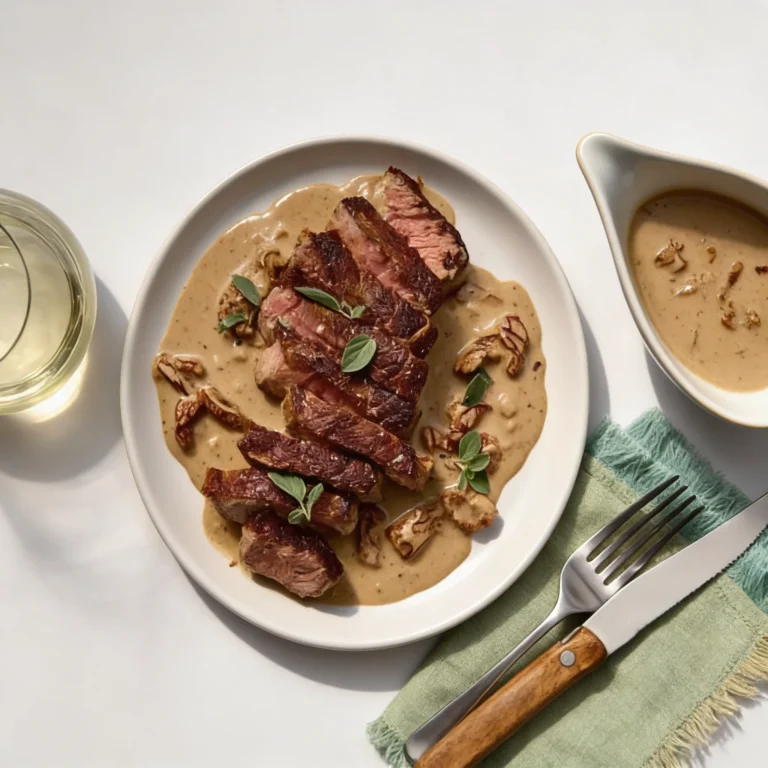
For the steak version of this sauce, see Marry Me Steak.
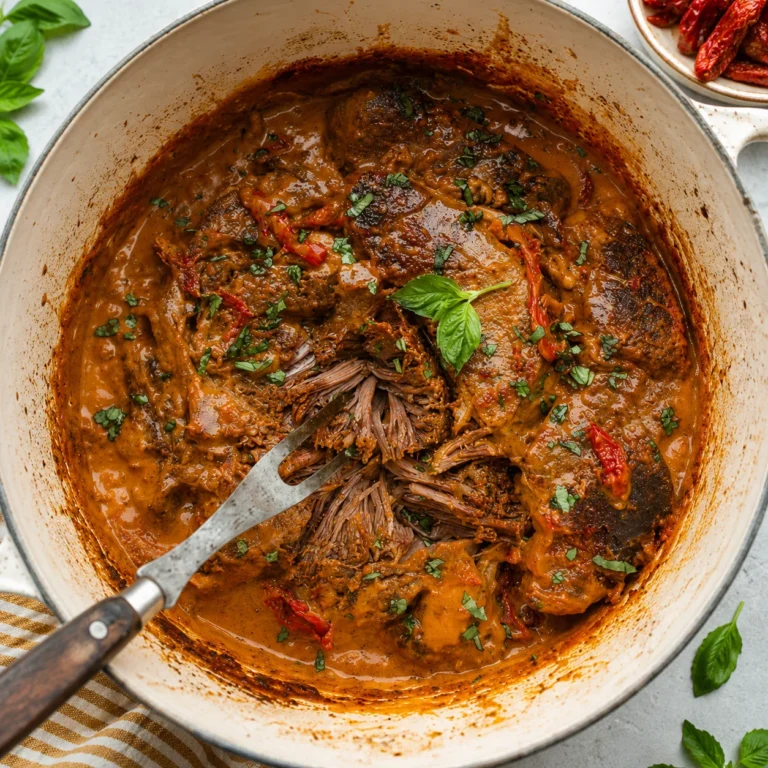
For the slow-braised pot roast version of this sauce, see Marry Me Pot Roast.
Spicy Marry Me Meatballs
Add 1 teaspoon of Calabrian chili paste to the sauce after the cream. Double the red pepper flakes in the meatball mixture itself. The heat from inside the meatball and the heat from the sauce build together through the meal. My preferred version for winter dinner parties.
Marry Me Turkey Meatballs
Use 500 grams of ground turkey in place of the beef and pork blend. Increase the panade to 80 grams of breadcrumbs per 500 grams of turkey. Add 1 tablespoon of olive oil to the meat mixture to compensate for lost fat. The sauce will be the lightest of all Marry Me meatball versions.
Dairy Free Version
Replace heavy cream with one can of full-fat coconut milk. Replace parmesan in the sauce with 4 tablespoons of nutritional yeast added in four stages. Replace parmesan in the meatball mixture with 3 tablespoons of nutritional yeast. The sauce carries a faint tropical note that works surprisingly well against the savory beef and pork fond.
Marry Me Meatball Soup
Add 2 cups of low-sodium chicken broth to the completed sauce after the meatballs are cooked through. Stir in 2 cups of baby spinach. Simmer 3 minutes. The sauce thins to a rich soup consistency. This variation works particularly well with the crockpot method. Add the extra broth and spinach in the final 30 minutes.
Bottom line: Five variations. Same meatball foundation. Completely different experiences depending on format and heat level.
My Marry Me Chickpeas uses the same Tuscan cream sauce base made entirely through plant-based starch, a thickening technique no meat-based recipe can replicate. Worth making back-to-back with this one.
Make Ahead Tips
Make Uncooked Meatballs Ahead
Form meatballs and place on a lined tray. Cover tightly and refrigerate for up to 24 hours before searing. The cold rest improves the meatball, the panade absorbs more evenly, and the shape holds better in the pan. My preferred make-ahead method for dinner parties.
Freeze Uncooked Meatballs
Form meatballs, place on a tray, and freeze uncovered for 2 hours until solid. Transfer to a freezer bag. Freeze for up to 3 months. Cook from frozen by adding 2 extra minutes to the searing time per side and 4 extra minutes to the sauce simmer. Always check the internal temperature.
Make The Sauce Ahead
The sauce alone keeps up to 2 days refrigerated. Reheat gently over low heat with 2 tablespoons of broth before adding freshly seared meatballs. Never reheat to a boil. Add fresh parmesan and basil after reheating, not before.
The cream sauce science here is consistent with what I have documented across my other Marry Me recipes, my Marry Me Chicken recipe covers the sauce rescue technique in full detail if yours separates during reheating.
In short, Meatballs make-ahead better than any other Marry Me protein. The uncooked meatball freezes perfectly. You can have this on the table in 20 minutes from a pre-made starting point.
How To Store And Reheat Leftovers
Refrigerator: Store meatballs and sauce together in an airtight container for up to 4 days. The beef and pork fat preserves the meatballs longer than salmon, 3 days, and slightly longer than plain chicken, 3 days, but not as long as the chickpea version at 5 days. The sauce thickens considerably when cold. This is normal.
Freezer: Freeze for up to 3 months. The cream sauce separates during freezing. To rescue: thaw overnight in the refrigerator, warm over low heat, and whisk in 2 tablespoons of fresh heavy cream while stirring. It re-emulsifies within 2 minutes.
Stovetop reheating: Add contents to a cold pan with 3 tablespoons of chicken broth. Heat over low, stirring gently. Spoon sauce over meatballs as it warms. Takes 6 to 8 minutes. Never rush with high heat.
Microwave reheating: Place in a microwave-safe dish with 2 tablespoons of broth. Cover loosely. Heat at 60% power in 60-second intervals. Meatballs reheat more evenly than salmon but less evenly than chickpeas in a microwave.
STORAGE GUIDE TABLE
| Method | Container | Duration | Reheating Notes |
| Refrigerator | Airtight glass container | Up to 4 days | Low heat with 3 tbsp broth |
| Freezer | Freezer-safe container | Up to 3 months | Thaw overnight, whisk cream while reheating |
| Uncooked meatballs in the fridge | Lined tray covered | Up to 24 hours | Sear from cold a shape holds better |
| Uncooked meatballs in the freezer | Freezer bag | Up to 3 months | Cook from frozen, add 4 min to simmer |
| Sauce only | Airtight glass jar | Up to 2 days | Gentle low heat, add fresh parmesan after |
| Microwave | Microwave-safe dish | Reheat twice max | 60% power, 60-second intervals |
Bottom line: Meatballs store better than salmon and similarly to chicken. Freeze uncooked for the best texture on reheating.
What Goes With Marry Me Meatball?
Marry Me Meatballs work best over pappardelle, rigatoni, gnocchi, or creamy polenta. The red meat cream sauce is rich; choose sides that absorb it rather than compete. Crusty bread and a simple rocket salad with lemon are the best accompaniments.
Pasta Options
Pappardelle is the first choice. The wide, flat noodles hold the heavier sauce without breaking. Rigatoni tubes trap the sauce inside every bite. Gnocchi is the dinner party choice; it absorbs the sauce completely. Avoid angel hair or thin pasta; the heavy sauce overwhelms delicate shapes.
Non-Pasta Options
Creamy polenta is the most impressive option. Spoon meatballs and sauce over a wide pool of soft polenta. Crusty sourdough serves as both a side and a sauce vessel. Mashed potatoes work for a cold-weather version.
Wine Pairing For Red Meat Cream Sauce
The beef and pork fat need tannins to cut through them. A Sangiovese, the grape of Chianti, is the textbook match. Its acidity cuts through both the cream and the meat fat simultaneously. A Barbera d’Alba carries similar acidity with a rounder finish. For a lighter red, a Montepulciano d’Abruzzo provides structure without aggression.
White wine drinkers can try a full-bodied Fiano di Avellino, richer than the whites that suit salmon but lighter than an oaked Chardonnay. The Fiano’s slight oxidative quality complements the deep, fond-enriched sauce well.
SERVING PAIRINGS TABLE
| Pairing Type | Best Options | Why It Works |
| Pasta | Pappardelle, rigatoni, gnocchi | Wide shapes hold heavy red meat sauce |
| Grains | Creamy polenta, farro | Absorbs sauce without competing |
| Bread | Sourdough, focaccia | Crusty exterior, sauce-absorbing interior |
| Vegetables | Rocket salad, broccolini, asparagus | Simple acid contrast or neutral companion |
| Red wine | Sangiovese, Barbera d’Alba, Montepulciano | Tannins cut red meat fat and cream together |
| White wine | Fiano di Avellino, full-bodied Vermentino | Body matches sauce richness without fighting |
Made this for date night? Tag your plate. I want to see your version.
Can You Freeze Marry Me Meatballs?
Yes. Freeze cooked meatballs and sauce together for up to 3 months. The cream sauce separates on thawing, rescue by reheating over low heat while whisking in 2 tablespoons of fresh cream. For best results, freeze uncooked formed meatballs separately and make the sauce fresh when ready to serve.
Cooked meatballs freeze and reheat acceptably. The sauce requires rescue every time because cream emulsions do not survive the freeze-thaw cycle cleanly.
Uncooked formed meatballs freeze perfectly. The panade structure is actually improved by freezing the milk, and breadcrumb bind more firmly during the freeze period. Cook from frozen by adding 2 minutes to each searing side and 4 minutes to the sauce simmer. Always check the temperature.
Frequently Asked Questions
Can I make marry me meatballs without pork?
Yes. Use all ground beef with an 80/20 fat content. Add half a teaspoon of fennel seed to the meat mixture; fennel replicates the sweet aromatic note pork provides. The sauce will be slightly less sweet, and the fond slightly less complex, but the results are very good.
Why do my meatballs fall apart in the sauce?
Three causes cover most problems. The meat was overworked, and the protein structure broke down. The panade ratio was wrong; too much breadcrumb weakens the bind. Or the sauce was boiling rather than simmering. A rolling boil breaks meatballs through physical force. Gentle simmer only after the meatballs return to the pan.
Can I use store-bought meatballs?
Technically yes. Pre-cooked store-bought meatballs will not produce usable fond when seared because they have already been cooked once. The sauce will be noticeably flatter. If using store-bought, sear anyway for color and warm in the sauce for 5 minutes only.
What is the difference between marry me meatballs and regular Italian meatballs?
The sauce is everything. Regular Italian meatballs use a tomato-based sauce. Marry Me Meatballs use a Tuscan cream sauce made from sun-dried tomatoes, heavy cream, parmesan, and garlic. The meatball itself is similar. The finished dish is completely different.
Can I make this recipe gluten-free?
Yes. Replace fresh white breadcrumbs with gluten-free breadcrumbs or certified gluten-free rolled oats pulsed into coarse crumbs. Use certified gluten-free chicken broth and check your Italian seasoning blend. Every other ingredient is naturally gluten-free.
How do I know when the sauce is the right consistency?
The correct consistency coats the back of a spoon and leaves a clean line when you drag a finger through it. If it pours like water, simmer uncovered 3 to 4 more minutes. If it is too thick, add 2 tablespoons of warm broth. Always pull slightly thinner than needed, as it thickens on cooling.
Can I add spinach to marry me meatballs?
Yes. Add 2 cups of fresh baby spinach to the sauce 2 minutes before serving. Stir until wilted, about 60 seconds. The spinach adds mild bitterness that cuts through the richness of the red meat cream sauce without changing the fundamental dish.
Is this the same as Swedish meatballs?
No. Swedish meatballs use a gravy-style sauce based on beef broth and cream with lingonberries on the side. Marry Me Meatballs use a Tuscan cream sauce with sun-dried tomatoes, garlic, and Italian herbs. Same format, completely different sauce and flavor profile.
Recipe Card
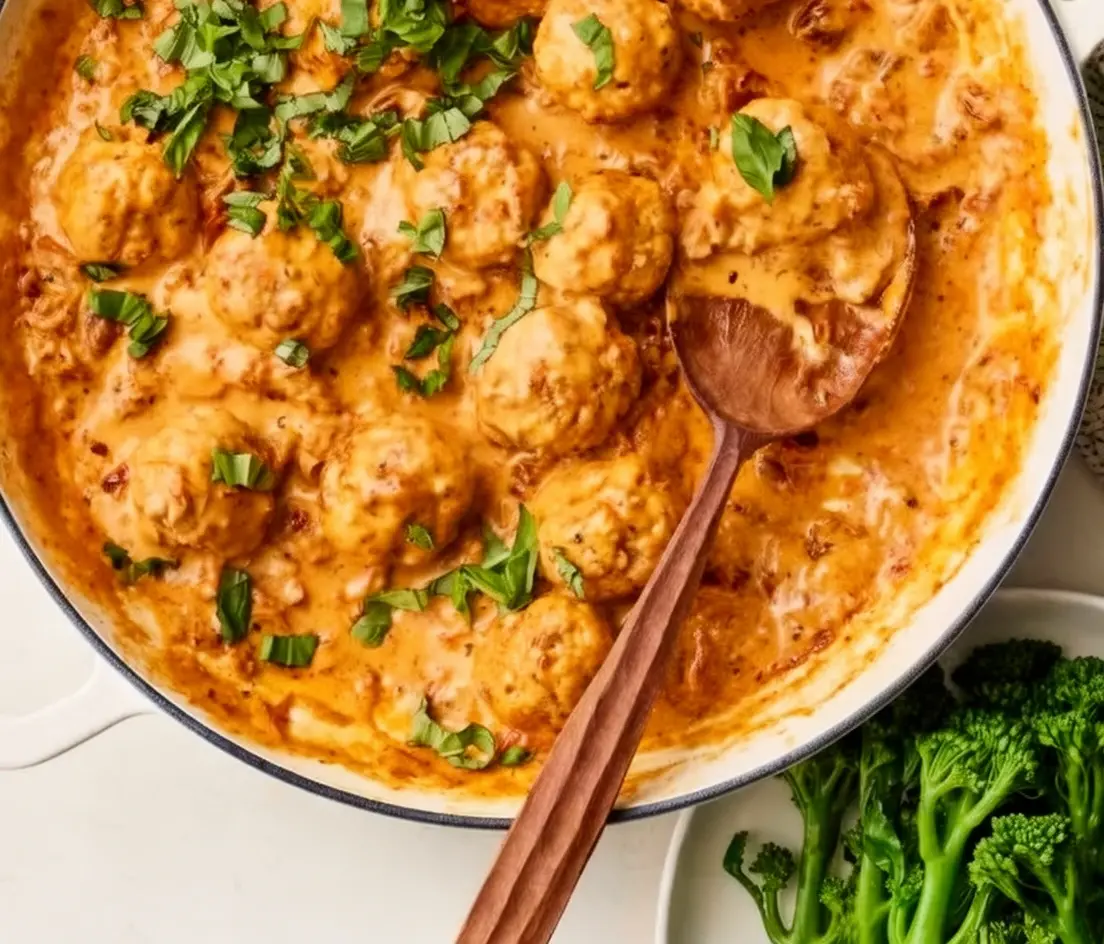
Marry Me Meatballs
Equipment
- Large 12-inch cast iron or stainless steel skillet
- Kitchen scale
- Large mixing bowl
- Wooden spoon
- Instant read meat thermometer
- Microplane grater for parmesan
Ingredients
- For The Meatballs
- 250 g ground beef 80/20 fat content
- 250 g ground pork standard fat
- 60 g fresh white breadcrumbs
- 4 tablespoons whole milk
- 1 large egg
- 40 g freshly grated parmesan
- 3 cloves garlic freshly minced
- 1 teaspoon Italian seasoning
- Half teaspoon fine salt
- Quarter teaspoon black pepper
- Quarter teaspoon red pepper flakes
- For The Marry Me Sauce
- 2 tablespoons sun-dried tomato oil from the jar
- 1 tablespoon unsalted butter
- 4 cloves garlic freshly minced
- 1 tablespoon tomato paste
- Half cup sun-dried tomatoes oil-packed, drained and chopped
- Half cup low sodium chicken broth
- 1 cup heavy cream full fat
- Half cup parmesan freshly grated from a block
- Quarter cup fresh basil thinly sliced
- Salt and black pepper to taste
Instructions
- Step 1: Make the Panade. Combine breadcrumbs and milk. Stir and press until absorbed. Rest 2 minutes.
- Step 2: Mix The Meat. Combine beef, pork, panade, egg, parmesan, garlic, and all seasonings. Mix with hands for exactly 2 minutes until completely uniform.
- Step 3: Form Meatballs Portion into 40-gram balls using a kitchen scale. Roll lightly. Do not compress. Refrigerate on a lined tray for 10 minutes.
- Step 4: Sear in Batches Heat the skillet over medium-high. Add sun-dried tomato oil. Sear meatballs in batches of 6 to 8, turning every 2 to 3 minutes, until deep brown all over, approximately 6 to 8 minutes per batch. Remove to a plate.
- Step 5: Make the Sauce Base. Reduce to medium. Add butter to the same pan. Add garlic, stir for 40 to 45 seconds. Add tomato paste, cook 2 full minutes until brick-red. Add sun-dried tomatoes, stir 30 seconds.
- Step 6: Make the Cream Sauce. Add broth, scrape all fond. Reduce by half over 2 minutes. Reduce to medium-low. Add cream, stir gently for 3 to 4 minutes. Add parmesan in four separate additions, stirring between each.
- Step 7: Finish in the sauce. Return meatballs to the pan. Spoon sauce over each. Cover, simmer gently on low for 8 to 10 minutes until internal temperature reads 160°F (71°C).
- Step 8: Rest and Serve. Remove from heat. Add fresh basil off the heat. Rest 3 minutes. Serve over pasta, gnocchi, or polenta.
Notes
- Never skip the panade: it keeps meatballs tender through the full simmer
- Sear in batches: pan temperature determines fond quality
- Add parmesan in four stages; red meat cream sauce requires slower integration
- Never boil after meatballs return, gentle simmer only
- Freeze uncooked meatballs for the best make-ahead option
| Ingredient | Substitution | Notes |
| Ground beef | Ground turkey | Leaner, lighter sauce |
| Ground pork | Ground veal | Milder, similar fat |
| Fresh breadcrumbs | Panko | Slightly coarser texture |
| Heavy cream | Full-fat coconut milk | Sweeter, thinner |
| Parmesan in the sauce | Pecorino Romano | Use 20% less |
| Chicken broth | Beef broth | Use half the amount |
Conclusion
If you have been making meatballs your whole life and they have never quite been this good, this is why. The panade kept them tender. The 50/50 blend made the richest possible fond. The four-stage Parmesan integration kept the sauce smooth. The gentle final simmer let the meatballs enrich the sauce from the inside out, something no other Marry Me protein can do.
Every step exists for a reason. And every reason is the same. To make the sauce as good as it can be.
Make it once, and it becomes the meatball recipe you use for the rest of your life. Make it twice, and it becomes the one your guests request by name.
Now close the laptop and go make it. Tonight.
About the Author
By Emily Carter, Recipe Developer and Culinary Instructor. Trained at the Institute of Culinary Education, New York. Six years in professional kitchens. Every recipe on this site is tested a minimum of three times before publication. If it does not work reliably, it does not get published.
What Readers Are Saying
★★★★★ “I finally understand what the fuss is about,” James T., February 2026. I have made meatballs my whole life and always thought they were just meatballs. Made this on a Friday night for my wife, and she put her fork down halfway through and said she wanted to make it every week. The panade trick is something I wish someone had told me 20 years ago. Never going back to my old recipe.
⭐ Rate This Recipe
Have you made this? Leave a star rating below and tell us how it turned out! Your feedback helps other home cooks.