Marry Me Salmon Pasta: The Fix That Stops It Tasting Like Fishy Alfredo
By Emily Carter. Last updated: May 2026. Recipe tested and verified. Nutritional data reviewed for accuracy.
Every creamy salmon pasta has the same problem. The sauce coats the noodles, the salmon sits on top, and somewhere between the pan and the plate, it starts tasting like a fish pie that lost its way. The fix is not a different sauce. It is lemon zest added at exactly the right moment, and understanding why salmon behaves differently in cream than chicken ever does.
This is the marry me salmon pasta that solves that problem. Thirty minutes. One pan for the sauce. The fix is already built in.
Sear salmon to 125°F, rest, and flake. Build the Marry Me sauce in the same pan. Toss with linguine and pasta water. Add Parmesan off the heat, then lemon zest. This is the step that stops the fishy taste. Thirty minutes total.
Key Takeaways:
- Lemon zest, not lemon juice, added off heat, stops the fishy cream problem
- Flaked salmon distributes through the pasta better than whole fillets
- Long pasta shapes, such as linguine or tagliatelle, carry salmon sauce better than tubes
- Pasta water is as essential here as in any other pasta in this collection
- Internal temperature: 125°F for medium, 145°F for well done your choice
Video:
What Is Marry Me Salmon Pasta?
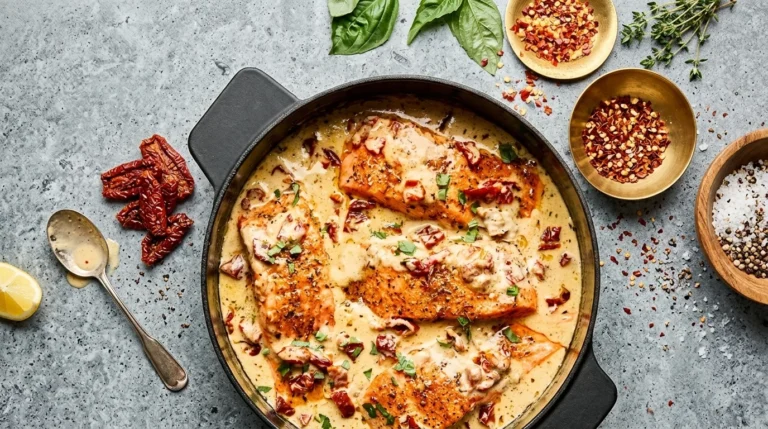
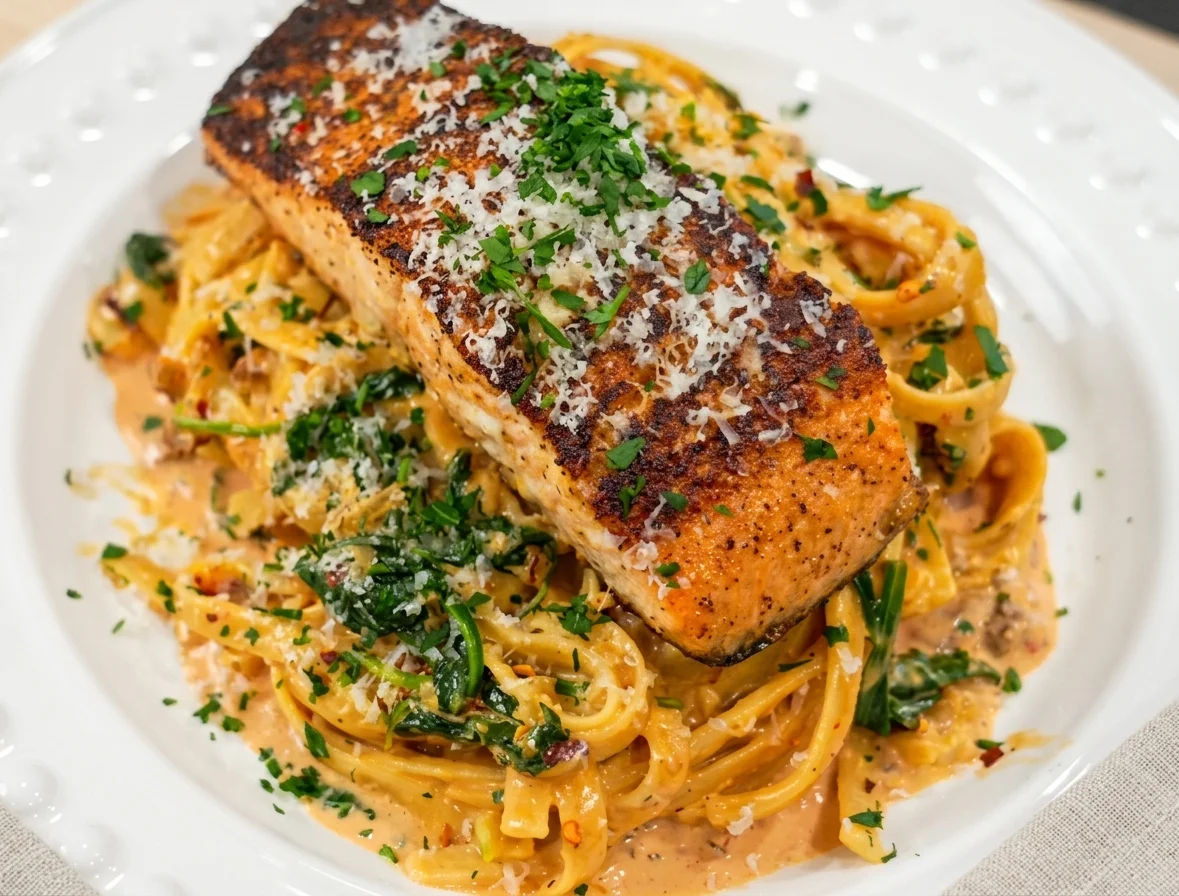
Marry me salmon pasta is pan-seared salmon fillets flaked into a creamy sun-dried tomato Parmesan sauce, tossed with linguine or tagliatelle and a splash of pasta water, finished with lemon zest and fresh basil off the heat. Ready in 30 minutes. Serves 4 at approximately 640 calories per serving.
At a Glance
| Detail | Value |
| Total time | 30 minutes |
| Prep time | 8 minutes |
| Cook time | 22 minutes |
| Servings | 4 |
| Calories per serving | ~640 kcal |
| Protein | 42g |
| Best pasta shape | Linguine or tagliatelle |
| Salmon internal temp | 125°F medium / 145°F well done |
| Gluten-free | Yes, GF pasta works |
| Dairy-free adaptable | Yes |
Why Salmon Pasta Tastes Fishy And The Exact Fix
The Science Behind Salmon’s Omega-3 Oils In Cream
Salmon contains significantly higher levels of omega-3 fatty acids than chicken, documented by USDA FoodData Central at approximately 2,260mg per 100g serving. When those oils meet heavy cream at a simmering temperature, they do not simply combine; they begin oxidizing in the heat. That oxidation is what produces the “fishy” flavour that turns a creamy salmon pasta into something closer to a tin of fish in white sauce.
Chicken fat does not oxidize this way. This is the chemical reason why Marry Me Chicken pasta and Marry Me Salmon pasta behave differently in the same sauce and why salmon pasta needs one extra step that chicken never does.
Lemon Zest: The One Ingredient That Changes Everything
Lemon zest contains limonene, a compound that binds with trimethylamine, the specific molecule responsible for fishy odour, and neutralizes it before it reaches the palate. Added off heat after the Parmesan, lemon zest does not add sourness, it adds brightness that makes the salmon taste cleaner, more present, and completely itself.
Lemon juice does the opposite. The acid in lemon juice added to warm cream can break the emulsion, curdle the Parmesan, and produce a grainy sauce. Zest only. Off heat only.
What Sauce Goes Best With Salmon Pasta?
The Marry Me sauce works with salmon for one specific reason that simpler cream sauces miss. The glutamic acid from the sun-dried tomatoes, between 650 and 1,140mg per 100g according to the Umami Information Center, adds savoury depth that anchors the salmon’s natural richness without competing with it. A plain cream sauce has nothing to anchor the fish. The Marry Me sauce does.
Classic Alfredo fails with salmon because it has no umami foundation; it is fat plus starch plus salt, and salmon’s omega-3 oils push through all three. The sun-dried tomato base changes that equation completely.
What Kind Of Pasta Is Best With Salmon?
Why Long Pasta Shapes Work Better Here
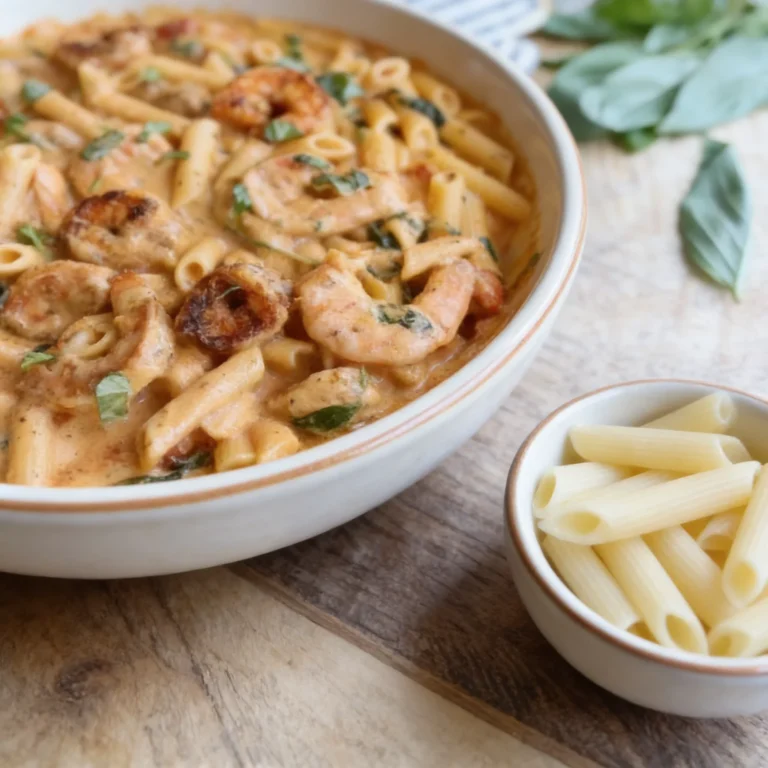
Tubular pasta, such as rigatoni or penne, traps sauce inside the tube. With flaked salmon, pieces catch inside the tube, and the ratio of fish to pasta per bite becomes unpredictable. Long flat pasta linguine, tagliatelle, pappardelle wraps around flaked salmon pieces naturally, coating each strand rather than swallowing chunks. Every twirl of the fork carries sauce, salmon, and pasta in the same proportion.
Pasta Shape Comparison
| Shape | Result With Salmon | Recommend? |
| Linguine | Even distribution, elegant | Best choice |
| Tagliatelle | Rich, wide coating, date night feel | Excellent |
| Pappardelle | Maximum sauce per bite | Excellent |
| Spaghetti | Works thinner coating | Good |
| Rigatoni | Salmon chunks are trapped inside tubes | Avoid |
| Penne | Same problem as rigatoni | Avoid |
Do Italians Use Salmon In Pasta?
Not traditionally. Italian pasta is built on the principle that the pasta region determines the sauce, and salmon has never been a coastal staple in the regions that produced Italy’s great pasta traditions. Northern Italian cuisine in Piedmont and Lombardy uses butter and cream. Central Italian Tuscany uses olive oil and cured meats. Salmon in pasta is a modern, Scandinavian-influenced adaptation that became popular in Italian restaurants outside Italy before it became accepted within.
What Italians do understand is that fish pasta requires restraint. The fish is the flavour, the sauce is the vehicle. This recipe follows that principle exactly: the Marry Me sauce carries the salmon rather than burying it.
Ingredients And Why Everyone Matters
Complete Ingredient List
For the salmon:
- 4 salmon fillets, skin on (approx. 150g / 5oz each)
- ½ tsp fine sea salt
- ¼ tsp freshly ground black pepper
- ½ tsp smoked paprika
- ½ tsp garlic powder
- 1 tsp olive oil
For the sauce:
- 2 tbsp oil from the sun-dried tomato jar
- 4 cloves fresh garlic, minced
- 1 tbsp double-concentrated tomato paste
- ⅓ cup (55g) sun-dried tomatoes in oil, drained and chopped
- ½ cup (120ml) dry white wine
- ¾ cup (180ml) low-sodium chicken or vegetable stock
- 1 cup (240ml) heavy cream, minimum 36% fat
- ½ cup (50g) freshly grated Parmesan from a block off heat
- ¼ tsp red pepper flakes
- Zest of 1 lemon off heat, after Parmesan
- ¼ cup fresh basil leaves, torn off the heat
For the pasta:
- 320g / 11oz linguine or tagliatelle
- ½ cup reserved pasta water
Whole Fillet vs Flaked Salmon
A whole fillet placed over pasta looks impressive. It also means every bite is either all salmon or all pasta, never both at once. Flaking the salmon into the sauce after searing gives every forkful an even distribution of fish, sauce, and pasta. The texture is also different; flaked salmon that has rested for 3 minutes pulls apart into moist pieces rather than pressing into dry chunks.
Always flake. Always rest first.
Substitutions
| Original | Substitute | Impact |
| Fresh salmon | Hot smoked salmon added at the end, no searing | Deeper smoke flavour, no cooking needed |
| Fresh salmon | Canned wild salmon, drained | Budget option skip searing, add at Step 5 |
| Heavy cream 36%+ | Full-fat canned coconut cream | Holds under heat, slight sweetness |
| Parmesan from a block | Pecorino Romano | Sharper reduces salt by ¼ tsp |
| White wine | Extra stock + 1 tsp white wine vinegar | Less complexity |
| Linguine | Tagliatelle, pappardelle | All excellent, avoid tubular shapes |
How To Make Marry Me Salmon Pasta: Step By Step
Step 1: Sear The Salmon
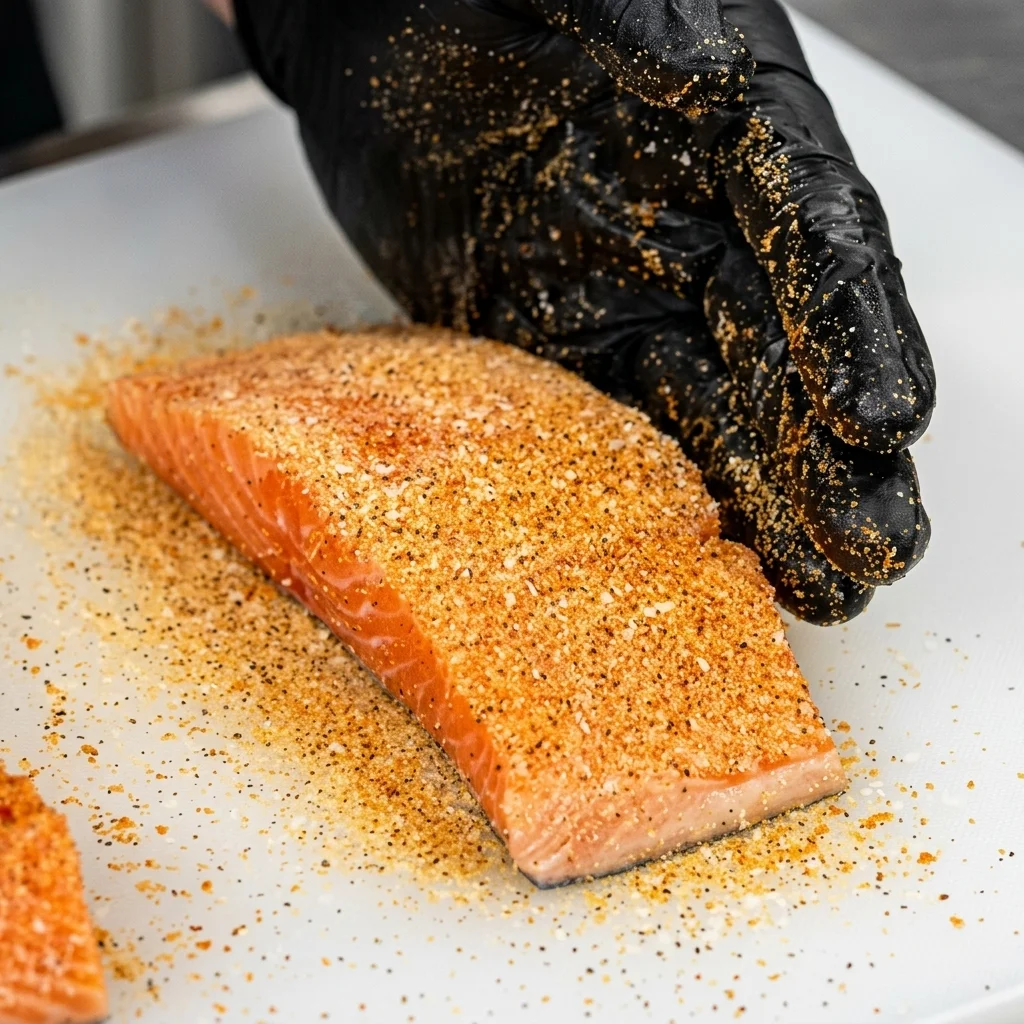
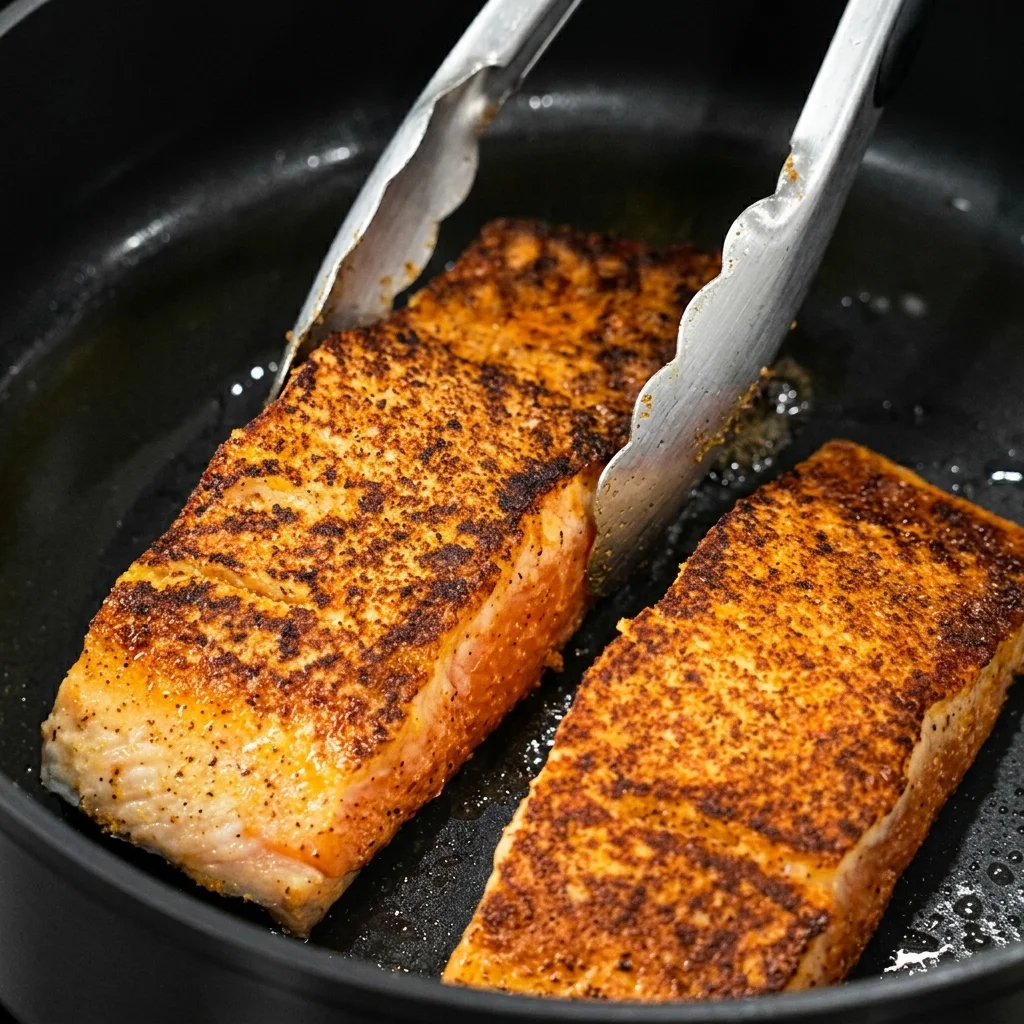
Pat salmon fillets completely dry. Moisture is the enemy of a proper sear on fish. Season both sides with salt, pepper, smoked paprika, and garlic powder. Heat olive oil in a large skillet over medium-high heat until shimmering. Place salmon skin-side down. Press gently with a spatula for the first 30 seconds to prevent curling. Sear 4 minutes without moving the skin crisps and releases naturally when ready. Flip. Sear 2 to 3 minutes until the internal temperature at the thickest point reads 125°F for medium or 145°F for well done per USDA food safety guidelines. Transfer to a plate. Rest 3 minutes. Remove skin. Flake into large pieces.
Step 2: Build The Sauce
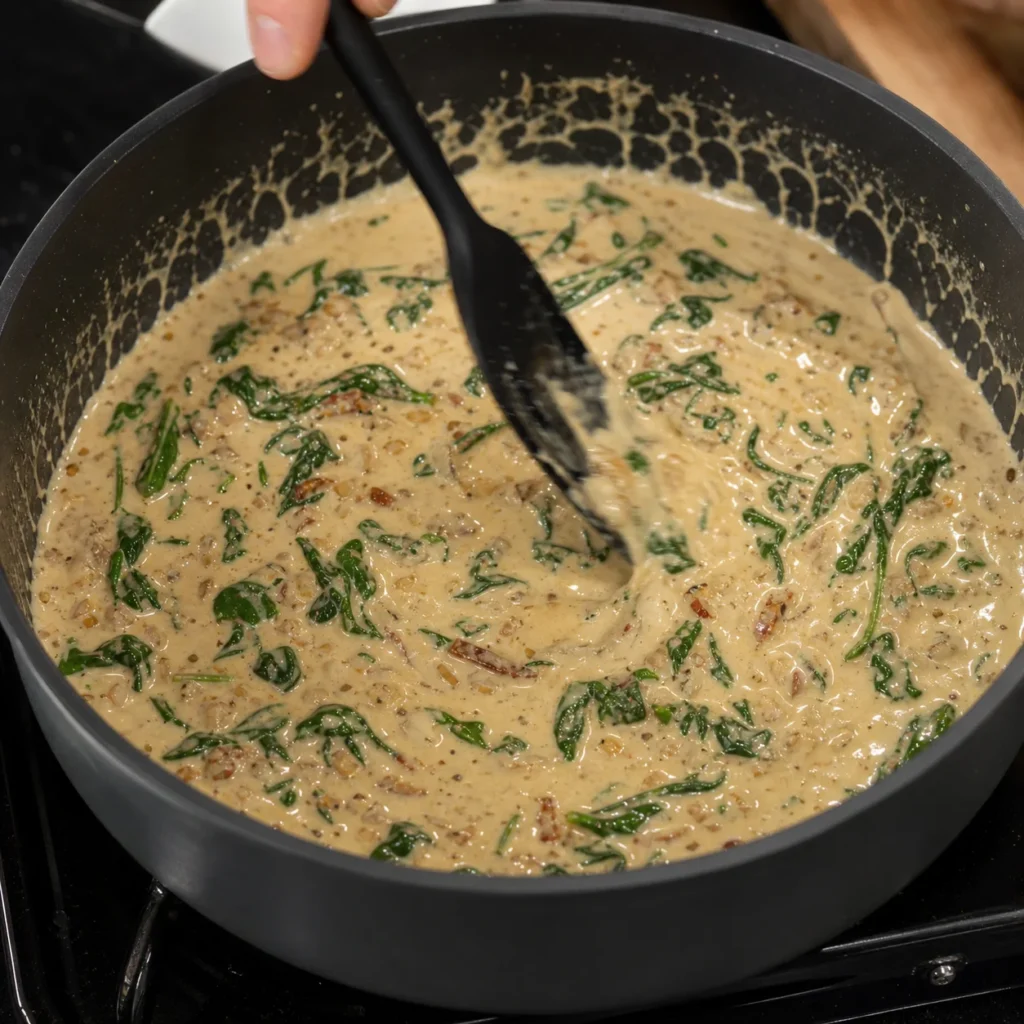
Same pan over medium-high. Add garlic to the salmon fond, stir for 60 seconds until pale gold. Add double-concentrated tomato paste, stir 90 seconds until brick red. Add sun-dried tomatoes, stir 30 seconds.
Pour in white wine. Scrape every browned bit from the pan that fond is built from salmon now, not chicken. Let it reduce for 90 seconds. Add stock. Reduce by 2 minutes. Reduce the heat to medium-low. Add cream and red pepper flakes. Simmer gently, never boil, 3 to 4 minutes until slightly thickened.
Step 3: The Lemon Zest Moment
Remove the pan from the heat completely. Add Parmesan in three stages off heat, stir fully between each. Then add the lemon zest. Stir once to distribute. The zest goes in after the Parmesan, and completely off heat, this is the step that prevents the fishy aftertaste.
Step 4: Pasta Water And Combine
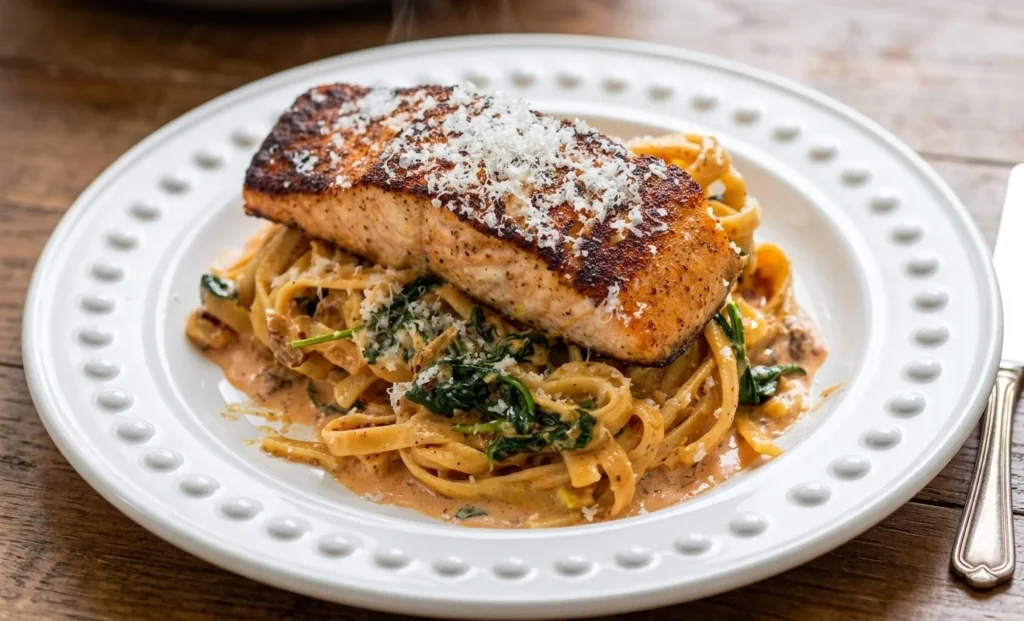
Cook linguine in well-salted boiling water until 1 minute before al dente. Reserve ½ cup of pasta water before draining. Add 3 tablespoons of pasta water to the sauce and stir. Add drained pasta directly to the pan. Toss over low heat for 60 seconds. Add the flaked salmon and fold gently, do not stir aggressively or the salmon breaks into mush. Add more pasta water, tablespoon by tablespoon if needed. Scatter fresh basil off the heat. Serve immediately.
Three Tests That Changed How I Make This
Test 1: Lemon juice vs lemon zest: Lemon juice at Step 3 sauce broke within 30 seconds, grainy Parmesan, flat acidity. Lemon zest off the heat sauce stayed silky, with brightness without any break.
Verdict: Zest only. Off heat only. Non-negotiable.
Test 2: Whole fillet vs flaked salmon: Whole fillet on top, every bite was either all fish or all pasta. Flaked salmon folded into the sauce, every forkful had both. No contest.
Verdict: Always flake. Always rest the salmon first.
Test 3: Pasta water vs no pasta water with fish sauce: Without pasta water sauce slid off the linguine within 90 seconds of plating. With 3 tablespoons of pasta water tossed in before combining, the sauce adhered to every strand and stayed there.
Verdict: Pasta water is as essential here as in any pasta dish. Reserve it before you drain.
Variations Worth Trying
Smoked Salmon Version
Skip the searing entirely. Add 200g of hot smoked salmon, broken into pieces, directly to the finished sauce at Step 3 after the Parmesan and lemon zest. The smoke complements the sun-dried tomatoes in a way that fresh salmon cannot replicate. Reduce the salt in the recipe by ¼ tsp, as smoked salmon is already seasoned.
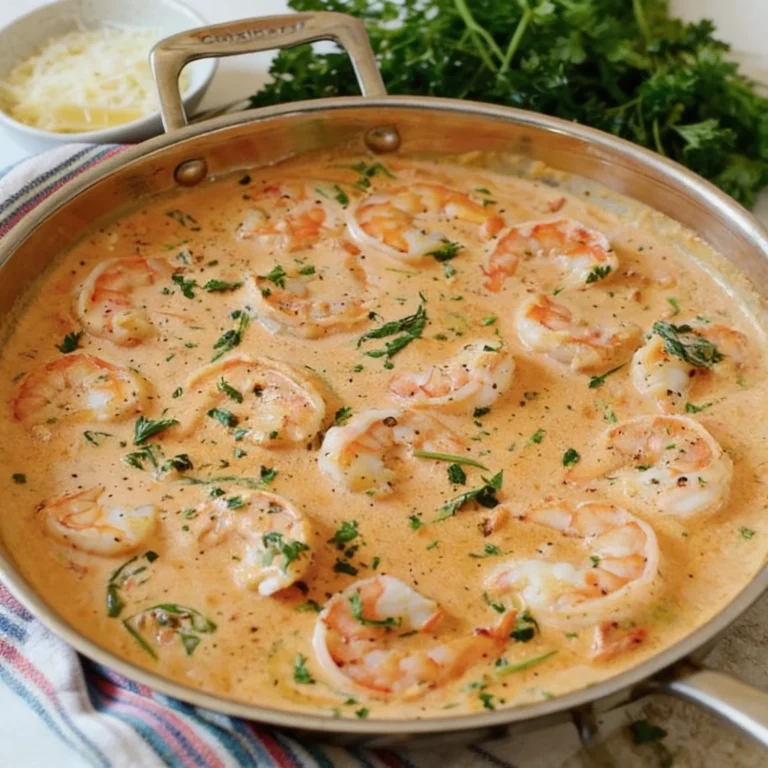
For the seafood pasta version, see Marry Me Shrimp Pasta.
Canned Salmon Version
Drain two 200g cans of wild-caught salmon thoroughly. Remove any bones and skin. Skip searing. Add at Step 4 with the pasta fold gently. The flavour is less fresh, but the dish is entirely weeknight-viable at a fraction of the cost. Lemon zest is even more important in this version, as canned salmon has a stronger baseline fish flavour.
Dairy-Free Version
Replace heavy cream with full-fat canned coconut cream. Replace Parmesan with 2 tablespoons nutritional yeast plus 1 teaspoon white miso paste. The miso provides the glutamate depth that Parmesan contributes. Lemon zest still goes in last, still off heat.
Storage And Reheating
Fridge: 2 days maximum, salmon deteriorates faster than chicken in a cream sauce. Store pasta and sauce together. Add 3 tablespoons of stock when reheating over low heat. Never reheat on high; the cream breaks, and the salmon dries out simultaneously.
Freezing: Not recommended. Salmon texture after freezing in a cream sauce becomes grainy and waterlogged. Make fresh each time.
Frequently Asked Questions
Why does my salmon pasta taste fishy?
Salmon’s omega-3 oils oxidize when simmered in cream; that oxidation produces the fishy flavour. Lemon zest is added off heat after the Parmesan neutralizes it by binding with trimethylamine, the specific molecule responsible. This is why the lemon zest step is non-negotiable in this recipe.
Should I flake the salmon or keep it whole in the pasta?
Flake it. Whole fillets placed over pasta create uneven bites all fish or all pasta. Flaked salmon distributed through the sauce gives every forkful an even ratio of fish, cream, and pasta. Rest the salmon for 3 minutes after searing before flaking so it pulls apart in moist pieces rather than dry chunks.
Can I use smoked salmon instead of fresh?
Yes, hot-smoked salmon works well. Skip the searing step entirely and add it to the finished sauce at the very end. The smoked character complements the sun-dried tomatoes naturally. Reduce added salt by ¼ tsp.
Can I use canned salmon?
Yes, drain it thoroughly, remove bones and skin, and add it to the pasta at the final step. The lemon zest is especially important with canned salmon to lift the stronger baseline fish flavour.
What temperature should salmon be cooked to?
125°F / 52°C is the recommended temperature for this recipe salmon stays moist and holds together when folded into the sauce. 145°F / 63°C produces a fully cooked, firmer result. Always use an instant-read thermometer at the thickest point. For pasta, 125°F is the better choice the salmon continues warming slightly when folded into the hot sauce.
Recipe Card:
Marry Me Salmon Pasta
Ingredients
Salmon:
- 4 fillets ~150g each ·
- ½ tsp salt · ¼ tsp pepper ·
- ½ tsp smoked paprika ·
- ½ tsp garlic powder ·
- 1 tsp olive oil
Sauce:
- 2 tbsp sun-dried tomato jar oil ·
- 4 garlic cloves minced ·
- 1 tbsp double-concentrated tomato paste ·
- ⅓ cup 55g sun-dried tomatoes chopped ·
- ½ cup 120ml white wine ·
- ¾ cup 180ml stock ·
- 1 cup 240ml heavy cream 36%+ ·
- ½ cup 50g Parmesan from block off heat ·
- ¼ tsp red pepper flakes ·
- Zest of 1 lemon off heat ·
- ¼ cup fresh basil off heat
Pasta:
- 320 g linguine or tagliatelle ·
- ½ cup reserved pasta water
Instructions
- Pat salmon dry. Season. Sear skin-side down 4 min. Flip 2-3 min until 125°F or 145°F. Rest 3 min. Flake.
- Same pan garlic 60 sec. Tomato paste 90 sec. Sun-dried tomatoes 30 sec.
- Wine reduces by 90 sec. Stock reduced by 2 min. Cream + red pepper flakes simmer gently 3-4 min.
- Off heat Parmesan in 3 stages. Then lemon zest. Stir once.
- Cook pasta. Reserve ½ cup of water. Add 3 tbsp of water to the sauce. Toss pasta in sauce for 60 sec.
- Fold salmon in gently. Add more pasta water if needed. Basil off heat. Serve immediately.
Notes
The sauce used here is the same foundation across every recipe in this collection. For standalone sauce science and exact ratios, the Marry Me Tuscan Sauce guide. For the chicken pasta version with pasta water science in full, Marry Me Chicken Pasta. For the salmon fillet version served without pasta, Marry Me Salmon.
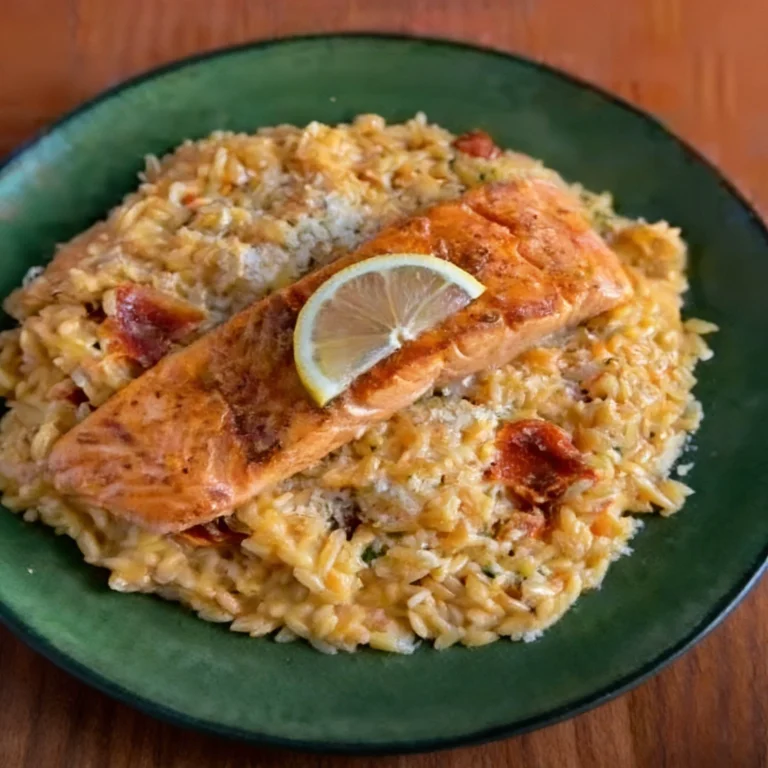
For the one pan orzo version, see Marry Me Salmon Orzo.
The Dish That Fixed The Problem Nobody Admitted Existed
Creamy salmon pasta has always had that problem. Everyone made it, nobody explained why it sometimes tasted wrong, and nobody fixed it with anything more than “add lemon.”
The fix is lemon zest, off heat, after the Parmesan. That is the difference between a dish that tastes like a compromised chicken pasta and one that tastes like something designed specifically for salmon.
This marry me salmon pasta was designed specifically for salmon.
About the Author
By Emily Carter, Recipe Developer and Culinary Instructor. Trained at the Institute of Culinary Education, New York. Six years in professional kitchens. Every recipe on this site is tested a minimum of three times before publication. If it does not work reliably, it does not get published.
⭐⭐⭐⭐⭐“I have made creamy salmon pasta before, and it always had that smell. Made this one on Friday night. The lemon zest at the end, I did not understand why until I tasted it. My partner asked for the recipe before we finished eating.” Sophie R.
⭐ Rate This Recipe
Have you made this? Leave a star rating below and tell us how it turned out. Your feedback helps other home cooks find this recipe and trust it before they make it.