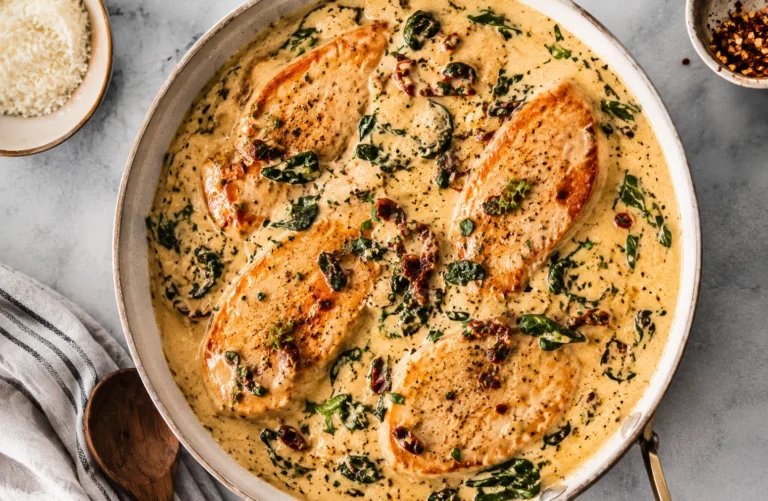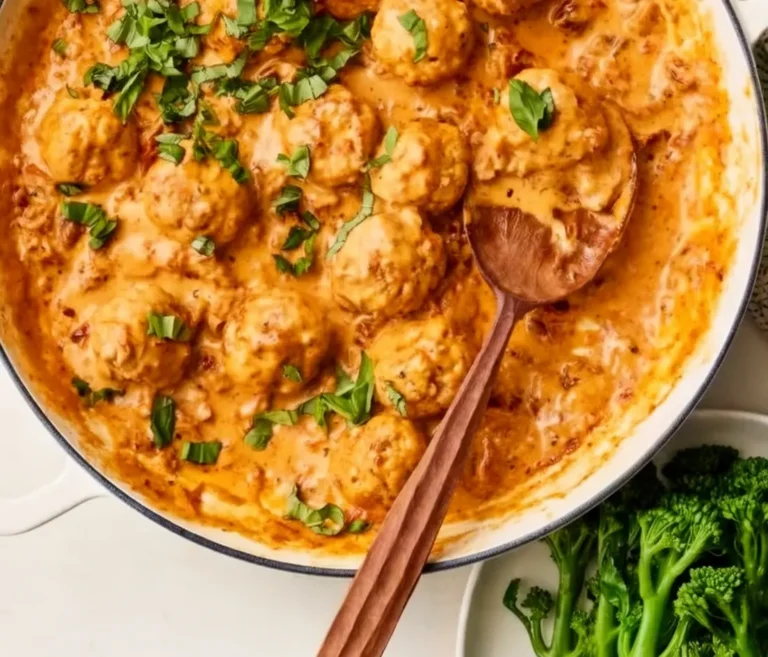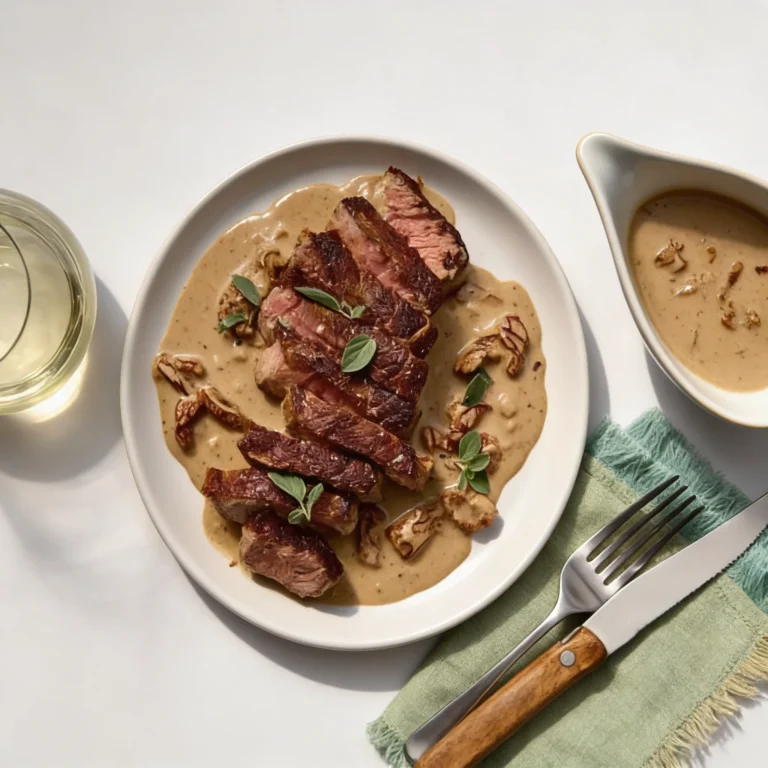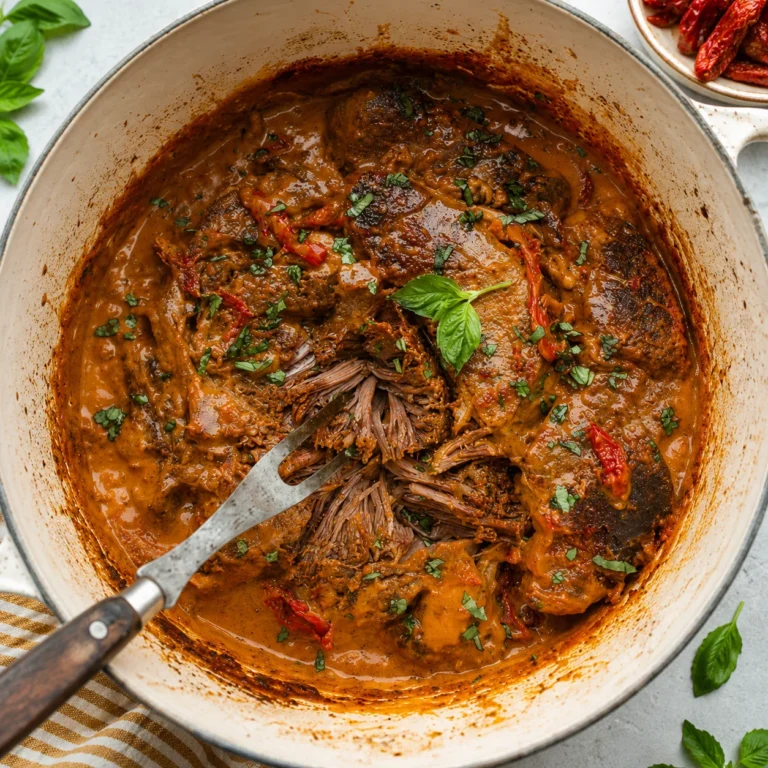
Marry Me Pork Tenderloin: The Shape That Changes Everything About How You Cook It
By Emily Carter. Last updated: May 2026. Recipe tested and verified. Nutritional data reviewed for accuracy.
Pork tenderloin is the leanest cut on the animal no fat cap, no bone, no marbling to protect it from heat. That is exactly why it needs a different method than pork chops. The cylindrical shape means the outside overcooks before the center catches up when cooked entirely on the stovetop. The fix for marry me pork tenderloin is a hard sear followed by a short oven finish and a sauce that does more than just coat the surface.
Forty minutes. One oven-safe pan. The Marry Me sauce is built from the tenderloin’s own fond.
Season and sear the tenderloin on all sides. Build the Marry Me sauce in the same pan. Return the tenderloin to the sauce and finish in a 375°F oven until the internal temperature reaches 145°F. Rest for five minutes. Slice into medallions. Return the sauce to the heat. Parmesan and basil go in completely off heat.
Key Takeaways:
- Sear all sides, not just two, like pork chops, tenderloin is cylindrical
- Oven finish is mandatory; stovetop only produces overcooked outside, raw center
- Pull at 145°F, same USDA 2011 rule as the pork chops recipe, not 160°F
- Slice into medallions after resting, before returning to the sauce, for more surface area for absorption
- Parmesan off the heat in three stages, same rule as every recipe in this collection.
Video:
What Is Marry Me Pork Tenderloin?
Marry me pork tenderloin is a whole pork tenderloin seared on all sides in sun-dried tomato oil, then finished in a 375°F oven in a creamy sun-dried tomato Parmesan sauce until it reaches 145°F internally, rested for five minutes, sliced into medallions, and returned to the sauce off heat. Ready in 40 minutes. Serves 4 at approximately 480 calories per serving.
At a Glance
| Detail | Value |
| Total time | 40 minutes |
| Prep time | 8 minutes |
| Cook time | 32 minutes |
| Servings | 4 |
| Calories per serving | ~480 kcal |
| Protein per serving | 46g |
| Safe internal temp | 145°F / 63°C + 5-min rest |
| Oven temperature | 375°F / 190°C |
| Pan type | Oven-safe skillet, cast iron preferred |
| Gluten-free | Yes |
What Kind Of Sauce Is Good On A Pork Tenderloin?
Pork tenderloin has almost no fat of its own, which means the sauce does more work here than with any other cut. A thin sauce slides off medallions before the first bite. A sauce with Parmesan emulsification, sun-dried tomato glutamates, and cream fat clings to every surface and builds the richness that the tenderloin cannot provide for itself.
Why The Marry Me Sauce Works Better With Tenderloin Than With Chops
Pork chops have a fat cap and bone that render into the sauce during cooking. Tenderloin has neither. The Marry Me sauce compensates by building its body from the fond left by the sear, sun-dried tomato oil caramelized with garlic and double-concentrated tomato paste and then emulsifying Parmesan off heat into the cream. The result is a sauce thick enough to coat medallions from every angle and carry flavor into the meat rather than sitting on top of it.
Italian Pork Tenderloin Tomato Sauce: The Science Behind It
Sun-dried tomatoes contain between 650 and 1,140mg of glutamic acid per 100g according to the Umami Information Center. Pork tenderloin contains inosinate, a nucleotide that works synergistically with glutamate to amplify savory flavor. When the two meet in the sauce at serving temperature, the perceived umami of the dish increases significantly beyond what either contributes alone. This is why an Italian pork tenderloin tomato sauce tastes more complex than the sum of its parts and why the Marry Me sauce in particular suits this cut so well.
Why Tenderloin Cooks Differently Than Pork Chops
Cylindrical Shape: Why Stovetop Only Fails
A pork chop has two flat sides; sear both sides, and the heat reaches the center evenly. A tenderloin is cylindrical; it has no flat side. On a stovetop, the direct contact area between the pan and the tenderloin is a narrow strip. The strip overcooks while the top of the cylinder sits above the heat source. By the time the top reaches 145°F, the bottom is at 165°F or beyond.
An oven distributes heat from all directions simultaneously, the tenderloin cooks evenly from every angle, and the seared crust maintains its integrity throughout.
Sear Then Oven: The Only Method That Works
The sear takes 5 to 6 minutes on the stovetop, rotating the tenderloin every 90 seconds to develop a golden crust on all surfaces. This crust seals the exterior and leaves the fond that becomes the sauce base. The oven finishes at 375°F and takes 18 to 22 minutes, depending on thickness, during which the tenderloin sits directly in the sauce, absorbing its character from the outside in.
Should I Sear Pork Tenderloin Before Cooking?
Yes always. The sear serves two purposes that the oven alone cannot replicate.
What The Sear Actually Does
First, it develops the Maillard reaction on the surface of the browning that produces hundreds of flavor compounds that raw pork does not contain. Second, it leaves a fond in the pan that becomes the first layer of flavor in the sauce. A tenderloin placed directly into the oven without searing produces a paler exterior, a thinner fond, and a noticeably less complex sauce.
Temperature And Timing
Sear over medium-high heat 90 seconds per rotation across 4 rotations, 6 minutes total. The tenderloin should be golden brown on all sides before it enters the oven. Reduce the heat to medium when building the sauce. Return to 375°F oven for 18 to 22 minutes. Pull at exactly 145°F / 63°C at the thickest point, the same safe minimum temperature the USDA updated for pork in 2011, dropping it from 160°F to 145°F with a three-minute rest.
Ingredients And Why Everyone Matters
Complete Ingredient List
For the tenderloin:
- 1 pork tenderloin (~500g / 1.1 lb)
- 1 tsp fine sea salt
- ½ tsp freshly ground black pepper
- ½ tsp garlic powder
- ½ tsp smoked paprika
- ½ tsp Italian seasoning
- 1 tsp olive oil
For the sauce:
- 2 tbsp oil from the sun-dried tomato jar
- 4 cloves fresh garlic, minced
- 1 tbsp double-concentrated tomato paste
- ⅓ cup (55g) sun-dried tomatoes in oil, drained and chopped
- ½ cup (120ml) dry white wine
- ¾ cup (180ml) low-sodium chicken stock
- 1 cup (240ml) heavy cream, minimum 36% fat
- ½ cup (50g) freshly grated Parmesan from a block off heat
- 2 large handfuls of fresh baby spinach
- ¼ tsp red pepper flakes
- ½ tsp Italian seasoning
- ¼ cup fresh basil leaves, torn off the heat
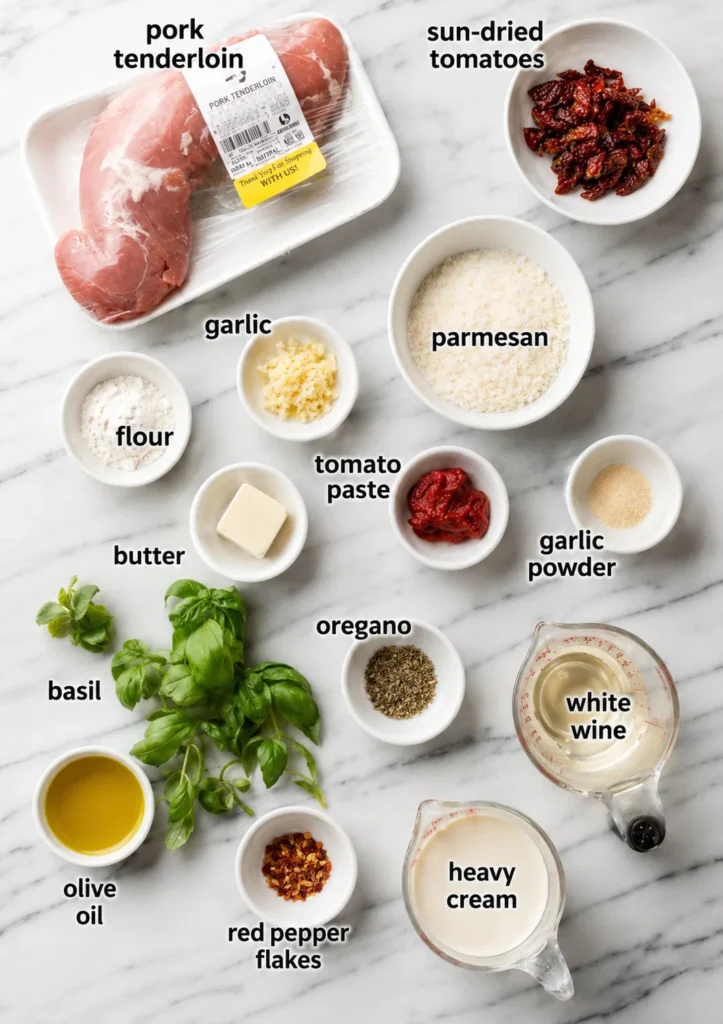
Why Italian seasoning instead of Creole: Italian seasoning oregano, basil, thyme is the correct flavour profile for a sun-dried tomato cream sauce. Creole seasoning adds paprika and cayenne heat that compete with the sauce rather than complement it. Italian seasoning amplifies the sauce’s existing character.
Why smoked paprika on the tenderloin: Tenderloin has almost no surface fat, smoked paprika guarantees a deep golden crust regardless of pan temperature variation, and adds a smoky note that the sun-dried tomatoes amplify in the sauce.
Substitutions
| Original | Substitute | Impact |
| Pork tenderloin | Pork loin increases oven time by 10 min | Slightly drier, less tender |
| Heavy cream 36%+ | Full-fat canned coconut cream | Holds under heat, slight sweetness |
| Parmesan from a block | Pecorino Romano | Sharper reduces salt by ¼ tsp |
| White wine | Extra stock + 1 tsp white wine vinegar | Slightly less complexity |
| Double-concentrated paste | Regular tomato paste (2 tbsp) | Milder depth |
| Chicken stock | Vegetable stock | Lighter still works well |
How To Make Marry Me Pork Tenderloin: Step By Step
Step 1: Season And Sear
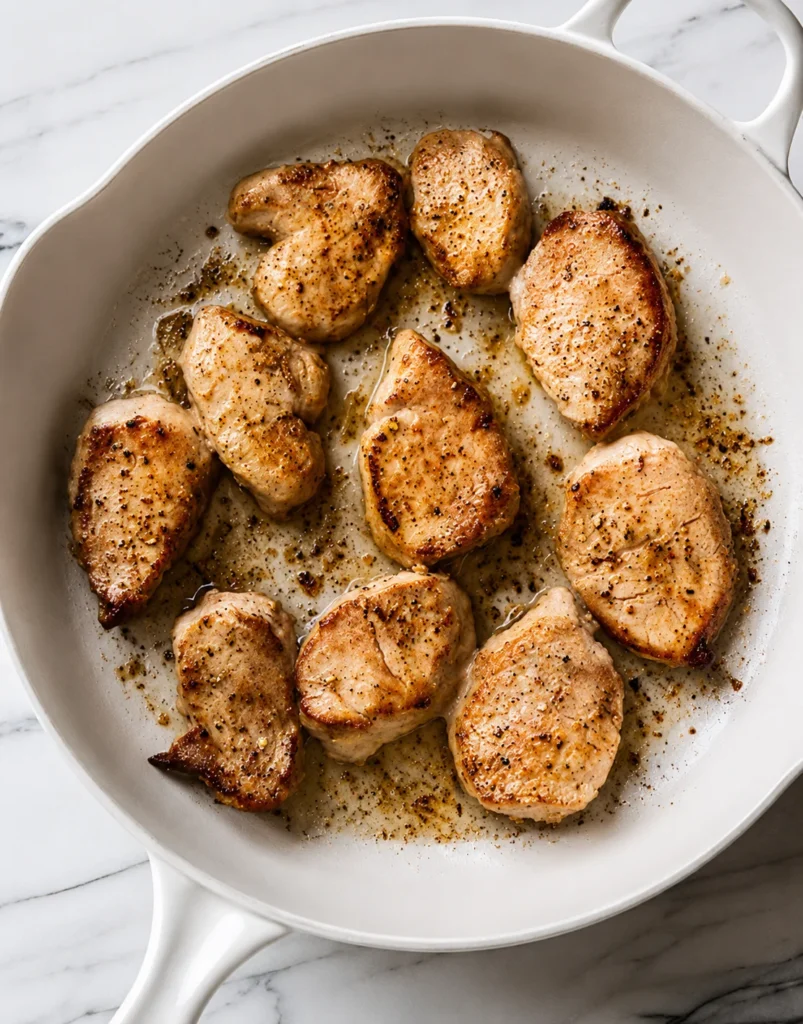
Pat the tenderloin completely dry with paper towels. Rub lightly with olive oil. Season all sides generously with salt, pepper, garlic powder, smoked paprika, and Italian seasoning. Press the seasoning firmly into the surface.
Heat sun-dried tomato oil in a large oven-safe skillet over medium-high heat until shimmering. Add the tenderloin. Sear 90 seconds per side, rotating through 4 positions to cover the entire cylindrical surface. Total sear time: 5 to 6 minutes. The exterior should be deep golden all over before moving to the next step. Transfer to a plate.
Step 2: Build The Sauce
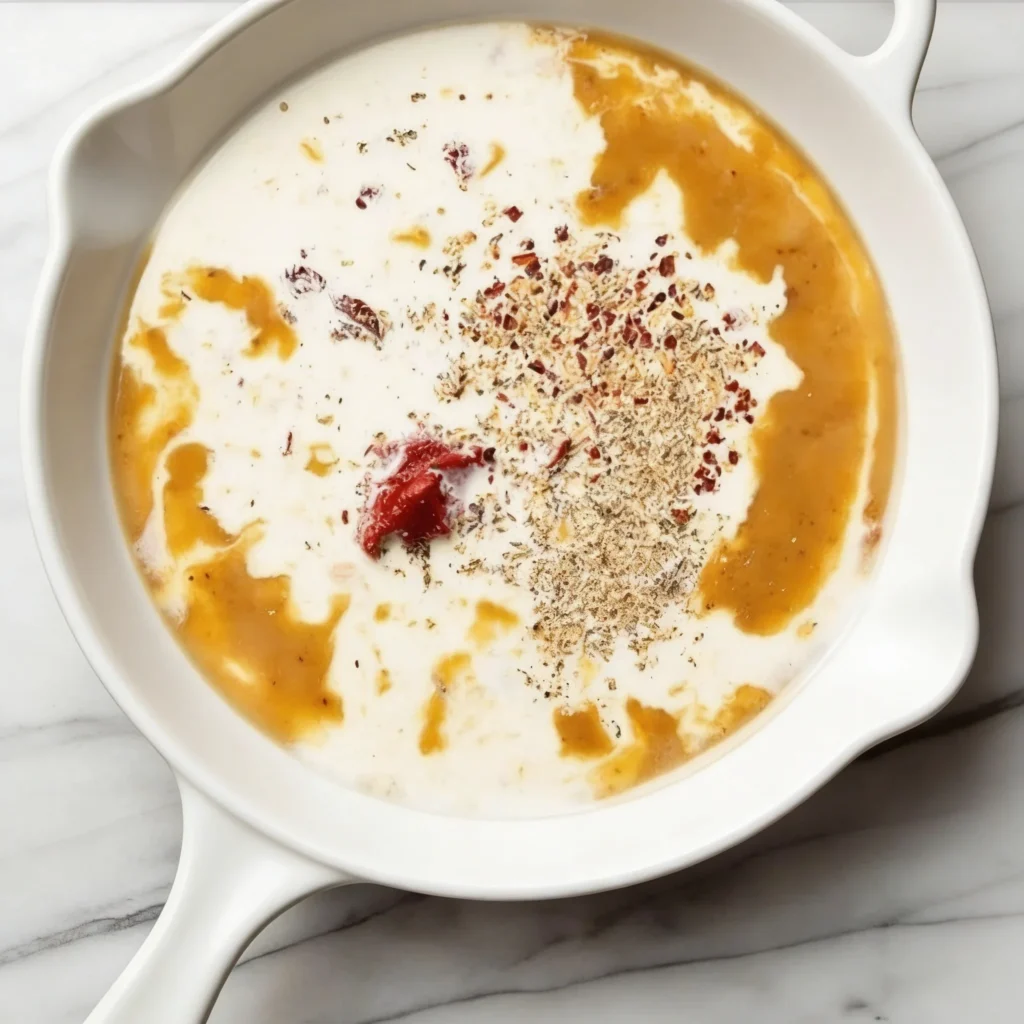
Same pan over medium-high. Add garlic to the tenderloin fond stir 60 seconds until pale gold. Add double-concentrated tomato paste, stir 90 seconds until dark brick red. Add sun-dried tomatoes, stir 30 seconds.
Pour in white wine. Scrape every browned bit from the pan bottom. This fond is built from pork sear, and it is the foundation of the sauce. Reduce by 90 seconds. Add stock. Reduce by 2 minutes. Reduce the heat to medium-low. Add cream, red pepper flakes, and Italian seasoning. Simmer gently, never boil 2 minutes.
Step 3: Oven Finish To 145°F
Return the seared tenderloin to the pan. Spoon sauce generously over the top. Transfer the pan to the preheated 375°F / 190°C oven. Roast uncovered for 18 to 22 minutes, basting once halfway through, until the internal temperature reads 145°F / 63°C at the thickest point.
Step 4: Rest And Slice Into Medallions
Remove from the oven. Transfer tenderloin to a cutting board. Tent loosely with foil. Rest exactly 5 minutes, and the internal temperature will rise 2 to 3 degrees during the rest. Slice marry me pork tenderloin into 1-inch medallions against the grain. Slicing before returning to the sauce exposes maximum surface area for the sauce to coat each medallion absorbs the sauce from two cut faces rather than from the exterior only.
Step 5: Return To Sauce And Finish
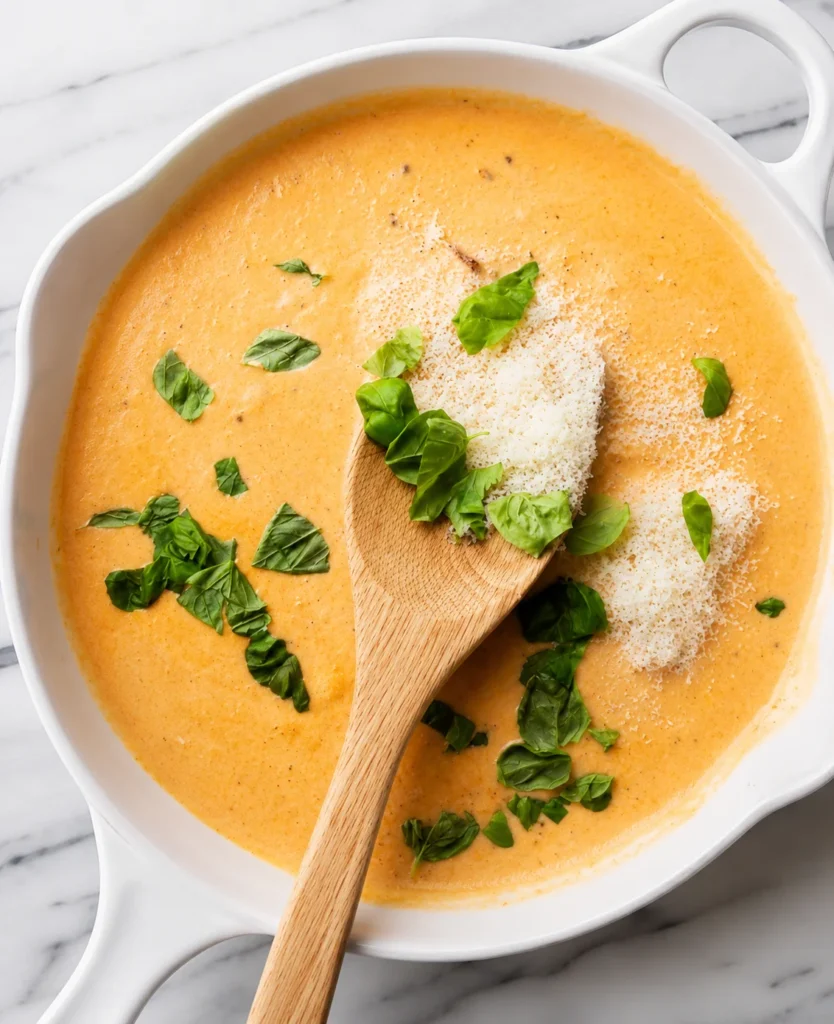
Place the pan back on the stovetop over low heat. Remove from heat completely. Add Parmesan in three stages off heat stir fully between each addition. Add spinach stir until wilted from residual heat, 60 seconds. Return medallions to the pan. Spoon sauce over every surface. Scatter fresh basil off the heat. Serve immediately.
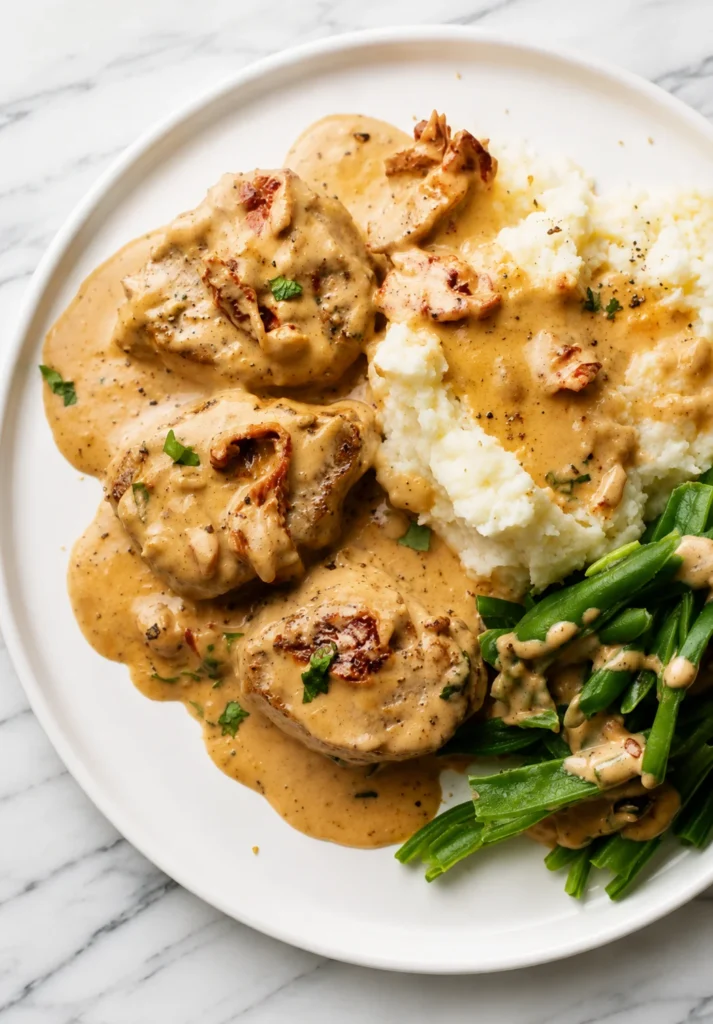
Three Tests That Changed How I Make This
Test 1: Stovetop Only vs Sear Then Oven
Stovetop, only the bottom strip was at 165°F when the center reached 145°F. The exterior was noticeably tougher, and the center barely reached a safe temperature. Sear then oven even color and temperature across the entire tenderloin. Every medallion came out the same.
Verdict: Oven finish is non-negotiable for a cylindrical cut.
Test 2: Slice Before Sauce vs Slice After
Tenderloin returned whole to the sauce and sliced on the plate; the sauce coated the exterior only. Tenderloin sliced into medallions first, then returned to the sauce, each medallion absorbed sauce from both cut faces. The flavour difference was immediate and significant.
Verdict: Always slice before returning to the sauce. The cut faces absorb what the exterior cannot.
Test 3: 145°F vs 160°F
Pulled at 160°F, dry throughout, no amount of sauce could compensate for the moisture lost from the meat. Pulled at 145°F with a five-minute rest, moist from edge to center, slightly pink at the core, sauce absorbed rather than sitting on dry fibers.
Verdict: 145°F always. This is the USDA safe minimum; the pink is correct and expected.
Marry Me Pork Tenderloin Slow Cooker
The marry me pork tenderloin slow cooker version works well pork tenderloin becomes exceptionally tender with extended low heat because the lean muscle fibers break down gradually rather than rapidly.
Sear the tenderloin as directed. This step cannot be skipped, even for the slow cooker version. Build the sauce in the same pan through Step 2. Transfer everything to the slow cooker. Cook on low for 3 to 4 hours or high for 1.5 to 2 hours until 145°F internal temperature. Remove tenderloin. Rest 5 minutes. Slice into medallions.
Add Parmesan and spinach off heat directly in the slow cooker; the residual heat wilts the spinach and melts the Parmesan without further cooking. Return medallions. Scatter basil. Serve immediately.
For the full slow cooker method and timing guide applied to chicken, see Slow Cooker Marry Me Chicken. The sauce technique adapts directly.
Variations Worth Trying
Medallion Bake Version
Slice the raw tenderloin into 1-inch medallions before cooking. Sear each medallion 2 minutes per side, faster than the whole tenderloin method. Build the sauce. Return medallions to the sauce and finish in a 375°F oven for 10 minutes. This version reduces total cook time by 10 minutes and is the better choice when serving immediately on weeknights.
Dairy-Free Version
Replace heavy cream with full-fat canned coconut cream. Replace Parmesan with 2 tablespoons nutritional yeast plus 1 teaspoon white miso paste. Both go in off heat exactly as directed. The miso provides the glutamate depth that aged Parmesan contributes essential for a lean cut like tenderloin, where the sauce carries most of the perceived richness.
Storage And Reheating
Fridge: 3 days in an airtight container. Store medallions and sauce together. Add 2 tablespoons of stock when reheating the tenderloin, which is lean and dries out faster than chicken in a cream sauce without added moisture.
Reheating: Low heat in a covered skillet with added stock for 4 to 5 minutes. Never heat the cream too high; it breaks, and the tenderloin tightens simultaneously. Microwave at 50% power in 30-second bursts with sauce spooned over the medallions.
Freezing: Freeze the sauce and tenderloin separately for up to 2 months. Medallions freeze better than whole tenderloin; the smaller size thaws more evenly. Reheat gently over low heat with added stock.
What Goes With Italian Pork Tenderloin?
The sauce is the feature sides should carry it rather than compete with it.
- Creamy mashed potato the classic pairing. The sauce functions as a gravy over the potatoes
- Soft polenta, the creaminess of the polenta, and the sauce work together without either overwhelming the tenderloin
- Egg noodles or pappardelle are tossed through the sauce before plating medallions on top
- White jasmine rice absorbs sauce from the bottom of the bowl
- Roasted broccolini the char contrasts with the cream richness directly
- Crusty sourdough for the sauce remaining in the pan after serving
Frequently Asked Questions
What temperature should marry me pork tenderloin be cooked to?
145°F / 63°C at the thickest point, followed by a five-minute rest. The USDA updated the safe minimum for pork from 160°F to 145°F in 2011. At 145°F, the tenderloin is safe, juicy, and slightly pink at the center. This is correct. At 160°F, it is dry throughout, and no amount of sauce fully compensates.
Should I cover pork tenderloin when cooking in the oven?
No uncovered. A covered tenderloin traps steam and prevents the sauce from reducing properly during the oven finish. The uncovered surface of the tenderloin also continues developing color and flavor in the oven that a covered version loses.
How do I keep pork tenderloin from drying out?
Three things pull at 145°F, not 160°F. Rest for five minutes before slicing, and return sliced medallions to the sauce before serving. The resting step is the most commonly skipped, and the most important, as it keeps the juices in the meat rather than on the cutting board.
How long to rest pork tenderloin?
Five minutes tented loosely with foil. Less than three minutes, and the juices have not fully redistributed. More than eight minutes, and the tenderloin cools enough that returning to the sauce does not bring it back to the right serving temperature.
Can I make marry me pork tenderloin in a slow cooker?
Yes, first, then build the sauce, transfer to the slow cooker on low for 3 to 4 hours. Add Parmesan and spinach to the heat when done. Always verify 145°F internal temperature regardless of timing.
What goes with Italian pork tenderloin?
Creamy mashed potato, soft polenta, or egg noodles work best all three carry the sauce naturally. Roasted broccolini or asparagus provides the contrast the cream sauce needs. Crusty bread for the sauce remaining in the pan.
Recipe Card:
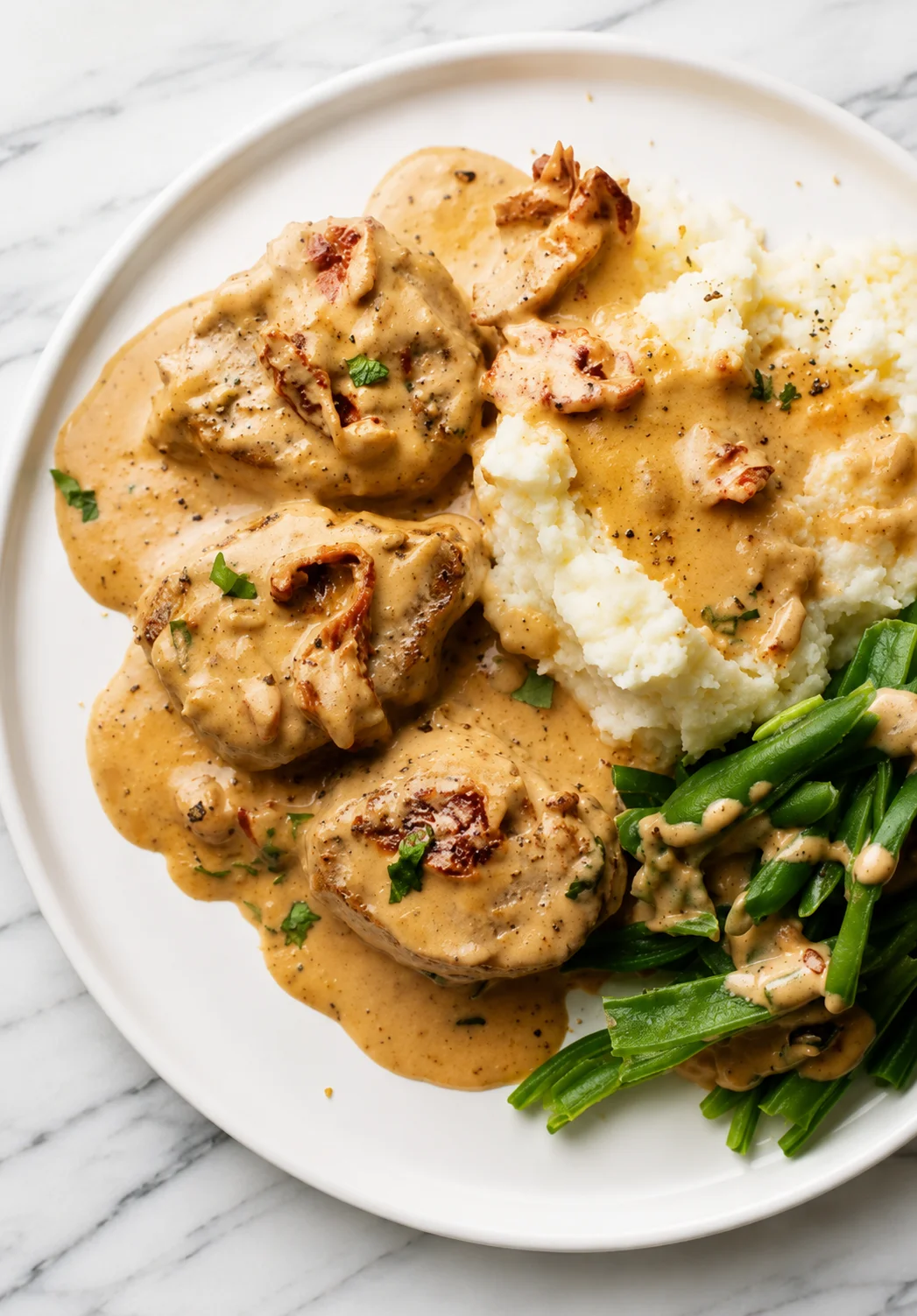
Marry Me Pork Tenderloin
Ingredients
Tenderloin:
- 1 pork tenderloin ~500g ·
- 1 tsp salt ·
- ½ tsp pepper ·
- ½ tsp garlic powder ·
- ½ tsp smoked paprika ·
- ½ tsp Italian seasoning ·
- 1 tsp olive oil
Sauce:
- 2 tbsp sun-dried tomato jar oil ·
- 4 garlic cloves minced ·
- 1 tbsp double-concentrated tomato paste ·
- ⅓ cup 55g sun-dried tomatoes chopped ·
- ½ cup 120ml white wine ·
- ¾ cup 180ml chicken stock ·
- 1 cup 240ml heavy cream 36%+ ·
- ½ cup 50g block Parmesan; off heat ·
- 2 handfuls spinach ·
- ¼ tsp red pepper flakes ·
- ½ tsp Italian seasoning ·
- ¼ cup fresh basil; off heat
Instructions
- Preheat oven to 375°F / 190°C. Pat the tenderloin dry. Rub with oil. Season all sides. Press firmly.
- Heat the tomato oil over medium-high heat. Sear tenderloin 90 sec per side across 4 rotations, 6 min total until golden all over. Transfer to plate.
- Same pan garlic 60 sec. Tomato paste 90 sec until brick red. Sun-dried tomatoes 30 sec.
- Wine scrape pan, reduce 90 sec. Stock reduce 2 min. Reduce to medium-low. Cream + seasonings simmer gently 2 min.
- Return tenderloin to the pan. Spoon sauce over. Transfer to oven uncovered. Roast 18 to 22 min until 145°F / 63°C.
- Transfer to the board. Tent with foil. Rest 5 minutes.
- Slice into 1-inch medallions. Place the pan on low heat. Off heat Parmesan in 3 stages. Add spinach wilt for 60 sec.
- Return medallions. Spoon sauce over every surface. Basil off heat. Serve immediately.
Notes
The sauce foundation is the same across every recipe in this collection. For the complete sauce guide, Marry Me Tuscan Sauce. For the pork chop version of this sauce, Marry Me Pork Chops.
The Leanest Cut, The Richest Sauce
Marry me, pork tenderloin asks for more of a sauce than any other protein in this collection. It brings almost nothing in the way of fat or collagen, no marbling, no bone, no cap. Everything that makes this dish rich comes from the fond, the sun-dried tomatoes, the Parmesan emulsification, and the cream.
That is not a limitation for this recipe. It is an opportunity. A sauce that has to do all the work tends to be better for it.
Sear all sides. Finish in the oven. Pull at 145°F. Slice before returning to the sauce. The rest follows.
About the Author
By Emily Carter, Recipe Developer and Culinary Instructor. Trained at the Institute of Culinary Education, New York. Six years in professional kitchens. Every recipe on this site is tested a minimum of three times before publication. If it does not work reliably, it does not get published.
⭐⭐⭐⭐“Pork tenderloin was always the one thing I avoided making. Too easy to dry out. Pulled this at 145°F, sliced it into the sauce, and my family went quiet. That kind of quiet.” Sarah L.
⭐ Rate This Recipe
Have you made this? Leave a star rating below and tell us how it turned out. Your feedback helps other home cooks find this recipe and trust it before they make it.