Marry Me Shrimp Pasta: Add The Shrimp Last. Here Is Why
By Emily Carter. Last updated: May 2026. Recipe tested and verified. Nutritional data reviewed for accuracy.
Shrimp is the fastest-cooking protein in any kitchen and the most likely to be overcooked. The fix is not heat management. It is timing. Every creamy shrimp pasta recipe has the same timing problem. The shrimp goes into the sauce too early, simmers while the pasta is tossed in, and arrives at the table as rubber. The fix is not a different sauce or a different pasta. It is knowing exactly when shrimp belongs in the pan, not when everyone else adds it.
Twenty-five minutes. One pan for the sauce. The shrimp goes in last. That is the whole secret to the best seafood pasta recipes: protein timing, not ingredient lists.
Sear shrimp on one side only, then set aside. Build the Marry Me sauce. Cook pasta separately and reserve pasta water. Combine pasta and sauce with pasta water. Add shrimp in the final 60 seconds off heat. Parmesan and lemon zest go in before the shrimp, never after
Key Takeaways:
- Shrimp goes in the last final 60 seconds off heat only
- One side sear only the same rule as the standalone shrimp recipe
- Long flat pasta, such as linguine or tagliatelle shrimp disappears in penne tubes
- Pasta water is essential for shrimp, which releases liquid that thins the sauce without it
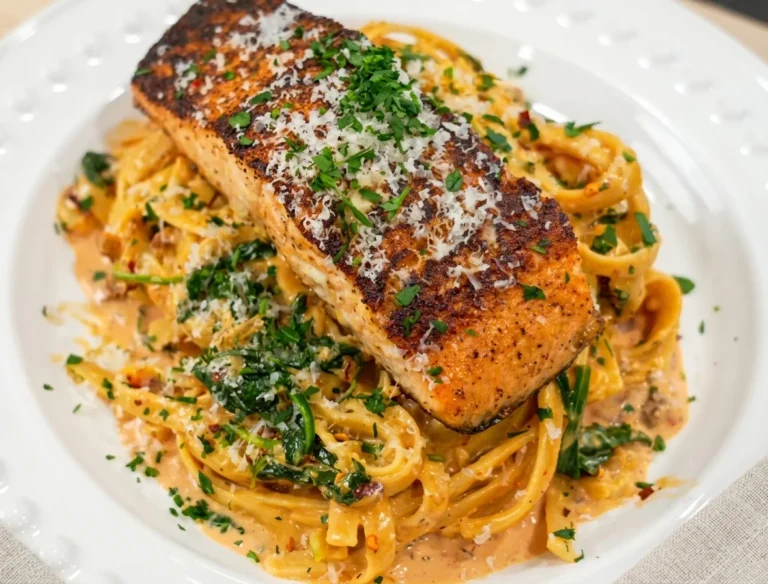
- Lemon zest off heat after Parmesan same principle as marry me salmon pasta
Video:
What Is Marry Me Shrimp Pasta?
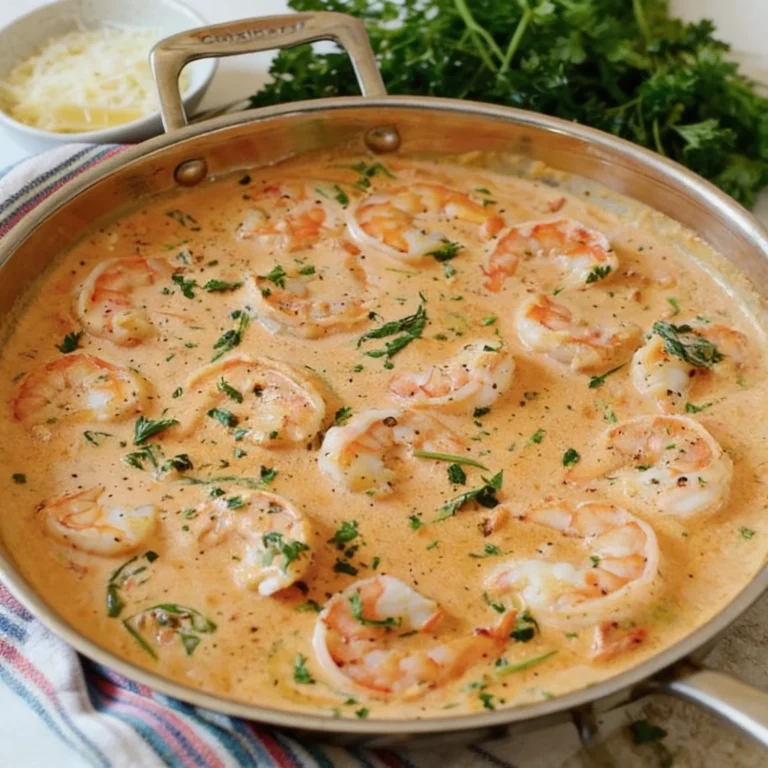
Marry me shrimp pasta is large peeled and deveined shrimp seared on one side in sun-dried tomato oil, set aside, then folded into a creamy sun-dried tomato Parmesan sauce tossed with linguine and pasta water in the final 60 seconds off heat. Ready in 25 minutes. Serves 4 at approximately 590 calories per serving.
At a Glance
| Detail | Value |
| Total time | 25 minutes |
| Prep time | 5 minutes |
| Cook time | 20 minutes |
| Servings | 4 |
| Calories per serving | ~590 kcal |
| Protein per serving | 40g |
| Best pasta shape | Linguine or tagliatelle |
| Shrimp size | Large 21 to 30 per pound |
| Gluten-free | Yes, GF pasta works |
| Dairy-free adaptable | Yes |
When Do You Add Shrimp To The Pasta?
This is the question every marry me shrimp pasta recipe gets wrong, and it is the only question that matters for texture.
The Double Overcooking Problem
Shrimp cook in 2 to 3 minutes. A cream sauce needs 5 to 7 minutes to build and reduce. When shrimp is added at the start of the sauce or even halfway through, it is simmering in liquid for far longer than it should. By the time the pasta is tossed in and served, the shrimp has been cooking for 10 to 15 minutes. The result is rubbery, shrunken pieces that have expelled all their moisture into the sauce.
The sauce gets the shrimp’s flavour. The plate gets the texture problem.
The Exact Timing That Works
Sear shrimp one side only at the start, 90 seconds in the hot pan, then remove and set aside. This sear builds fond for the sauce without cooking the shrimp through. Build the entire sauce without the shrimp. Toss pasta and pasta water through the sauce. Remove from heat completely. Add shrimp. Fold gently. The residual heat of the sauce finishes the second side in 60 seconds exactly as it does in the standalone Marry Me Shrimp recipe. The shrimp arrives at the table tender, not rubbery.
What Pasta Shape Works Best With Shrimp?
Why Long Flat Pasta Beats Short Tubes
Penne and rigatoni trap sauce inside their tubes, which works well with chicken pieces and bite-sized cuts. Shrimp is not bite-sized; it is a whole curved piece that sits across the pasta rather than sitting inside it. In a tube pasta dish, shrimp and pasta exist in separate bites. In a long pasta dish, every twirl of the fork picks up both simultaneously.
Linguine and tagliatelle wrap around the curved body of each shrimp piece naturally. The sauce clings to the long, flat strands. The shrimp rests across the pasta rather than disappearing between tubes. Every forkful carries sauce, pasta, and shrimp in the same ratio, which is the entire point of a pasta dish.
Pasta Shape Comparison
| Shape | With Shrimp | Recommend? |
| Linguine | Wraps around shrimp naturally | Best choice |
| Tagliatelle | Wide, elegant holds sauce well | Excellent |
| Pappardelle | Maximum sauce coating | Excellent |
| Spaghetti | Works with a slightly thinner coating | Good |
| Penne | Shrimp sits separately uneven bites | Avoid |
| Rigatoni | Same problem as penne | Avoid |
Why Is My Marry Me Shrimp Pasta Sauce Too Thin?
The Roux Problem And The Correct Fix
Several shrimp pasta recipes thicken their sauce with flour. In a Marry Me sauce built on sun-dried tomatoes and Parmesan emulsification, flour adds a starchy aftertaste that competes with the glutamates in the tomatoes. The correct thickening comes from Parmesan proteins added off heat and from pasta water starch added before the pasta is tossed through.
Shrimp releases extra liquid during cooking, more than chicken, which can thin the sauce further if the pasta water step is skipped.
Cause And Fix Table
| Cause | Exact Fix |
| Pasta water not added | Add 3 tbsp of pasta water before tossing past the mandatory |
| Shrimp added too early | Shrimp releases moisture during simmer, add last, off heat |
| Cream below 36% fat | Use a minimum 36% heavy cream only |
| Parmesan added to the simmering sauce | Add completely off heat in three stages |
| Pre-shredded Parmesan used | Always grate fresh from a block |
Ingredients And Why Everyone Matters
Complete Ingredient List
For the shrimp:
- 450g / 1 lb large shrimp, peeled and deveined (21 to 30 per pound)
- ½ tsp fine sea salt
- ¼ tsp freshly ground black pepper
- ½ tsp smoked paprika
- ½ tsp garlic powder
- ½ tsp Italian seasoning
For the sauce:
- 2 tbsp oil from the sun-dried tomato jar
- 4 cloves fresh garlic, minced
- 1 tbsp double-concentrated tomato paste
- ⅓ cup (55g) sun-dried tomatoes in oil, drained and chopped
- ½ cup (120ml) dry white wine
- ½ cup (120ml) low-sodium chicken or vegetable stock
- 1 cup (240ml) heavy cream, minimum 36% fat
- ½ cup (50g) freshly grated Parmesan from a block off heat
- 2 large handfuls of fresh baby spinach
- ¼ tsp red pepper flakes
- ½ tsp Italian seasoning
- Zest of ½ lemon off heat after Parmesan
- ¼ cup fresh basil leaves, torn off the heat
For the pasta:
- 320g / 11oz linguine or tagliatelle
- ½ cup of reserved pasta water is mandatory
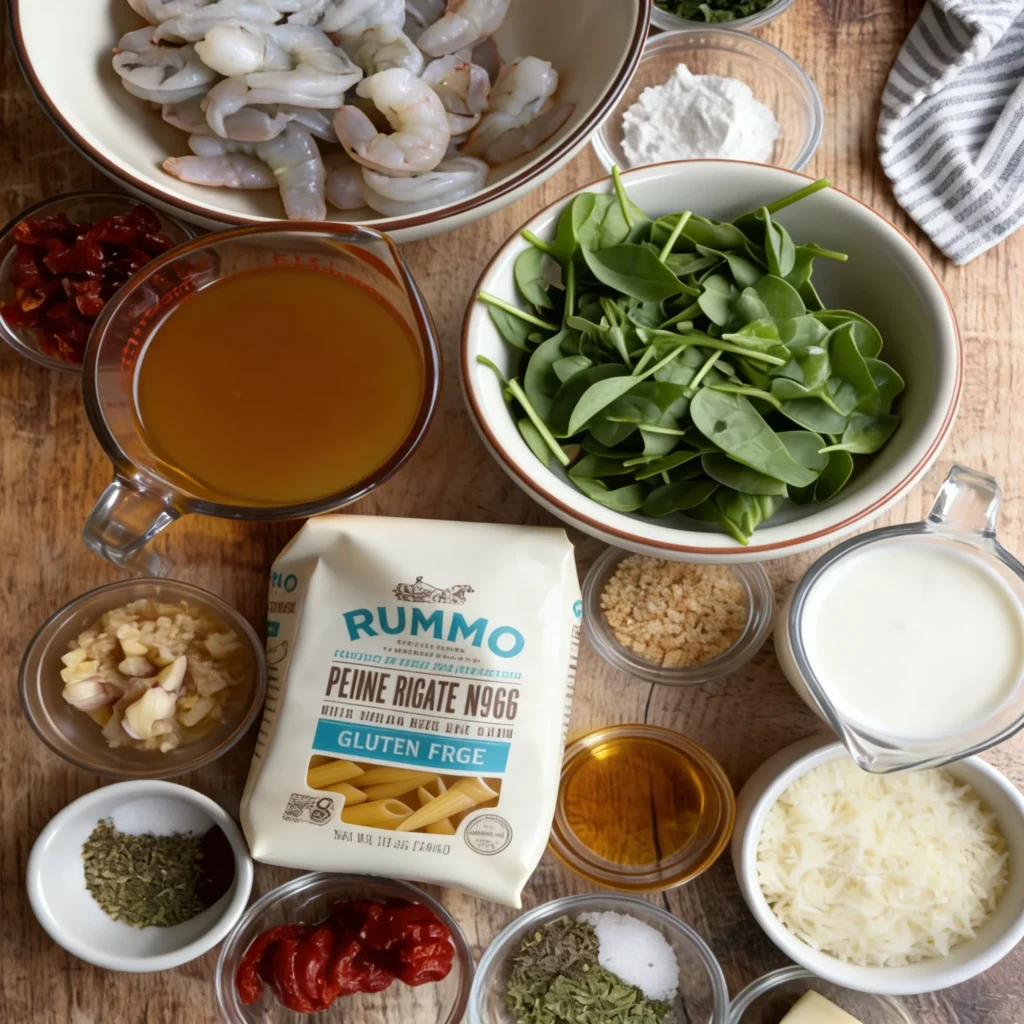
Why pat shrimp dry: According to USDA seafood handling guidelines, surface moisture on shrimp creates steam the moment it hits a hot pan, preventing any sear from forming and producing pale steamed shrimp instead of golden seared pieces. Pat completely dry before seasoning every time.
Why lemon zest: Shrimp contains trimethylamine, the compound responsible for the faint briny smell that becomes more pronounced in cream. According to food science research from PubMed, citrus compounds bind with trimethylamine and neutralise it before it reaches the palate. Lemon zest is added off heat after the Parmesan lifts the shrimp flavour without adding any sourness or breaking the cream emulsion.
Substitutions
| Original | Substitute | Impact |
| Linguine | Tagliatelle, pappardelle | All excellent |
| Large shrimp 21-30/lb | Jumbo shrimp 16-20/lb | Better presentation |
| Heavy cream 36%+ | Full-fat canned coconut cream | Holds under heat |
| Parmesan from a block | Pecorino Romano | Sharper — reduce salt ¼ tsp |
| White wine | Extra stock + 1 tsp white wine vinegar | Less complexity |
| Baby spinach | Kale, stems removed | Earthier — add 2 min earlier |
How To Make Marry Me Shrimp Pasta: Step By Step
Step 1: Sear Shrimp One Side Only
Pat shrimp completely dry. Season with salt, pepper, smoked paprika, garlic powder, and Italian seasoning. Heat sun-dried tomato oil in a large skillet over medium-high heat until shimmering. Add shrimp in a single layer, no crowding. Sear one side only for 90 seconds until pink on the bottom and C-shaped. Transfer immediately to a plate. The top will still look raw. Leave the pan on the heat.
Step 2: Build The Sauce
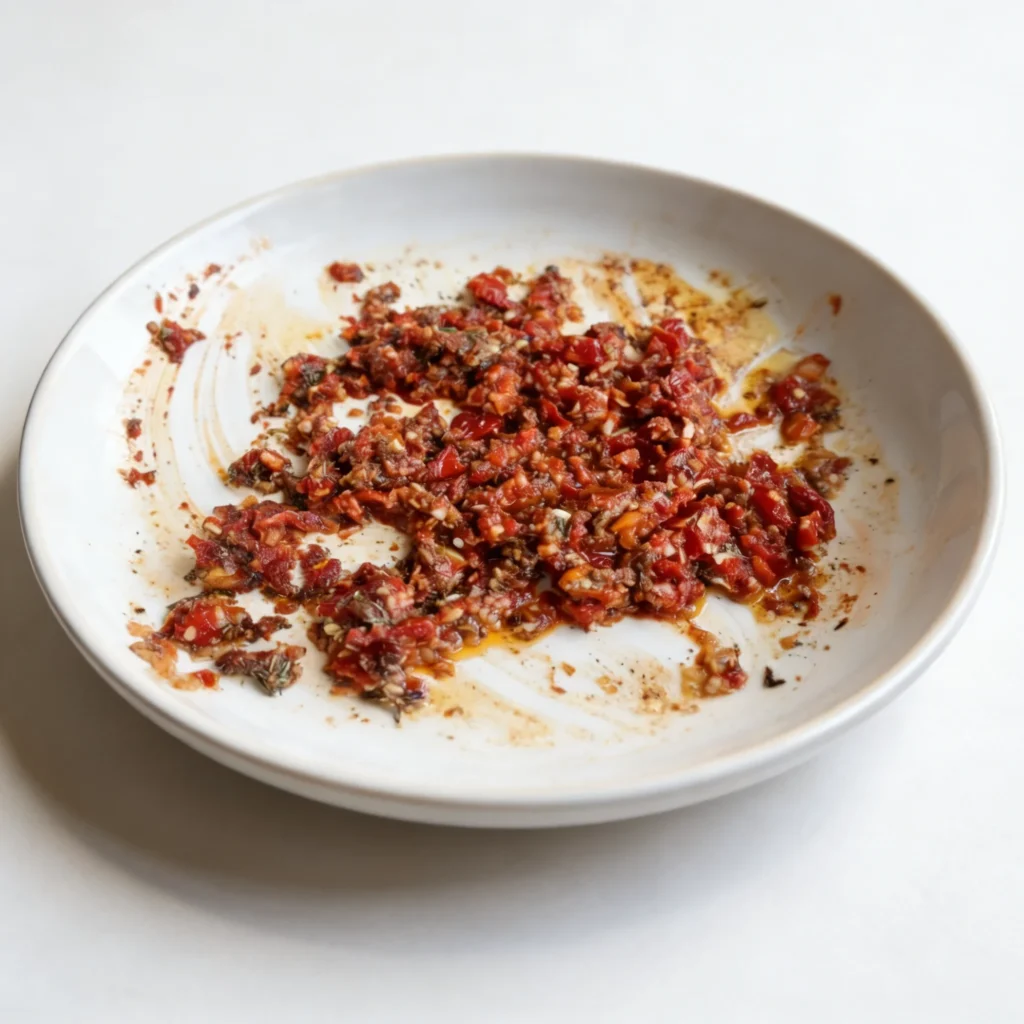
Same pan over medium-high. Add garlic to the shrimp fond, stir for 60 seconds until pale gold. Add double-concentrated tomato paste, stir 90 seconds until brick red. Add sun-dried tomatoes, stir 30 seconds.
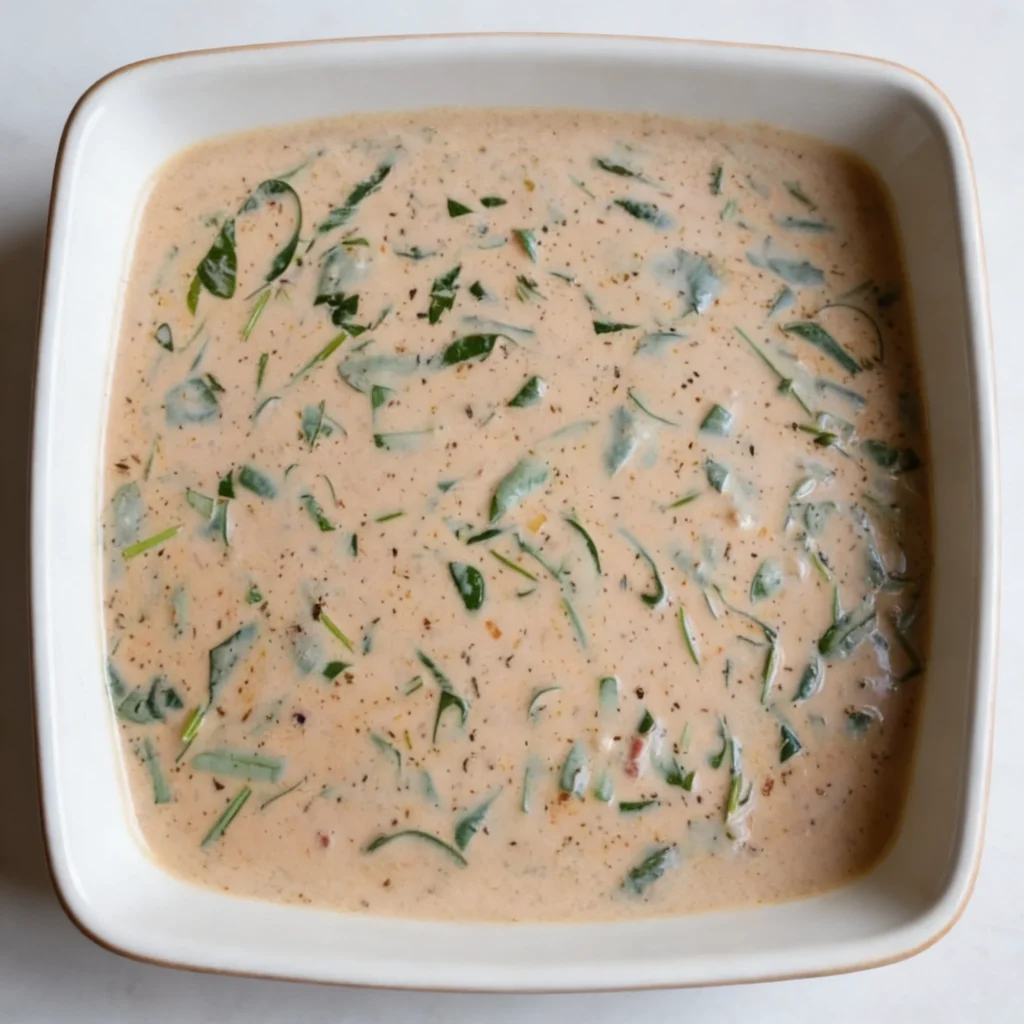
Pour in white wine. Scrape every browned bit from the pan bottom. Reduce by 90 seconds. Add stock. Reduce by 2 minutes. Reduce to medium-low. Add cream, red pepper flakes, and Italian seasoning. Simmer gently, never boil 3 minutes. Add spinach, stir until wilted, 60 seconds.
Step 3: The Pasta Water Step
Cook linguine in well-salted boiling water until 1 minute before al dente. Reserve ½ cup of pasta water before draining. Add 3 tablespoons of pasta water to the sauce and stir the starch, which binds the cream to the pasta and compensates for the liquid the shrimp will release when it is folded in. Add drained pasta directly to the saucepan. Toss over low heat for 60 seconds.
Step 4: Add Shrimp Last
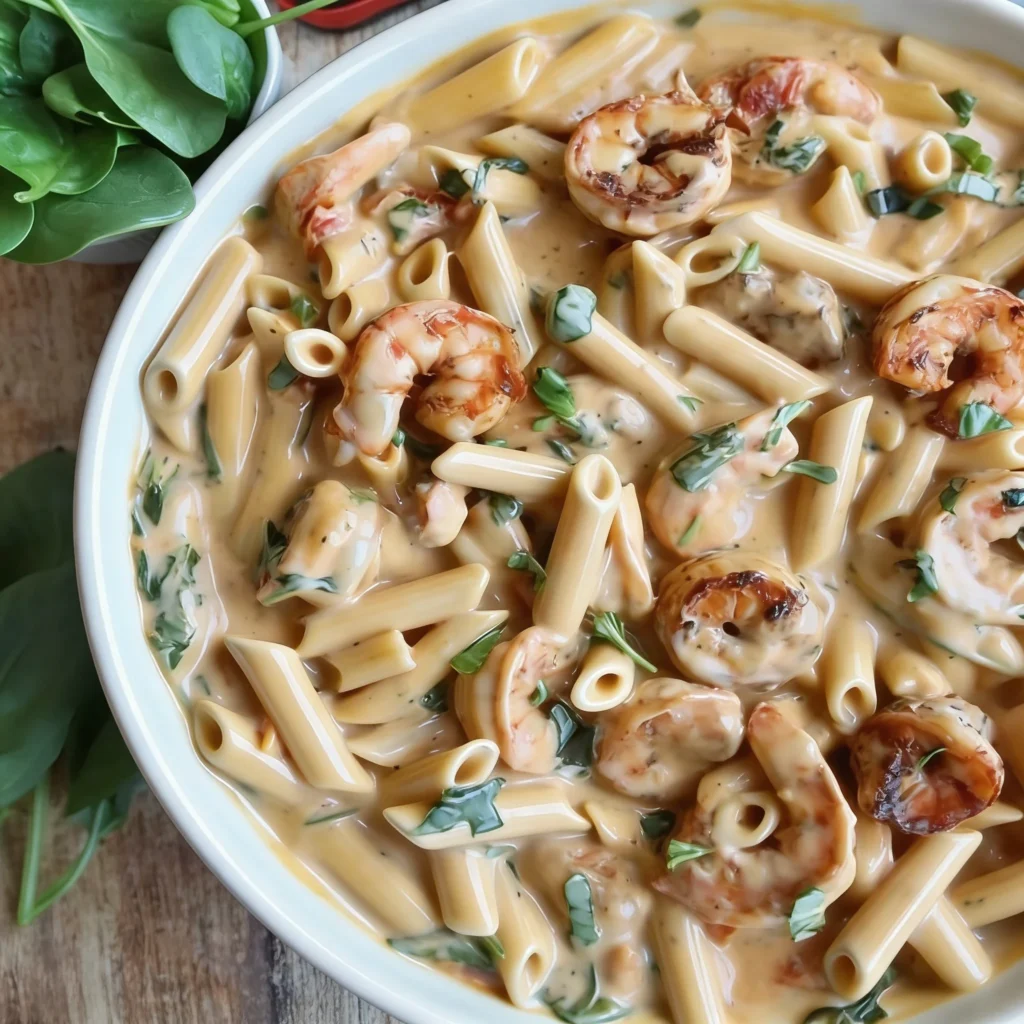
Remove the pan from the heat completely. Add Parmesan in three stages off heat, stir fully between each. Add lemon zest. Stir once. Add shrimp seared-side up. Fold gently, do not stir aggressively or the shrimp breaks and the pasta tangles. The residual heat finishes the second side in 60 seconds. Scatter fresh basil off the heat. Serve immediately in warmed bowls.
Three Tests That Changed How I Make This
Test 1: Shrimp Added Early vs Shrimp Added Last
Shrimp added with the cream and simmered through, rubbery, shrunken, O-shaped by the time the pasta was tossed. Shrimp seared one side, set aside, folded in off heat at the very end, C-shaped, tender, juicy throughout. The sauce from the early-added version was slightly richer from the shrimp liquid, but the texture trade-off made it not worth it.
Verdict: Shrimp last. Off heat. Every time.
Test 2: Pasta Water vs No Pasta Water
Without pasta water, the sauce slid off the linguine within 90 seconds of plating, and the shrimp liquid thinned the remaining sauce in the bowl. With 3 tablespoons of pasta water before combining, the sauce adhered to every strand and held its consistency through to the last forkful.
Verdict: Pasta water is mandatory. Reserve it before draining.
Test 3: Lemon Zest vs No Lemon Zest
Without lemon zest faint brininess in the cream that builds with each bite. Not unpleasant but noticeable. With lemon zest off heat after Parmesan brininess completely gone, shrimp flavour cleaner and more present, sauce tasting lighter despite identical cream quantity.
Verdict: Lemon zest off heat. Same rule as every seafood recipe in this collection.
Marry Me Shrimp Pasta With Spinach
Spinach is already part of the base recipe; two large handfuls are added with the cream. To make it a feature, double the quantity to four handfuls and add in two stages.
First two handfuls go in with the cream, they wilt fully and become part of the sauce, turning it a deeper green and adding subtle earthiness. The second two handfuls go in off the heat after the Parmesan; they retain their shape and bright colour alongside the shrimp. The result is a marry me shrimp pasta with spinach that reads as a complete, built-in vegetable meal
Storage And Reheating
Fridge: 2 days maximum. Shrimp in cream sauce deteriorates faster than any other protein; the texture changes noticeably by day 3. Store pasta and sauce together; the sauce keeps the linguine from drying out overnight.
Reheating: Low heat in a covered pan with 2 to 3 tablespoons of stock added. Stir gently; linguine tangles easily when cold. Never heat the cream emulsion too high; it breaks, and the shrimp tightens further. Microwave at 50% power in 20-second bursts only.
Freezing: Not recommended. Shrimp in cream sauce becomes waterlogged after thawing, and pasta becomes mushy. Making fresh 25 minutes is fast enough to justify it every time.
Frequently Asked Questions
Should I cook pasta separately or in the sauce with shrimp?
Separately always. Pasta cooked directly in cream sauce absorbs liquid unevenly, and the shrimp timing becomes impossible to manage. Cook linguine in a separate pot, reserve pasta water, and combine in the final step. The pasta water does the work of binding the sauce to the pasta that is cooking in the sauce, claims to provide, without the timing problems.
Can I make marry me shrimp pasta without wine?
Yes, replace white wine with an equal amount of stock plus 1 teaspoon of white wine vinegar. The vinegar provides the acidity that the wine contributes. The sauce loses some complexity but remains excellent.
Can I add spinach to marry me shrimp pasta?
Yes, two large handfuls added with the cream wilt into the sauce. Double the quantity and add in two stages for spinach as a feature rather than a background ingredient.
How long does marry me shrimp pasta last in the fridge?
2 days maximum. Shrimp deteriorates faster than chicken or salmon in a cream sauce. Reheat gently over low heat with stock added to restore sauce consistency.
Can I use angel hair or linguine instead of penne?
Use linguine, tagliatelle, or any long flat pasta. Avoid penne and other short tube shapes. Shrimp sit separately from the pasta rather than wrapping around it, producing uneven bites. Angel hair is too thin for this sauce; it tangles and breaks under the cream.
Can I use frozen shrimp?
Yes, thaw overnight in the refrigerator or in a sealed bag in cold water for 15 minutes. Pat completely dry before seasoning; any moisture prevents the one-sided sear from forming properly.
Recipe Card:
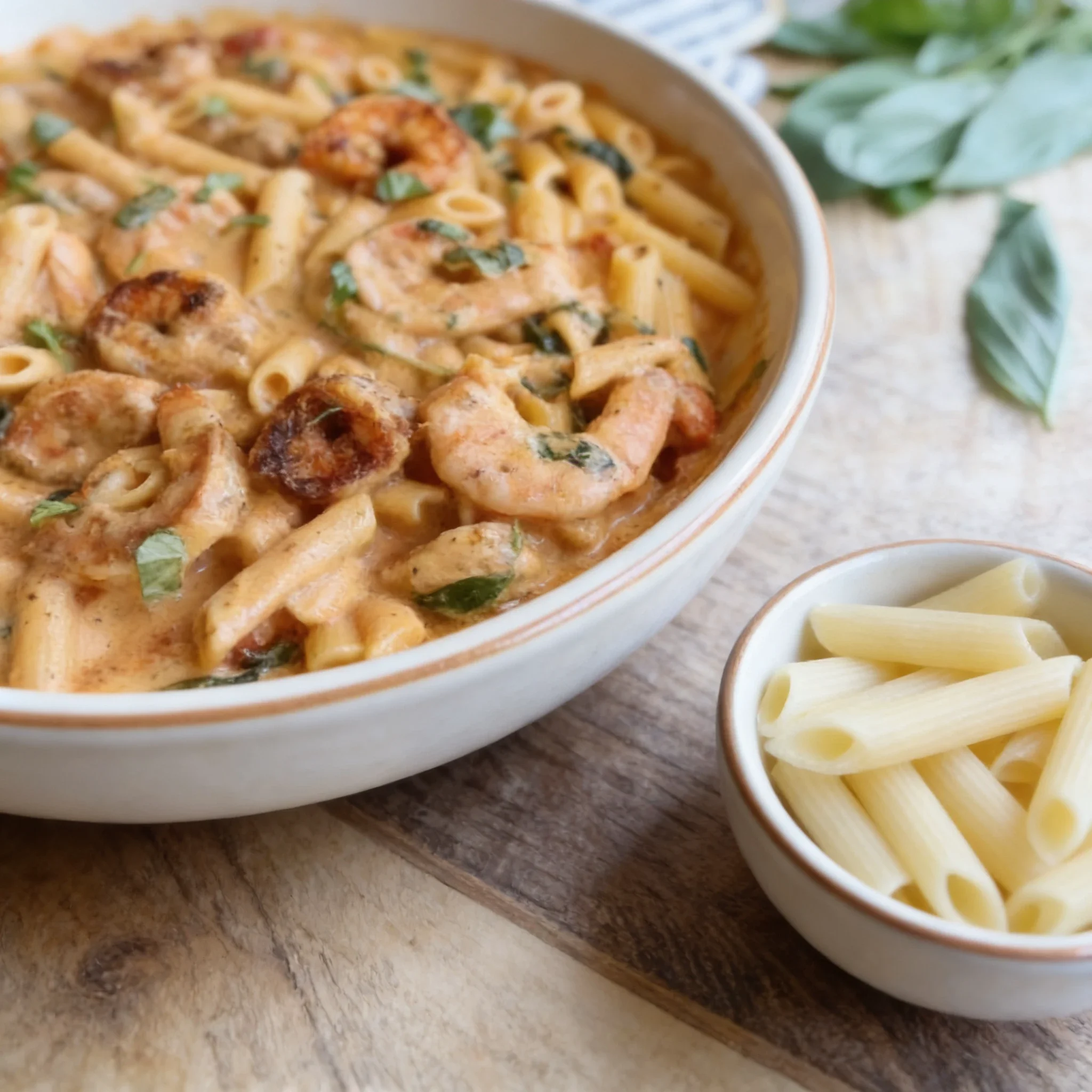
Marry Me Shrimp Pasta
Ingredients
- Shrimp:
- 450 g large shrimp peeled and deveined ·
- ½ tsp salt ·
- ¼ tsp pepper ·
- ½ tsp smoked paprika ·
- ½ tsp garlic powder ·
- ½ tsp Italian seasoning
- Sauce:
- 2 tbsp sun-dried tomato jar oil ·
- 4 garlic cloves minced ·
- 1 tbsp double-concentrated tomato paste ·
- ⅓ cup 55g sun-dried tomatoes chopped ·
- ½ cup 120ml white wine ·
- ½ cup 120ml stock ·
- 1 cup 240ml heavy cream 36%+ ·
- ½ cup 50g block Parmesan; off heat ·
- 2 handfuls spinach ·
- ¼ tsp red pepper flakes ·
- ½ tsp Italian seasoning ·
- zest of ½ lemon; off heat ·
- ¼ cup fresh basil; off heat
Pasta:
- 320 g linguine or tagliatelle ·
- ½ cup reserved pasta water
Instructions
- Pat shrimp dry. Season. Heat the tomato oil over medium-high heat. Sear shrimp one side only 90 sec until C-shaped and pink on the bottom. Transfer to plate.
- Same pan garlic 60 sec. Tomato paste 90 sec until brick red. Sun-dried tomatoes 30 sec.
- Wine scrape pan, reduce 90 sec. Stock reduced by 2 min. Reduce to medium-low. Cream + seasonings simmer gently 3 min. Spinach wilt 60 sec.
- Cook pasta. Reserve ½ cup of water. Add 3 tbsp of water to the sauce. Toss pasta in sauce for 60 sec over low heat.
- Off heat Parmesan in 3 stages. Add lemon zest.
- Add shrimp seared-side up. Fold gently. Rest 60 sec. Basil off heat. Serve immediately.
Notes
The same sauce runs through every recipe in this collection. For the complete sauce guide, Marry Me Tuscan Sauce. For the standalone shrimp version without pasta, Marry Me Shrimp. For the salmon pasta version, Marry Me Salmon Pasta.
The Pasta That Shrimp Were Always Meant For
Every other pasta in this collection adds the protein at the start or in the middle. This one adds it last. That single change is the difference between a shrimp pasta worth making again and one that confirms every suspicion about shrimp being difficult to cook.
Sear one side. Set aside. Build the sauce. Add pasta water. Fold shrimp off the heat. Sixty seconds. Done.
This is the one pasta dish in this collection where the protein goes in last not because shrimp is difficult, but because it needs less time than everything else. Give it sixty seconds off heat. It will give you everything back.
About the Author
By Emily Carter, Recipe Developer and Culinary Instructor. Trained at the Institute of Culinary Education, New York. Six years in professional kitchens. Every recipe on this site is tested a minimum of three times before publication. If it does not work reliably, it does not get published.
⭐⭐⭐⭐⭐“Tried three shrimp pasta recipes this month. Two of them were rubbery. This one was not. The difference was adding the shrimp at the end. Obvious in hindsight. Nobody else said it.” Claire W.
⭐ Rate This Recipe
Have you made this? Leave a star rating below and tell us how it turned out. Your feedback helps other home cooks find this recipe and trust it before they make it.